

Bringing more visitors to your website isn't about finding one secret trick. It’s about building a solid, multi-channel engine that consistently drives growth. The most effective strategies blend Search Engine Optimisation (SEO) to pull in organic visitors, social media to build a community, and targeted paid ads for that immediate boost.
Your Blueprint for Driving UK Website Traffic
For any UK business, whether you're a local service in Cambridgeshire or a national e-commerce store, the aim is to create multiple pathways for potential customers to find you. Think of it less as a complex puzzle and more as a clear, executable plan built on a few core strategies.
To get started, it’s vital to understand exactly where your traffic can come from. Each channel plays a unique role in your overall plan, and knowing the difference is the first step toward smart growth.
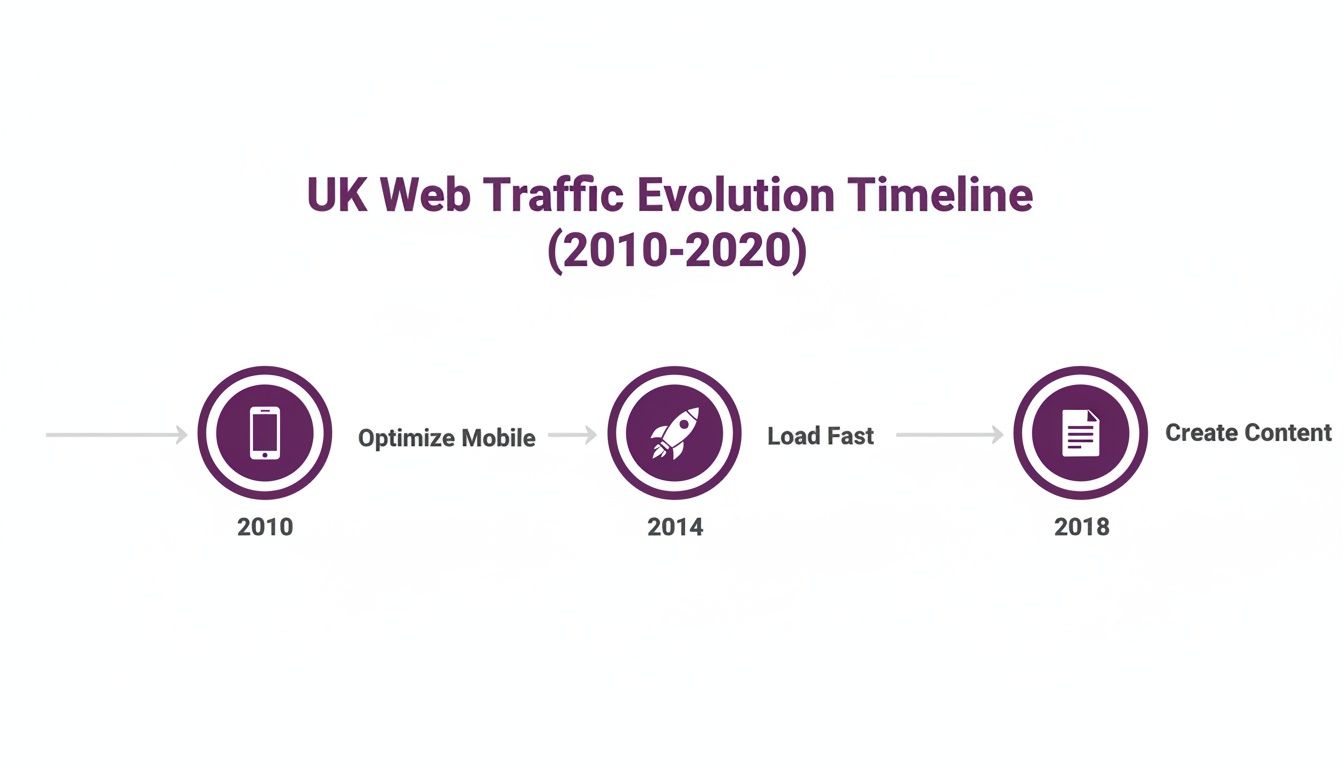
Key Website Traffic Channels at a Glance
To give you a clearer picture, I've broken down the main traffic sources every UK business should know. This table simplifies what each channel does and gives you a practical first step to take for each one.
| Traffic Channel | What It Is | Key Benefit | First Actionable Step |
|---|---|---|---|
| Organic Search | Visitors who find you via search engines like Google after you've worked on your website's optimisation. | Delivers highly relevant, long-term traffic without the ongoing cost of ads. | Identify five core questions your ideal customer asks, then write one detailed blog post answering one of them. |
| Social Media | Traffic from platforms like Instagram, LinkedIn, Facebook, or X (formerly Twitter). | Builds community, brand awareness, and lets you engage directly with your audience. | Share a behind-the-scenes photo or video of your business on your most active social platform today. |
| Paid Advertising | Paying for clicks from platforms like Google Ads or social media ads to appear in front of a targeted audience. | Provides immediate, scalable traffic and allows for incredibly precise audience targeting. | Set up a small Google Ads campaign (e.g., £5/day) targeting your most profitable service and location. |
| Direct Traffic | Visitors who type your website URL directly into their browser or click a bookmark. | A clear sign of strong brand recognition and loyal, returning customers. | Make sure your website URL is clearly printed on all your marketing materials, from business cards to email signatures. |
This foundational knowledge is crucial. Understanding these channels helps you allocate your time and budget effectively, which is a key part of learning how to create an SEO strategy that actually delivers results.
The digital opportunity in the UK is massive. As of early 2025, an incredible 67.8 million people—that's 97.8% of the population—are active internet users.
To tap into this audience, you absolutely must have a mobile-friendly website, as over two-thirds of all UK web traffic now comes from mobile devices. The data also shows that businesses that blog consistently generate 67% more leads, proving that quality content remains one of the most powerful tools for attracting visitors.
Mastering Search Engines for Sustainable Growth
While paid ads can give you a quick traffic boost, Search Engine Optimisation (SEO) is what builds the engine for long-term, sustainable growth. It's all about making your website the single best answer to the questions your potential customers are typing into Google.
For UK businesses, getting this right means attracting a steady stream of visitors who are already looking for what you sell. Think of SEO less as a dark art and more as a methodical process of aligning your website with what both search engines and real people value. It's the difference between hoping people find you and making sure they do.
Decoding Your Customer's Language
First things first: you need to understand the exact words and phrases your customers are using. This is keyword research, and it’s about getting inside your audience's head. You might describe your service as "bespoke joinery," but are your customers in Bristol actually searching for "custom kitchen cabinets"? That small difference can be everything.
Effective keyword research for the UK market isn't just guesswork. It involves a few key moves:
- Brainstorm Core Topics: List your main services or products. If you run a bakery in Cambridgeshire, this might be "wedding cakes," "sourdough bread," and "afternoon tea delivery."
- Use Keyword Tools: Tools like Semrush or even Google's own Keyword Planner can show you search volumes and spark new ideas. You’ll often uncover "long-tail keywords"—longer, more specific phrases like "vegan wedding cakes Cambridge"—which tend to have less competition and attract buyers who are ready to convert.
- Analyse Your Competitors: Take a look at what keywords your rivals are ranking for. This is a brilliant way to spot opportunities you might have missed.
Key Takeaway: Don't just assume you know what your customers are searching for. Use data to find the precise language they use. This insight is the bedrock of any content that's going to rank and attract the right kind of traffic.
Optimising Your On-Page Elements
Once you've got your target keywords, you need to weave them into your website. This is what we call on-page SEO, and it’s how you signal to Google what each page is about. This isn't about stuffing keywords everywhere you can; it's about thoughtful, natural integration that helps both users and search engines.
Here's where to focus your energy:
- Page Titles (Title Tags): This is the blue, clickable link people see in search results. It needs to be punchy (under 60 characters), include your main keyword, and be compelling enough to earn that click.
- Meta Descriptions: This is the little snippet of text under the title. While it's not a direct ranking factor, a well-written meta description acts like a mini-advert, persuading users to choose your page over the competition.
- Headers (H1, H2, H3): Use headers to give your content a clear structure. Your main page title should always be an H1, with subheadings as H2s and H3s. Slot in your primary and secondary keywords where they make sense.
- Content Quality: This is absolutely non-negotiable. Your content has to be original, genuinely helpful, and thorough. Google’s main job is to satisfy its users, so creating top-notch content that solves their problem is the most powerful SEO tactic there is. To really nail this, you should check out the ultimate guide to SEO for lead generation, which connects the dots between getting seen and getting customers.
The Technical Foundations of SEO
Behind the scenes, your website's technical health plays a massive role in how search engines see you. This is the world of technical SEO—making sure your site is fast, secure, and easy for search engine crawlers to read and index.
In the UK, where google.co.uk gets billions of visits, getting the technical side right is crucial. With a staggering 66.02% of web traffic now coming from mobile devices, a mobile-friendly site isn't a "nice-to-have" anymore—it's essential. Site speed is another deal-breaker; aiming for load times under 0.5 seconds can massively improve user experience and your rankings. That's why it pays to get your head around what technical SEO is and why it matters.
A quick look at a typical Google Analytics dashboard, like the one above, often shows 'Organic Search' as a top traffic driver, hammering home just how important a solid SEO strategy really is.
As you build your strategy, keep an eye on emerging trends, too. Projections show that 25% of UK shoppers will be using AI tools by 2024. Getting your site optimised for these new forms of search could give you a serious edge. Getting these technical elements right ensures that all your hard work on content and keywords has a solid foundation to stand on.
Creating and Distributing Content That Captures Attention
If technical SEO is the engine that powers your website, then great content is the fuel that makes it go. But just creating that content isn't enough; you need a smart plan to get it in front of the right people. This one-two punch of creation and distribution is what consistently brings new and returning visitors through your digital door.

Ultimately, your content should solve problems, answer questions, and build trust with your audience. For a UK business, that means ditching generic blog posts and creating resources that genuinely connect with your customers' real-world challenges.
Brainstorming Content That Connects
The best content ideas don’t come out of thin air—they come from listening. Before you write a single word, you need to get inside your audience's head to figure out what they’re actually looking for.
Start by paying attention to your customers. What questions do they ask you all the time, whether on the phone or by email? These are content goldmines. If you’re a plumber in Cambridgeshire, for instance, frequent questions about "common boiler faults" or "how to fix a dripping tap" are perfect prompts for genuinely helpful guides.
Next, use the keyword insights we talked about earlier to see if people are searching for these topics online and to uncover new ideas. Fusing real-world customer queries with hard search data is the secret sauce for a powerful content plan. For a much deeper dive, our guide explains in detail how to create a content strategy that lines up perfectly with your business goals.
The Power of Effective Distribution
There's no point in creating brilliant content if nobody ever sees it. Distribution is all about actively getting your articles, guides, and videos in front of your target audience. A multi-channel approach is almost always the best way to get the most mileage out of your work.
Expert Tip: Don't treat distribution as an afterthought. Plan how you'll promote each piece of content before you even hit "publish." This simple shift in mindset can massively boost its impact and drive far more traffic.
Think about using a mix of these powerful channels:
- Email Marketing: Your email list gives you a direct line to your most engaged audience. A simple newsletter highlighting your latest blog post is a fantastic way to bring loyal readers back to your site.
- Guest Blogging: Look for non-competing but relevant blogs in your industry here in the UK. Writing a guest post not only introduces you to a fresh audience but also nets you valuable backlinks, which are brilliant for SEO.
- Content Repurposing: One in-depth blog post can be spun into multiple pieces of content. Turn key points into a social media carousel, expand on a section in a short video, or create an infographic from the most important stats.
Content Distribution Strategy Comparison
Not all distribution channels are created equal, and the right choice really depends on your audience, content, and resources. Here’s a quick comparison to help UK SMEs decide where to focus their efforts.
| Distribution Method | Best For | Effort Level | Potential Impact |
|---|---|---|---|
| Email Newsletters | Nurturing your existing audience and driving repeat traffic. | Low-Medium | High |
| Guest Blogging | Reaching new, highly relevant audiences and building backlinks. | High | High |
| Social Media Sharing | Building community engagement and immediate visibility. | Medium | Medium-High |
| Content Repurposing | Maximising the value and reach of a single content piece. | Medium | High |
This table gives a bird's-eye view, but the key is to experiment and see what works for your specific business. Don't be afraid to mix and match.
By building a solid process for both creating and distributing content, you turn it from a static asset into an active, traffic-driving machine. The real secret is consistency. If you regularly publish valuable content and push it out across multiple channels, you'll build momentum over time, establishing your website as a go-to resource in your field.
Using Social and Paid Channels for Immediate Impact
While SEO is busy building your long-term, sustainable traffic, sometimes you just need a boost now. That's where social media and paid advertising come in. They're your fast track to getting your brand in front of a targeted audience, right when you need it.
Think of it like this: SEO is your marathon training, building strength and endurance over time. Social and paid channels are the sprints, giving you that burst of speed to cross the finish line on short-term goals.

Harnessing Social Media for Targeted Engagement
Social media isn’t just for posting company updates; it’s a powerhouse for driving conversations and, more importantly, traffic back to your website.
For UK businesses, the trick is picking the right playground. A B2B consultancy in Manchester will likely get more traction on LinkedIn, whereas a local boutique in Brighton will thrive on the visual-first world of Instagram.
The secret sauce? Create content that makes people want to click. Don't just show off your product; tell the story behind it. Share a glowing customer testimonial or film a quick "how-to" video. Your aim is to spark enough curiosity that visiting your website feels like the natural next step.
Don't underestimate its power. UK social media ad spend is projected to hit £9.95 billion in 2025, and nearly half (49.3%) of UK adult internet users already use these platforms to discover new brands. With 33.4 million UK users on Instagram and TikTok’s explosive growth, the opportunity is massive. Young adults (18-24) in the UK spend an average of 64 minutes a day on TikTok alone.
Kickstarting Your Traffic with Paid Advertising
Paid advertising, or Pay-Per-Click (PPC), is the most direct route to the top of search results or into a potential customer's social feed. Platforms like Google Ads and Meta Ads (for Facebook and Instagram) offer incredibly precise targeting based on location, interests, and online behaviour.
Getting started doesn't require a huge budget. Even a modest £10-£20 per day can start driving targeted clicks and give you valuable data on what’s working.
Pro Tip: Start small and specific. Instead of targeting the whole of "Cambridgeshire," narrow it down to "emergency plumbers in Cambridge." The more niche your targeting, the higher the quality of traffic you'll attract and the more efficiently your budget will be spent.
Here’s a quick breakdown of where to begin:
- Google Search Ads: These ads pop up at the top of Google when someone is actively searching for what you offer. They are brilliant for capturing "high-intent" users who are ready to buy or make an enquiry.
- Paid Social Ads: These appear in users' social media feeds. They're fantastic for building brand awareness and reaching people based on their interests, even if they aren't actively looking for your solution at that moment.
Creating Ad Copy That Converts Clicks
Your ad's success really boils down to two things: who you're targeting and what you're saying. Once you know your audience, your ad copy needs to grab their attention and give them a compelling reason to click.
Effective ad copy is always:
- Clear and Concise: Get straight to the point. What problem are you solving for them?
- Benefit-Oriented: Focus on what the user gains. Instead of "We sell ergonomic chairs," try "Work Pain-Free With Our Ergonomic Chairs."
- Driven by a Strong Call-to-Action (CTA): Tell people exactly what to do next. "Shop Now," "Learn More," or "Get a Free Quote" are direct, effective, and leave no room for confusion.
On visual platforms like TikTok, timing is everything. You need to post when your audience is most active to maximise reach and engagement. For some pointers, check out this guide on the best time to post on TikTok.
By blending a consistent social media presence with strategic, well-managed paid campaigns, you create a powerful one-two punch. Social builds your community and brand loyalty, while paid ads deliver the immediate, scalable traffic you need to hit your targets. This two-pronged approach means you’re not just waiting for traffic to find you—you’re actively going out and getting it.
Refining Your Approach with Local SEO and Analytics
Now that you have a solid foundation for driving traffic, it’s time to sharpen your focus. Two of the most powerful tools in your arsenal, especially for UK businesses serving a specific area, are local Search Engine Optimisation (SEO) and web analytics. Mastering these will move you from casting a wide net to precision targeting.
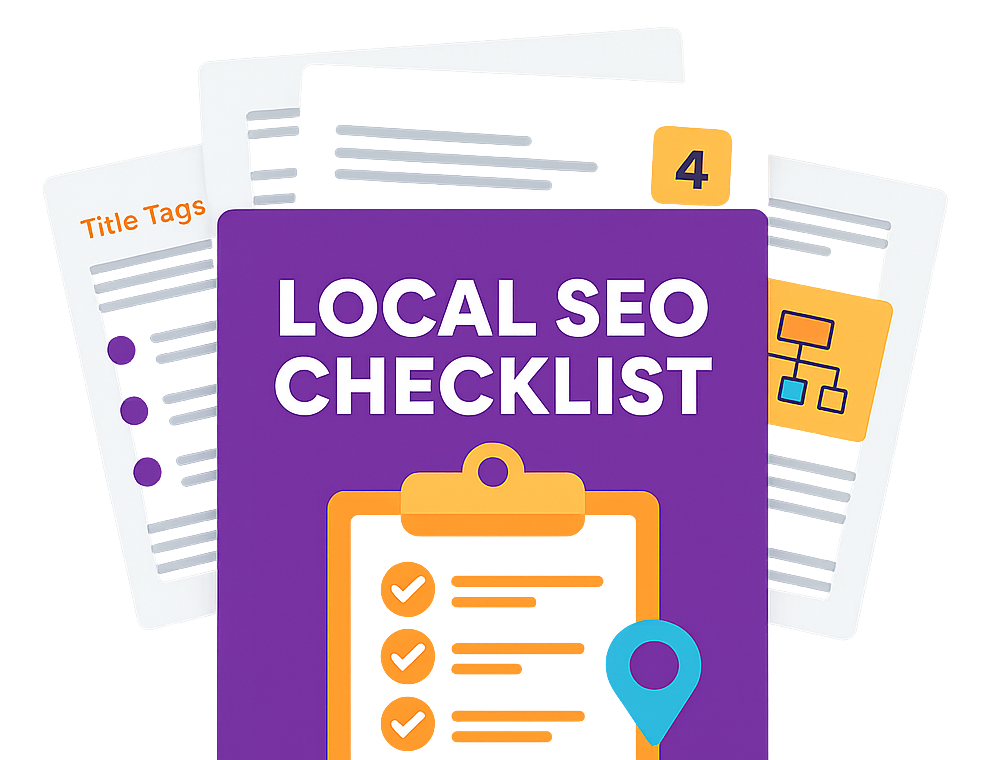
For any local business, appearing in that coveted "map pack" on Google when someone nearby searches for your services isn't just a nice bonus—it's a game-changer. This is where local SEO shines, connecting you directly with customers in your community who are actively looking to buy.
Dominating Your Local Search Area
Think of Local SEO as making your business unmissable to customers right on your doorstep. It’s all about sending strong signals to search engines that you are the most relevant, trustworthy, and authoritative choice for a particular service in a specific location.
The absolute centrepiece of this strategy is your Google Business Profile (GBP). This free profile is your digital shopfront on Google Search and Maps, and getting it fully optimised is non-negotiable.
Here’s where to put your energy first:
- Complete Every Single Section: Fill out your business name, address, phone number (NAP), opening hours, and services with meticulous accuracy. Consistency across the web is absolutely vital here.
- Choose Precise Categories: Select the most specific primary category for your business (e.g., "Plumbing Contractor" instead of just "Contractor"). Then, add secondary categories where they make sense.
- Encourage and Respond to Reviews: Positive reviews are a massive trust signal for both Google and potential customers. Actively ask happy clients to leave a review and make sure you respond to all of them—good and bad. It shows you're engaged.
Beyond your GBP, you need to build local citations. These are simply mentions of your business's NAP details on other websites and directories, such as Yell, Thomson Local, or industry-specific UK sites. Each consistent citation reinforces your location and legitimacy, giving your local ranking a healthy boost.
Making Data-Driven Decisions with Analytics
You can’t improve what you don’t measure. Web analytics tools are your window into understanding visitor behaviour, allowing you to stop guessing and start making informed decisions.
For years, Google Analytics has been the go-to, but it's worth knowing there are some excellent Google Analytics alternatives out there that might better suit your business, especially with growing privacy concerns. Whichever tool you choose, the goal is always the same: turn raw data into actionable insights.
Key Takeaway: Analytics data isn't just about counting visitors. It's about understanding their journey. Knowing which blog post brings in the most organic traffic or which social campaign drove the most sales allows you to double down on what works and cut what doesn't.
Turning Insights into Action
Once your analytics tool is set up, start by focusing on a few key metrics that actually tell a story about your traffic. Don't get lost in a sea of numbers; just concentrate on what matters for growth.
- Traffic Acquisition: This report shows you exactly where your visitors are coming from. Is it organic search, social media, or referrals? If you see that LinkedIn is driving high-quality traffic but you're only posting once a week, that’s a clear signal to ramp up your activity there.
- Audience Demographics: Get to know your visitors' age, gender, and location. If you’re a London-based e-commerce store and discover you have a growing customer base in Manchester, you could create targeted ad campaigns or content specifically for that audience.
- Top Performing Pages: This is gold. Identify which pages or blog posts are your most popular. You can promote these content champions more heavily, update them with fresh info, or create similar pieces on related topics to replicate their success.
By regularly reviewing this data, you create a powerful feedback loop. Local SEO gets relevant, nearby customers to your site, and analytics tells you what they do once they arrive. This combination allows you to continuously refine your strategy, ensuring your efforts and budget are always invested where they’ll generate the greatest return.
Common Questions on Increasing Website Traffic
Navigating the world of website traffic can throw up a lot of questions. From timelines and budgets to potential pitfalls, getting clear answers helps you move forward with confidence. This section tackles some of the most common queries we hear from UK businesses looking to grow their online presence.
How Long Does It Realistically Take to See More Traffic?
This is the million-pound question, and the honest answer is: it depends.
If you’re running paid advertising like Google Ads, you can start seeing highly targeted traffic within hours of launching a campaign. It's a direct and immediate way to get visitors through the door, perfect for promotions or quick wins.
However, for organic growth through SEO and content marketing, patience is key. It generally takes three to six months of consistent, focused effort to see meaningful results. This isn't an arbitrary timeline; it's how long it takes for search engines to crawl, index, and start trusting your website as an authority on your topic.
Key Insight: Think of traffic generation in two speeds. Paid channels offer an immediate sprint, perfect for short-term goals. SEO provides the long-term marathon training, building sustainable traffic that grows over time. A balanced strategy uses both.
What Is the Biggest Mistake to Avoid?
The single biggest mistake we see is inconsistency. So many businesses start with a huge burst of energy—a few blog posts, a flurry of social media updates—and then let it fizzle out when they don't see instant results. This stop-start approach almost never works.
Search engines and social media algorithms are designed to reward consistency. A website that regularly publishes valuable content and stays active sends strong signals of relevance and authority.
To avoid this all-too-common pitfall:
- Create a simple content plan: Don't overcommit. Just plan one or two high-quality blog posts a month to start.
- Batch your work: Dedicate a specific block of time each week to writing content or scheduling social media posts for the weeks ahead.
- Focus on one channel first: Instead of trying to be everywhere at once, get really good at one platform before expanding to others.
Getting into a steady rhythm, even a slow one, is far more effective than short, inconsistent sprints. It builds momentum that delivers compounding returns over time.
What Is the Most Effective First Step for a Small Business?
For a small or local UK business, the most impactful first step is to fully claim and optimise your Google Business Profile (GBP). It is completely free, surprisingly straightforward to set up, and is the absolute cornerstone of local SEO.
A well-managed GBP can give you immediate visibility in local search results and on Google Maps. It drives traffic from customers who are physically nearby and actively looking for what you offer. Make sure your name, address, phone number (NAP), and opening hours are precise and identical everywhere they appear online.
Once that's sorted, your next move should be to write one incredibly helpful piece of content that answers a core question your ideal customer has. Don't worry about creating a huge blog overnight; just focus on one comprehensive, valuable article. This becomes a foundational asset you can promote and build on for months.
How Much Should I Budget to Increase Website Traffic?
Honestly, your budget can range from £0 to thousands of pounds per month. It all depends on your strategy, your goals, and how quickly you need to see results.
If you have more time than money, you can focus on "free" strategies like SEO, content creation, and organic social media. While they don't have a direct media cost, they do require a significant investment of your time to learn and execute properly.
If you need faster results, a paid advertising budget is non-negotiable. For a local business in the UK, a starting budget of £10-£20 per day on Google Ads or Facebook Ads is often enough to start gathering data and driving initial traffic. The key is to start small, measure your results obsessively, and only scale up what’s proven to work.
At Bare Digital, we specialise in creating bespoke SEO strategies that drive sustainable traffic and deliver measurable results for UK businesses. If you're ready to stop guessing and start growing, get in touch for a free, no-obligation SEO Health Check and see how we can help. Find out more at https://www.bare-digital.com.