
For UK local businesses and multi-location brands, standing out in a crowded digital marketplace isn't just an advantage; it's essential for survival and growth. Standard advice often misses the nuances of local search, where customer intent is immediate and location-specific. Winning 'near me' searches, dominating the Google Maps pack, and turning local visibility into tangible enquiries requires a specialised toolkit.
This guide cuts through the noise, offering a definitive roundup of actionable, UK-focused tips for SEO. It moves beyond generic suggestions to provide concrete strategies tailored for businesses that depend on local customers. You will learn how to transform your online presence from being merely visible to becoming the default choice for your target audience.
We will cover ten critical areas designed to deliver measurable results. You'll discover how to:
- Optimise your Google Business Profile for local dominance.
- Conduct hyper-local keyword research using postcode and area targeting.
- Build powerful, location-specific landing pages with unique content.
- Implement essential technical SEO fixes like site speed and mobile-friendliness.
- Develop a robust review management strategy to build trust signals.
Whether you're a wedding venue in Yorkshire, a construction firm in Manchester, or a multi-site healthcare provider in London, these are the essential steps to drive sustainable growth. We will provide detailed checklists, practical examples, and clear implementation instructions to help you put these tactics into practice effectively. This is your blueprint for winning local search.
1. Optimise Your Google Business Profile (GBP) for Local Dominance
For any UK business targeting a local customer base, your Google Business Profile (GBP) is the cornerstone of your digital presence. It's often the first interaction a potential customer has with your brand, appearing prominently in Google Maps and the coveted "local pack" results for area-specific searches. A fully optimised profile is a powerful tool, acting as a mini-website that builds trust and drives direct action, from phone calls to foot traffic. This is one of the most impactful tips for SEO you can implement immediately.
A neglected or incomplete GBP is a missed opportunity. Google rewards businesses that provide comprehensive, accurate, and fresh information. This signals to the search engine that you are an active and reliable local entity, making it more likely to show your profile for relevant "near me" searches.
Why It Works for Local Businesses
GBP directly influences your visibility where it matters most: in front of local searchers with high purchase intent. An interior designer showcasing a portfolio of before-and-after project photos in their GBP can quickly capture the attention of homeowners in their service area. Similarly, a construction company that clearly defines its service areas by postcode on its profile can generate pre-qualified leads directly from users browsing Google Maps. The profile functions as a critical trust-building and lead-generation asset before a user even clicks through to your website.
Actionable GBP Optimisation Checklist
To make your profile a local powerhouse, focus on these specific actions:
- Complete Every Section: Fill out every available field with detail. This includes adding all relevant business categories, services with descriptions, accessibility information, and opening hours.
- Maintain NAP Consistency: Ensure your Name, Address, and Phone number (NAP) are identical across your website and all other online citations. Any discrepancy can confuse search engines.
- Upload High-Quality Visuals: Add at least 10-15 high-resolution images showing your storefront, team, products, and services in action. Aim for a mix of professional photos and authentic, behind-the-scenes shots.
- Publish Weekly Posts: Use GBP Posts to share updates, offers, events, or blog content. This keeps your profile active and engaging. A wedding venue, for example, could post about newly available dates.
- Generate and Respond to Reviews: Actively encourage customers to leave reviews. Crucially, respond to all of them, both positive and negative, within 48 hours to show you value customer feedback.
Key Insight: Responding to reviews does more than just manage your reputation; it's a direct ranking signal to Google that demonstrates your business is active and engaged with its community.
To ensure your profile is performing at its best, you can identify specific areas for improvement with a Google Business Profile audit, which provides a structured way to check your optimisation efforts against best practices.
2. Conduct Hyper-Local Keyword Research with 'Near Me' and Postcode Targeting
Moving beyond broad search terms is fundamental for local success. Hyper-local keyword research focuses on the precise phrases customers use when they need a service in their immediate vicinity, such as combining a service with a location, postcode, or the ubiquitous 'near me' modifier. This strategy targets users with high purchase intent, meaning they are actively looking to make a decision and take action.
Focusing on these specific queries allows you to sidestep the immense competition for generic keywords. A critical step in understanding your audience and search intent is knowing how to do keyword research effectively, which forms the foundation of this targeted approach. This method is one of the most direct tips for SEO when aiming to attract qualified local leads.
Why It Works for Local Businesses
Hyper-local keywords connect you directly with customers at the moment of need. For instance, an architect targeting 'sustainable architects Brighton' or 'extension designer East Sussex' is reaching a far more qualified audience than one just aiming for 'architect'. Similarly, a funeral director in Stockport will see better results from 'funeral director Stockport' than a general UK-wide term. This specificity dramatically increases conversion rates because the search intent is crystal clear.
Actionable Hyper-Local Keyword Checklist
To refine your keyword strategy and capture local intent, follow these steps:
- Combine Service + Location: Create a primary list of your core services combined with the towns, cities, and specific postcodes you serve (e.g., 'barn wedding venues Yorkshire', 'GP appointments Croydon').
- Embrace 'Near Me' Variants: Recognise the power of 'near me' searches. Develop content that answers queries like 'osteopath near me' or 'emergency plumber near me', ensuring your location information is optimised.
- Target Pain Points: Think about the user's problem. Instead of just 'dentist London', target phrases like 'NHS dentist available now London' to capture urgent, specific needs.
- Analyse Search Console Data: Regularly check Google Search Console for the actual queries bringing users to your site. You may discover unexpected local keyword opportunities to build upon.
- Build Postcode-Level Pages: For high-volume postcode clusters or distinct service areas, create dedicated landing pages. This signals strong geographic relevance to Google.
Key Insight: Over a fifth of all Google searches now include a 'near me' component. Optimising for this behaviour isn't just a good idea; it's essential for capturing a huge segment of the local market actively looking to buy.
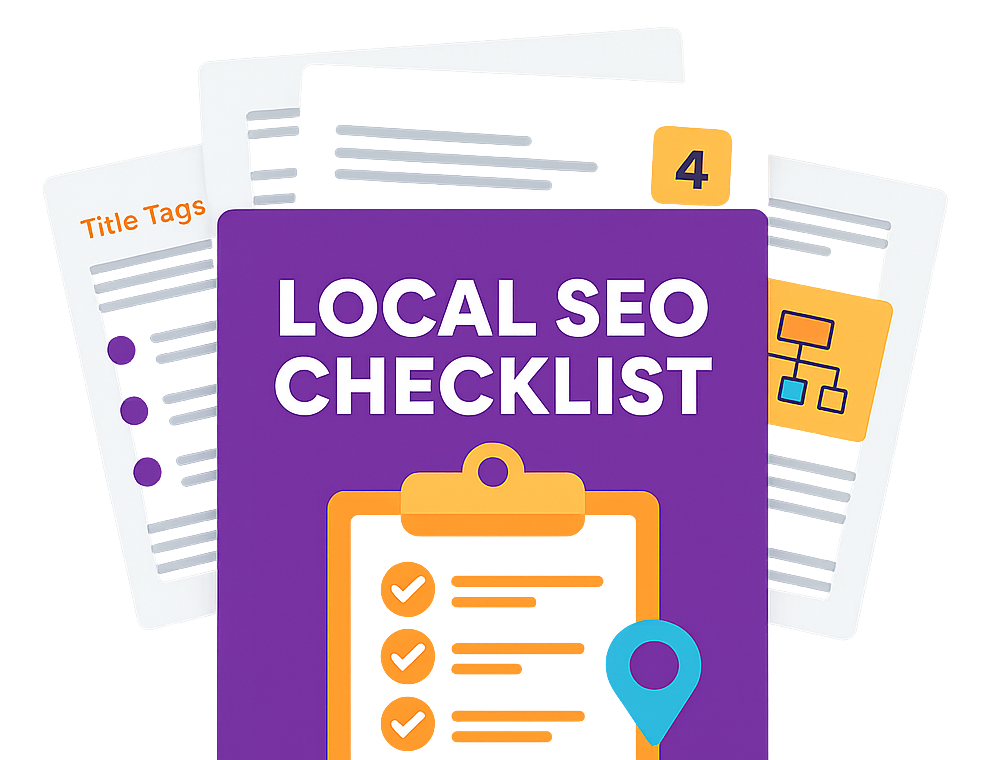
A well-organised keyword strategy is a central part of any successful campaign, and our local SEO checklist provides a structured guide to implementing these terms across your site.
3. Build Location-Specific Landing Pages with Unique, Relevant Content
For multi-location businesses or companies serving distinct UK towns and cities, generic content falls flat. Creating dedicated landing pages for each specific area you serve is a powerful SEO strategy that signals deep local relevance to Google. This goes beyond simply swapping out a city name; it involves creating genuinely unique content that speaks directly to the needs, culture, and context of each community.
Simply duplicating a service page and changing the location is a shortcut to failure, often leading to thin content penalties. Instead, each page should function as a micro-homepage for that area, demonstrating your commitment and expertise within that specific market. This is one of the most effective tips for SEO for businesses aiming to scale their local presence.
Why It Works for Multi-Location Businesses
Google’s algorithm is designed to deliver the most relevant local results. A construction company with a generic "House Extensions" page will struggle to rank in specific locales. However, one with dedicated pages for 'House Extensions Kent', 'Loft Conversions Surrey', and 'Renovations Sussex' – each showcasing local projects and area-specific planning advice – proves its authority and relevance in each location. This targeted approach attracts higher-quality, geographically qualified leads.
Actionable Checklist for Location Pages
To create landing pages that rank and convert, follow this structured approach:
- Create a Flexible Template: Design a consistent page structure but allow for unique content blocks. This ensures brand consistency while enabling local customisation.
- Feature Local Social Proof: Embed genuine testimonials from clients in that specific area. Include names, photos, and details of the service provided to build trust.
- Showcase Your Local Team: Add professional bios and photos of team members who serve that location. This personalises your business and builds a local connection.
- Include Area-Specific Details: Address local concerns, such as "How We Handle Planning Permission in Manchester," or mention partnerships with local suppliers.
- Use Local Schema Markup: Implement
LocalBusinessschema on each page with the correct address, phone number, and service area details to give search engines structured data. - Link to Your GBP: Ensure each location page links directly to its corresponding Google Business Profile listing, strengthening the connection between the two assets.
Key Insight: The goal of a location page is to prove to both users and Google that you aren't just targeting an area; you are an active, knowledgeable, and integral part of that local business community.
This meticulous, location-focused strategy is central to achieving top rankings across multiple regions. By developing a deeper understanding of area-specific optimisation, as seen in expert approaches to SEO services in Cambridge, you can turn each location into a strong digital asset.
4. Implement Technical SEO Fixes: Site Speed, Mobile, and Core Web Vitals
Technical SEO is the non-negotiable foundation upon which all other marketing efforts are built. Think of it as the engine of your car; without a well-maintained engine, even the most beautiful paint job and premium fuel won't get you very far. In SEO terms, this means factors like page speed, mobile-friendliness, and Google’s Core Web Vitals determine whether your brilliant content and valuable links can even perform to their full potential.
A slow, clunky, or mobile-unfriendly website actively works against you, frustrating potential customers and sending negative signals to search engines. Addressing these technical issues is one of the most effective tips for SEO because it can yield significant ranking improvements and a better user experience within a matter of weeks, directly impacting your bottom line.
Why It Works for Local Businesses
For local businesses, technical performance directly influences lead generation. A wedding venue that reduces its page load time from 4.2 to 1.8 seconds can see a dramatic increase in form submissions, as impatient brides-to-be don't abandon the site. Similarly, a healthcare clinic that improves its mobile experience can see its bounce rate plummet and start ranking for crucial "dentist near me" queries, as over 60% of searches now happen on mobile devices. A solid technical base ensures that when a local customer finds you, their experience is seamless.
Actionable Technical SEO Checklist
To build a strong technical foundation, focus on these specific actions:
- Diagnose Performance: Use free tools like Google PageSpeed Insights and GTmetrix to benchmark your site's current speed and identify specific areas for improvement.
- Compress Your Images: Large image files are a primary cause of slow load times. Use tools like TinyPNG to compress images without a noticeable loss in quality before uploading them to your site.
- Enable Caching & Compression: Work with your developer to enable browser caching and GZIP compression on your server. This allows returning visitors' browsers to load your site much faster.
- Prioritise Mobile-First: Test your website on actual smartphones, not just browser simulators. The experience must be fast, intuitive, and easy to navigate on a small screen.
- Minify Code: Reduce the size of your CSS, JavaScript, and HTML files by removing unnecessary characters and spaces, a process known as minification.
- Fix Crawl Errors: Regularly check the "Coverage" report in Google Search Console to find and fix any errors that prevent Google from properly indexing your pages.
Key Insight: Core Web Vitals (CWV) are a direct ranking factor. Focusing on improving Largest Contentful Paint (LCP), First Input Delay (FID), and Cumulative Layout Shift (CLS) not only pleases Google but also measurably improves the user's experience on your site.
5. Build High-Quality, Contextual Backlinks Through Authority and Relevance
Backlinks, or links from other websites to yours, remain a fundamental signal Google uses to determine your site's authority and credibility. However, the game has shifted from quantity to quality. A focused strategy that earns a handful of powerful, relevant links will always outperform hundreds of low-quality, spammy ones. For UK businesses, this means earning links from reputable local news outlets, industry associations, and complementary local companies.
These contextual links act as votes of confidence, telling search engines that your business is a trusted authority in its niche and geographical area. This is one of the most enduring tips for SEO because it directly builds your website's long-term value and trustworthiness in Google's eyes, leading to higher rankings for competitive search terms.

Why It Works for Local Businesses
Contextual backlinks send strong local relevance signals. For example, a wedding venue in the Cotswolds that earns links from a popular local wedding blog, the Gloucestershire Chamber of Commerce, and a well-regarded local photographer is building a powerful local link profile. This tells Google precisely where it operates and that it is a legitimate part of the local business community, helping it rank for searches like "wedding venue Cotswolds". Similarly, an architect securing a link from their professional body (RIBA) and a feature in a local business journal builds both topical and geographic authority.
Actionable Backlink Building Checklist
To build a profile of high-quality, relevant links, concentrate on these proven tactics:
- Secure Foundational Citations: Start by getting listed in major UK directories like Yelp, Yell, and Thomson Local, plus any key industry-specific directories. Ensure your Name, Address, and Phone number (NAP) is consistent everywhere.
- Local PR & Media Outreach: Build relationships with local journalists and bloggers covering your sector. Offer expert commentary or share newsworthy stories about your business to earn media mentions and links.
- Sponsor Local Events: Sponsoring a local charity run, community festival, or school fete often results in a backlink from the event organiser's website, which carries strong local relevance.
- Join Industry Associations: Become a member of relevant trade bodies or your local Chamber of Commerce. These memberships almost always include a listing and a valuable link back to your website.
- Create Link-Worthy Content: Develop a truly useful resource, such as a detailed guide to local planning permissions for a construction firm, or original research on local market trends. High-value content naturally attracts links.
Key Insight: The most valuable links come from websites that are both topically relevant to your industry and geographically relevant to your service area. One link from a local newspaper is often more powerful for local SEO than ten links from generic, non-local blogs.
6. Create Long-Form, Authoritative Blog Content Around Local Service Topics
Beyond your core service pages, a well-maintained blog is a powerful asset for attracting organic traffic. Creating long-form, authoritative content allows you to rank for informational "top-of-funnel" keywords that your target audience is searching for before they are ready to buy. This strategy establishes your business as a trusted expert and nurtures potential customers by answering their questions. This is a fundamental tip for SEO that builds long-term authority.
For local businesses, the key is to infuse this expertise with local relevance. Instead of generic advice, you can mention local venues, suppliers, regional regulations, or specific case studies from your area. This signals to Google that your content is not just helpful, but specifically helpful for users in your target locations, which can boost your visibility for geographically-qualified searches.
Why It Works for Local Businesses
Long-form blog content directly addresses the questions and problems of your local audience, capturing their attention early in their research process. A construction company in London could write a "House Extension Planning Permission Guide (London)," directly targeting local homeowners. Similarly, a wedding venue can create a post on "Top Wedding Décor Trends," featuring and linking to local florists and event stylists, which both serves the reader and builds local relationships. This content attracts highly relevant traffic and supports your service pages by internally linking to them.
Actionable Blog Content Checklist
To turn your blog into a local lead-generation engine, follow these steps:
- Target Local Informational Keywords: Use keyword research tools to find questions people are asking. Think "what," "how," "guide," and "ideas," then add your city or region.
- Structure for Readability: Organise posts with clear H2 and H3 headings, short paragraphs, and bullet points. A 1,500-word post should be easy to scan.
- Localise Every Post: Weave in local examples, testimonials from area clients, or case studies. This contextualises your expertise and builds local trust.
- Internally Link Strategically: Add 3-5 internal links from each blog post to your relevant service and location pages to pass authority and guide users.
- Include a Clear Call-to-Action (CTA): End each post with a natural next step, such as "Request a free consultation" or "View our self storage packages." You can find more specific examples in this guide on SEO for self storage.
- Update Top Performers: Every quarter, review your best-performing articles in Google Search Console and update them with fresh data or new examples to maintain their rankings.
Key Insight: A blog is not just for attracting new visitors; it's a tool for proving your expertise. Each post is a new opportunity to demonstrate your authority on topics your customers care about, building trust long before they need your services.
7. Leverage Schema Markup and Structured Data for Rich Snippets and Local Visibility
While your website's content is for human visitors, schema markup is a vocabulary written for search engines. This code helps Google understand the context of your information, such as your business hours, services, or reviews. In return, Google can display this data as "rich snippets" directly in the search results, making your listing more informative and visually appealing. This is a powerful, yet often overlooked, tip for SEO that can significantly boost your click-through rate.
Implementing structured data signals to search engines that you are a well-organised, authoritative source of information. It essentially translates your content into a language Google can easily process, increasing the chances of your business appearing with enhanced features like star ratings, event details, or FAQ dropdowns. For local UK businesses, this provides a competitive advantage in crowded search results.
Why It Works for Local Businesses
Schema directly impacts how your business appears in search, making you stand out before a user even visits your website. For example, a healthcare clinic can use LocalBusiness and FAQ schema to answer common questions like "Do you accept NHS patients?" directly in the search results. A construction company could use Service and Review schema for "House Extensions," displaying their service area and glowing customer testimonials right beneath their website link. These rich snippets build immediate trust and encourage more qualified clicks.
Actionable Schema Markup Checklist
To make your website's search listings more compelling, focus on these specific actions:
- Implement
LocalBusinessSchema: Add this to your homepage or contact page, ensuring it includes your consistent Name, Address, and Phone number (NAP), opening hours, and business type. - Use
ServiceSchema: For each core service you offer, create dedicatedServicemarkup. Define the service type, a description, and the geographic area you cover (e.g., "covering Berkshire and Surrey"). - Showcase
ReviewSchema: EmbedRevieworAggregateRatingschema to pull your star ratings into the search results, providing powerful social proof at a glance. - Add
FAQSchema: Identify 3-5 of your most common customer questions for a key service page and mark them up withFAQschema to create helpful dropdowns in search results. - Use JSON-LD Format: This is Google’s recommended format for structured data. For WordPress users, plugins like Yoast SEO or Schema Pro can simplify implementation.
- Validate Your Code: Always use Google's Rich Results Test tool to ensure your markup is free of errors before deploying it on your live site.
Key Insight: Structured data is not just a technical task; it's a marketing opportunity. By marking up key business information, you are directly influencing how potential customers perceive your brand in the first few seconds of their search.
8. Develop a Review and Reputation Management Strategy to Build Trust Signals
Customer reviews are no longer just a reputation management tool; they are a direct and influential ranking factor. Google’s algorithm prioritises businesses with strong, recent, and positive review profiles because they signal trust and authority to both the search engine and potential customers. A high star rating and a significant volume of reviews can directly impact your position in the local pack and influence a user's decision to click on your profile over a competitor's. This is one of the most powerful tips for SEO that merges customer service with search visibility.
A proactive approach to generating and managing reviews builds a powerful moat around your brand's local presence. It provides social proof that differentiates you from competitors, often becoming the deciding factor for customers with high purchase intent.

Why It Works for Local Businesses
Reviews provide authentic, user-generated content that Google uses to understand your business's quality and relevance. For a wedding venue with a 4.8-star rating from over 150 reviews, this social proof translates into first-page local pack rankings where nearly every enquiry mentions the positive feedback they saw online. Similarly, a healthcare clinic can generate word-of-mouth referrals when its SERP listing highlights reviews praising its "friendly doctors" and "short wait times," directly answering a searcher's potential concerns.
Actionable Review Management Checklist
To turn customer feedback into a ranking asset, implement these specific actions:
- Ask Promptly and Directly: Request a review immediately after a service is completed. Use email or SMS with a direct link to your preferred review platform to make it easy for the customer.
- Use In-Person Prompts: Display QR codes at your reception desk or point of service that link directly to your Google Business Profile or Trustpilot page.
- Respond to All Feedback: Make it a policy to reply to every review, positive or negative, within 24–48 hours. This shows you are engaged and value customer input.
- Handle Negative Reviews Gracefully: For negative feedback, publicly apologise, acknowledge the specific issue, and offer to resolve the matter offline. This demonstrates accountability to all future customers.
- Amplify Positive Reviews: Thank positive reviewers personally, mentioning specifics from their feedback. With permission, feature these glowing testimonials on your website and social media channels.
- Monitor and Analyse Trends: Regularly check your reviews for recurring themes. If multiple customers mention a specific issue, like parking difficulties, address it by updating the information on your location pages.
Key Insight: Responding to a review is not just about customer service. It sends a direct signal to Google that your business is active, engaged, and trustworthy, which can positively influence your local search rankings.
9. Create Location-Specific Local Link Opportunities and Relationship Building
Beyond technical fixes and on-page content, one of the most powerful tips for SEO involves grounding your digital presence in real-world community engagement. Proactive local relationship building, from sponsoring events to joining business networks, creates authentic, high-value backlinks that search engines favour. These links signal to Google that your business is a trusted and integral part of the local community, boosting your relevance for area-specific searches.
This strategy shifts the focus from simply asking for links to earning them through genuine partnerships and contributions. When your brand is mentioned by local media, charities, or other respected businesses, it builds a powerful layer of trust and authority that algorithms are designed to recognise. These aren't just links; they are endorsements from your community.
Why It Works for Local Businesses
Contextual local links are a direct signal of relevance. For instance, a funeral home that partners with local hospices and grief support groups often earns links from their resource pages. These links are highly valuable because they originate from topically and geographically relevant organisations, telling Google exactly what services the business provides and where it operates. Similarly, a wedding venue that sponsors a local bridal expo will naturally get featured links from the event website and local media, driving both referral traffic and SEO authority.
Actionable Local Relationship Checklist
To build a strong local link profile, focus on these community-centric actions:
- Identify Key Local Entities: Make a list of 5-10 local charities, business networks, and non-competing businesses that align with your brand.
- Sponsor a Relevant Event: Sponsor a local charity gala, school sports team, or industry-specific event. A healthcare clinic sponsoring a school health fair is a perfect example.
- Join a Business Network: Actively participate in organisations like a local Chamber of Commerce or a BNI (Business Network International) chapter to build professional relationships.
- Partner with Complementary Services: An interior designer can collaborate with local architects and builders, leading to features in home improvement guides and shared project portfolios.
- Engage Local Media: Build relationships with local journalists and bloggers. Distribute press releases for newsworthy events like winning an award or a significant business milestone.
Key Insight: The most powerful local links are a by-product of genuine relationships and community involvement. Focus on providing value to your local area, and the authoritative links will follow naturally.
10. Monitor, Measure, and Report SEO Performance with Transparent KPI Tracking
You cannot improve what you do not measure. Effective SEO isn't about guesswork; it's a data-driven process that requires consistent monitoring and transparent reporting to prove its value. Setting up Key Performance Indicators (KPIs) allows you to track progress, identify what’s working, and make informed decisions to optimise your strategy, providing clear accountability for your SEO investment. This is one of the most crucial tips for SEO to ensure long-term, sustainable growth.
Without clear metrics, you're flying blind. Regular reporting, whether through monthly dashboards or quarterly reviews, transforms abstract SEO activities into tangible business results. This process highlights wins, pinpoints underperforming areas, and aligns your digital marketing efforts directly with your commercial goals, such as generating more leads or increasing revenue.
Why It Works for Local Businesses
Transparent KPI tracking gives local businesses clarity and control. For a healthcare clinic tracking appointment bookings from its postcode-specific landing pages, the data can directly justify local ad spend or further content investment. Similarly, a wedding venue can use a dashboard to see which blog posts are driving the most organic traffic and converting into brochure downloads, allowing them to double down on successful content topics. This feedback loop is essential for refining your approach and maximising your return on investment.
Actionable KPI Tracking Checklist
To build a robust and transparent reporting system, focus on these specific actions:
- Define Primary KPIs Upfront: Select 3-6 core metrics that align with your business goals. Examples include organic sessions, qualified leads, GBP calls, and conversion rate.
- Set Up Goal Tracking: Configure goal and event tracking in Google Analytics 4 (GA4) to measure valuable user actions like form submissions or phone number clicks.
- Use UTM Parameters: Consistently apply UTM tags to campaigns and partner links to accurately attribute traffic and conversions back to their source.
- Build Reporting Dashboards: Use a tool like Looker Studio to create a reusable dashboard that visualises your key metrics for clear, at-a-glance monthly reporting.
- Schedule Regular Reviews: Hold monthly meetings to review performance data and quarterly sessions to discuss broader strategy adjustments based on trends.
- Monitor Search Console: Check Google Search Console weekly for any indexing errors, manual actions, or significant drops in visibility that require immediate attention.
Key Insight: Annotating your analytics when major changes occur, such as a website migration or the launch of a big campaign, provides crucial context. This helps you accurately interpret performance spikes or dips in future reports.
Understanding the direct financial impact of your SEO efforts is vital. You can start by exploring how to calculate the return on investment for SEO, which helps frame your tracking and reporting around what truly matters: business growth.
Top 10 Local SEO Tips Comparison
| Strategy | Implementation Complexity 🔄 | Resource Requirements ⚡ | Expected Outcomes 📊⭐ | Ideal Use Cases | Key Advantages 💡 |
|---|---|---|---|---|---|
| Optimise Your Google Business Profile (GBP) for Local Dominance | Low–Medium (ongoing maintenance) | Low (time for photos, posts, review management) | 30–50% increase in local visibility and enquiries | Single-location retailers, service businesses targeting "near me" | Direct Maps visibility, free channel, builds trust via reviews |
| Conduct Hyper-Local Keyword Research (Near Me & Postcode) | Low–Medium (research and updates) | Low–Medium (keyword tools, analyst time) | 40–60% faster ranking for local keywords vs generic terms | Multi-location services, businesses focused on high-intent queries | Targets high intent with lower competition; cost-effective content focus |
| Build Location-Specific Landing Pages with Unique Content | Medium–High (per-location content production) | Medium–High (copywriters, local assets, dev support) | 50–70% local ranking lift per location; ↑30–40% location conversions | Multi-location businesses needing postcode-level ranking | Avoids duplicate content, strengthens local relevance and credibility |
| Implement Technical SEO Fixes: Speed, Mobile, Core Web Vitals | Medium (developer expertise required) | Medium (hosting/CDN, dev time, tools) | 10–30% ranking gains; 15–25% conversion uplift; fast wins (weeks) | Sites with poor load times or mobile UX; high-traffic sites | Measurable UX and ranking improvements; competitive advantage |
| Build High-Quality, Contextual Backlinks | High (outreach and relationship building) | Medium–High (outreach time, content, PR effort) | 15–35% ranking improvement for competitive keywords over months | Competitive local markets seeking authority and referral traffic | Sustained ranking power, credibility, and relevant referral visits |
| Create Long-Form, Authoritative Blog Content (Local Topics) | Medium (consistent publishing cadence) | Medium (writers, promotion, research) | Gradual traffic growth (months); generates backlinks and leads | Businesses targeting informational queries and thought leadership | Evergreen content, supports internal linking and conversions |
| Leverage Schema Markup & Structured Data for Rich Snippets | Low–Medium (technical implementation) | Low (JSON-LD snippets or plugin/developer) | 20–30% CTR increase; richer SERP appearance (no guaranteed rank boost) | Local businesses seeking higher CTR and rich results | Improves SERP display and click-throughs with modest effort |
| Develop Review & Reputation Management Strategy | Low–Medium (process + response system) | Low–Medium (tools, staff time, automation) | 15–35% improvement in local pack ranking; ↑CTR and conversions | Customer-facing services where trust drives decisions | Builds trust signals, influences local pack and conversion rates |
| Create Location-Specific Local Link Opportunities & Relationships | Medium–High (relationship and event work) | Medium (sponsorships, memberships, PR effort) | 15–25% improvement in local relevance signals over time | Businesses seeking community presence and local PR coverage | Genuine community credibility, organic local backlinks and mentions |
| Monitor, Measure & Report SEO Performance with KPIs | Low–Medium (setup; ongoing reporting) | Low–Medium (analytics tools, dashboard creation) | 10–30% better optimisation efficiency; clearer ROI | All businesses investing in SEO; agencies managing clients | Data-driven prioritisation, accountability, and faster issue detection |
Turning These SEO Tips into Sustainable Growth
The journey to the top of local search results is a marathon, not a sprint. We've explored ten critical areas, from optimising your Google Business Profile to building a robust review strategy and tracking your key performance indicators. Each of these tips for SEO serves as a vital component in a larger machine designed to drive consistent, high-intent local traffic to your business.
Merely reading these points won't change your rankings; the real value comes from their sustained and integrated application. Think of your SEO efforts not as a checklist to be completed once, but as an ongoing business process, much like managing your finances or customer service. The goal is to build a powerful, self-reinforcing system where each element supports the others. For example, great local content will attract high-quality backlinks, which in turn boosts the authority of your location pages and improves your GBP rankings.
Your Actionable Blueprint for Local SEO Success
To move from theory to tangible results, it's crucial to prioritise. Don't feel you have to tackle all ten areas at once. A more practical approach is to audit your current standing and identify the weakest links in your strategy.
Start by asking these questions:
- Is our Google Business Profile fully optimised with up-to-date information, services, and regular posts?
- Do we have dedicated, unique landing pages for each physical location or primary service area?
- Is our website technically sound, offering a fast and seamless experience on mobile devices?
- Are we actively encouraging and responding to customer reviews to build social proof?
An honest assessment of these areas will reveal your immediate priorities. For many UK businesses, the biggest initial gains often come from mastering the fundamentals: a perfectly tuned GBP, well-researched local keywords, and a proactive review management system. These foundational pillars directly influence your visibility in the Google 'map pack', which is prime real estate for capturing local customers ready to act.
Key Takeaway: Consistency is more important than intensity. Committing to small, regular improvements across these areas will compound over time, building a durable competitive advantage that one-off tactics simply cannot match.
Ultimately, mastering local search is about proving your relevance and trustworthiness to both search engines and potential customers. Every tip we've discussed is a mechanism for demonstrating that your business is the best and most credible solution for a specific need within a specific geographic area. By consistently applying these tips for SEO, you're not just playing the algorithm game; you're building a fundamentally stronger, more visible, and more trusted local brand. The result isn't just better rankings; it's sustainable business growth fuelled by a steady stream of qualified local leads.
Overwhelmed by the details and need a clear path forward? The team at Bare Digital specialises in implementing these proven SEO strategies for UK businesses, turning complex technical requirements into measurable growth. Get in touch for a no-obligation audit to discover your biggest opportunities for local search dominance.