

For a local business, online marketing isn't about splashy, worldwide campaigns. It's much simpler, and much more effective. It’s about making sure you’re the first name people see when they search for a “plumber in Bristol” or the “best cafe near me”. This is won on the ground, with a solid website, a perfectly tuned Google Business Profile, and genuine local trust.
Building Your Digital Foundation
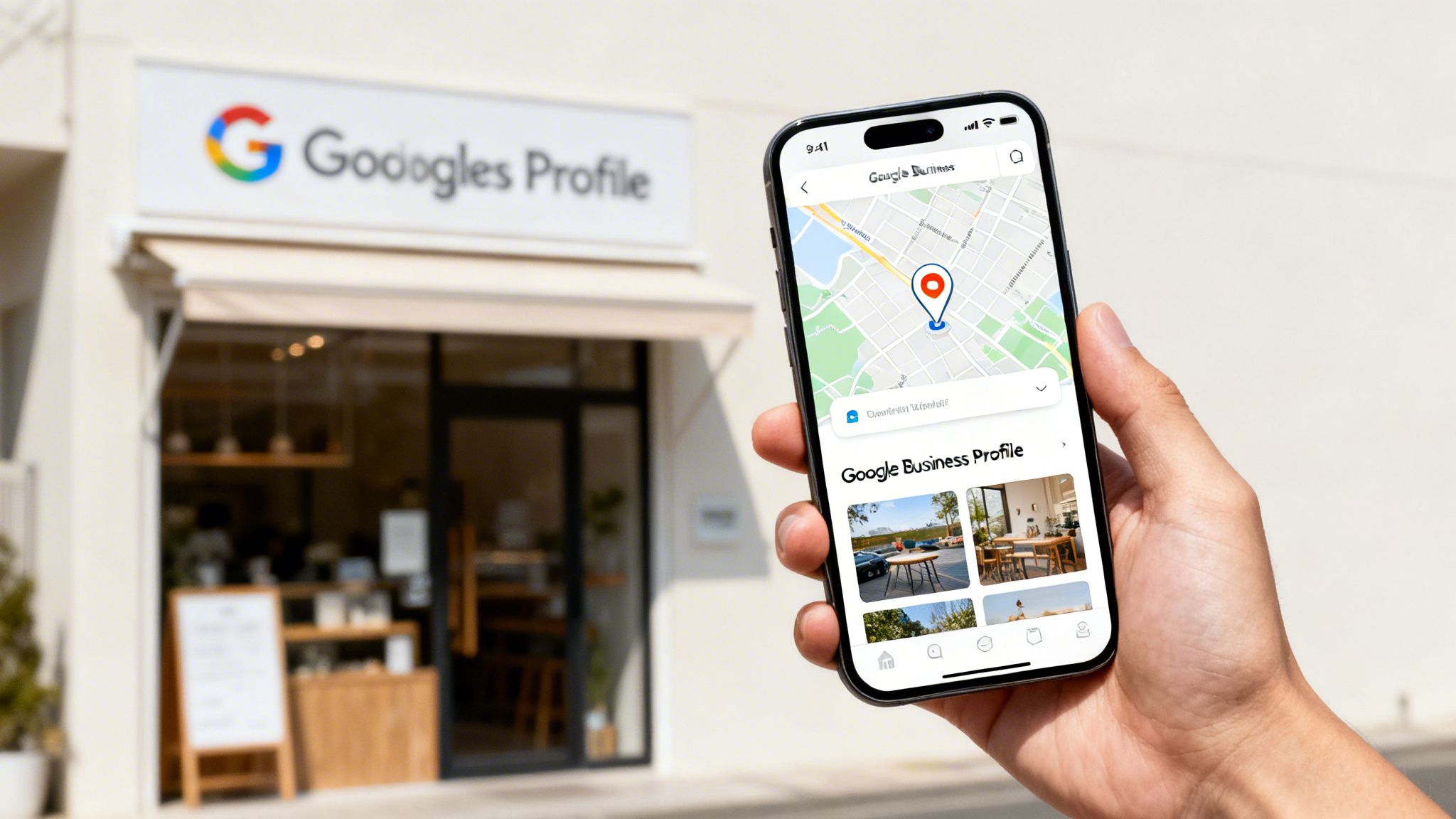
Your journey into real, effective online marketing starts with one incredibly powerful asset: your Google Business Profile (GBP). This is so much more than a simple listing in a directory. It’s your digital shopfront, your virtual front door. For a huge number of local customers, it will be the very first—and sometimes only—interaction they have with your business online.
Think about your own behaviour. When you need a service, you probably pull out your phone and search. Those businesses that pop up in Google Maps, complete with photos, reviews, and opening hours? They’re all powered by their Google Business Profiles. Right there, that's where the battle for local customers is won or lost.
Optimising Your Google Business Profile
Just having a GBP is the first step, but an optimised one is a magnet for customers who are ready to spend money. This means going way beyond just your name and address. It’s about methodically filling out every single section with rich, relevant, and local information that tells both Google and your potential clients that you are the best possible answer to their search.
Let’s look at how this plays out in the real world:
- A Cotswolds wedding venue doesn't just upload random photos. They create specific albums for “outdoor ceremonies,” “marquee receptions,” and “bridal suites,” helping engaged couples find them visually.
- A Manchester construction firm uses GBP Posts every week to show off finished jobs. They’ll feature before-and-after photos of a loft conversion in Didsbury or a kitchen extension in Chorlton.
- A local Bristol-based caterer makes sure their services list is packed with detail, like “corporate event catering,” “private party buffets,” and “vegan wedding menus.”
These small details are everything. They change your profile from a static, boring listing into a dynamic portfolio that answers a customer's questions before they even have to ask them.
The Power of Local Keyword Research
Working hand-in-hand with your GBP is the need to understand the exact words and phrases your customers are using. This is the whole point of local keyword research. You're not trying to show up for massive, general terms; you're zeroing in on the specific, location-based phrases that signal someone is ready to take action.
The goal isn't just to find customers; it's to be found by customers who are already looking for you. Effective local keyword research is the bridge between a customer's urgent need and your business's solution.
So, instead of a broad term like "builder," you target "extension builder in North London." Instead of "photographer," you aim for "newborn photographer near Bath." These incredibly specific searches convert at a much higher rate because the user's intent is crystal clear. They need something specific, in a specific place, right now.
For any service-based business, this precision is what it's all about. The data shows that local SEO is absolutely vital for UK small businesses. Google Search and Maps consistently drive more genuine customer enquiries than broad social media campaigns ever could. When a customer is actively hunting for a solution, a sharp local marketing strategy ensures you're the one they find.
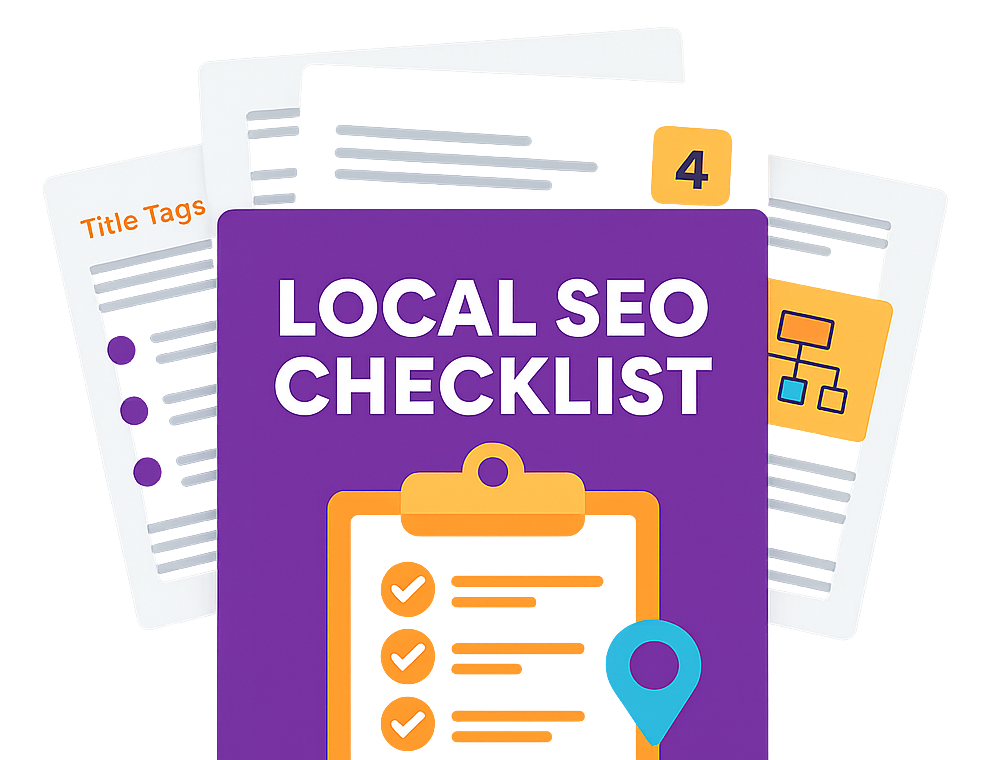
This foundation—a fully optimised GBP and a clear list of your local keywords—is the bedrock for every other tactic in this playbook. For a much deeper dive, our comprehensive local SEO checklist will walk you through every critical step.
GBP Optimization Checklist The Five-Minute Wins
Many business owners think optimising their profile is a long, drawn-out job, but some of the most powerful tasks can be knocked out in minutes. This quick checklist covers the high-impact wins you can sort in the time it takes to make a cup of tea.
| Optimization Task | Impact on Ranking & Clicks | Time to Complete |
|---|---|---|
| Verify Opening Hours | High – Prevents lost customers from incorrect times. | 1 minute |
| Add 5 New Photos | High – Increases engagement and user trust significantly. | 3-5 minutes |
| Answer a Q&A | Medium – Shows active management and provides key info. | 2 minutes |
| Create a GBP Post | Medium – Signals activity to Google and informs customers. | 5 minutes |
| Update Service List | High – Helps you rank for specific service-related searches. | 4-5 minutes |
By nailing these foundational elements first, you make sure your business is visible and compelling at the exact moment a local customer needs you. This isn't about guesswork; it’s about building a solid digital presence that works for you 24/7.
Turning Your Website Into a Local Authority
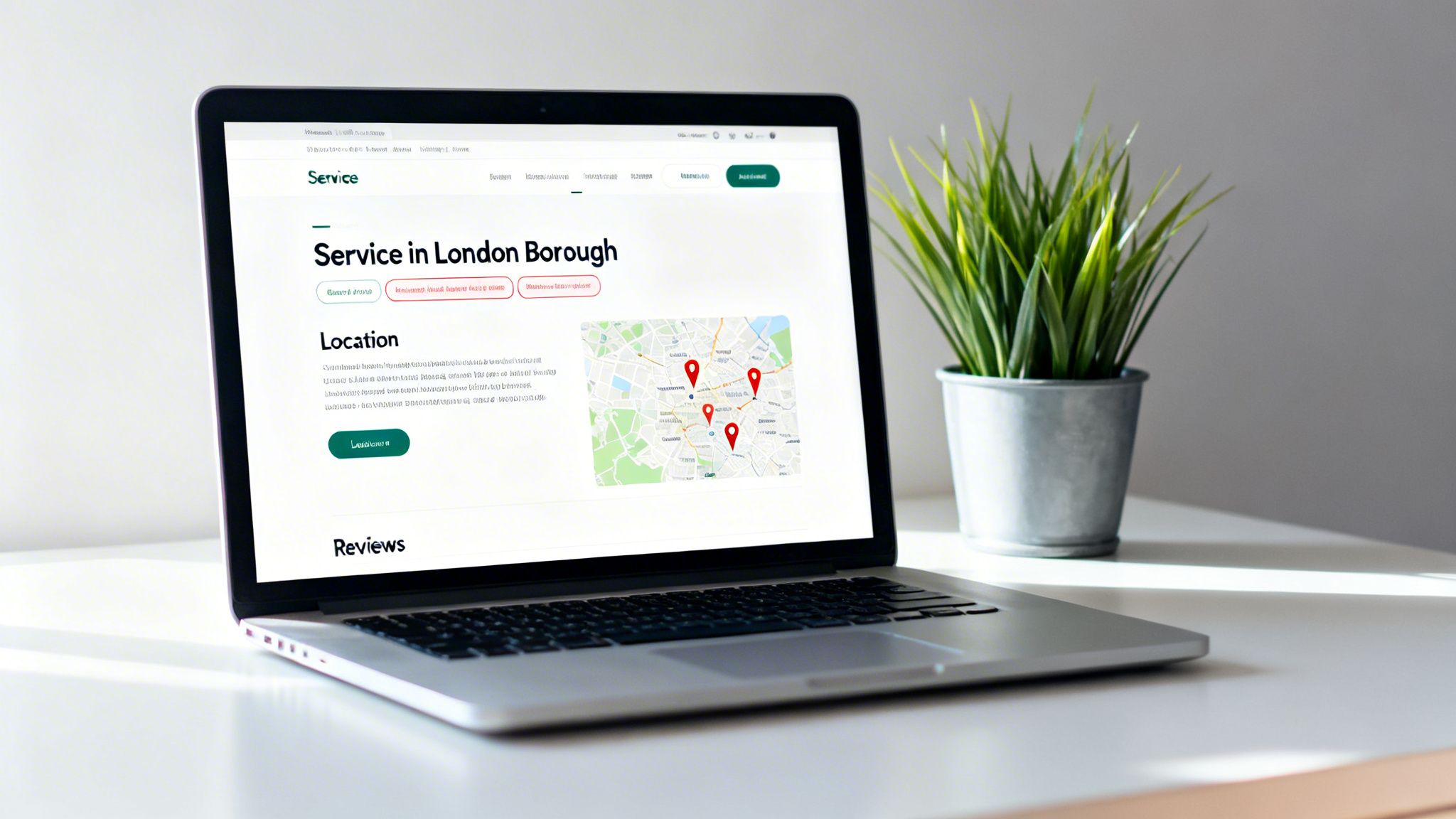
While your Google Business Profile might be the digital front door, your website is the main event. This is the space you have total control over, where you can break free from Google's character limits and truly prove your expertise. It's where you convert all that hard-earned visibility into real business, turning curious searchers into paying customers.
The aim isn't just to have a website; it’s to make it an essential resource for your local audience. This means shifting it from a simple online brochure into a powerhouse of local authority that answers questions, proves your skill, and builds unshakable trust. This transformation is the linchpin of effective online marketing for any local business.
Creating Location-Specific Service Pages
If you serve multiple towns, boroughs, or even specific postcodes, creating dedicated pages for each key area is an absolute game-changer. These aren’t just lazy copies of your main service page with the town name swapped out. They have to be unique, valuable pages that signal your deep connection to that specific community.
Think about a roofing company based in Manchester. A single "roofing services" page just won't cut it. They should be building out distinct pages like:
- Roof Repairs in Didsbury: This page could showcase testimonials from happy Didsbury clients, feature photos of a job completed near Fletcher Moss Park, and even discuss common roofing issues found in the area’s classic Victorian housing stock.
- New Roofs in Altrincham: Here, they could highlight a modern roofing project on a new build, mention their collaboration with local Altrincham architects, and talk about navigating local planning permissions.
This approach does two crucial things. First, it gives Google hyper-relevant pages to rank for searches like "roofer didsbury." Second, it speaks directly to a potential customer from that area, telling them, "We don't just work here; we get it."
Weaving Local Keywords Into Your Content
Once you have your location pages sorted, the next layer is to infuse your entire site with local flavour. This isn't about awkwardly jamming "plumber in bath" into every paragraph. It's about naturally referencing the world your customers actually live in.
Your website content should sound like you're having a conversation with a neighbour, not a search engine. Authenticity builds trust, and local references are a powerful signal of that authenticity.
Talk about local landmarks, mention community events, or reference well-known streets. An interior designer in London could pen a blog post titled "Maximising Light in a Shoreditch Warehouse Conversion." A wedding photographer might create a gallery showcasing a beautiful ceremony at a specific local venue. For more on this tactic, our guide on SEO for photographers offers some great strategies that are easily adapted for other creative and local service businesses.
This kind of hyper-local content confirms to both users and search engines that you are genuinely part of the community you claim to serve.
Go Beyond Generic Blog Posts
Your blog is one of the most powerful tools you have for building authority. Instead of writing bland, generic posts, focus on content that proves your expertise within a local context. This strategy not only demonstrates your skill but also builds a fantastic portfolio of locally-relevant content that attracts your ideal clients.
Here are a few practical content ideas that really deliver:
- Case Studies: Walk through a challenging project you nailed. A landscaper could document the transformation of a small, overlooked garden in a specific Cambridge suburb into a beautiful, functional space.
- Local Guides: A family law solicitor could write a piece on "Navigating Child Arrangements Through the Bristol Family Court," offering genuine local insight that a generic article could never match.
- Project Spotlights: A construction firm might feature a "behind-the-scenes" look at a major renovation on a well-known local commercial building, complete with photos and interviews with the team.
Content like this is incredibly valuable to your target audience because it’s specific, tangible, and directly relevant to their lives. By consistently producing it, your website becomes the definitive source for your niche in your area—the very definition of a local authority.
Earning Trust and Building Your Reputation
For a local business, your reputation isn't just a part of your brand; it is your brand. It's the currency of trust that turns a one-time customer into a regular and a casual observer into a vocal supporter. Building that reputation online is one of the most powerful things you can do.
This isn't about just hoping for good reviews. It’s about building a system to encourage feedback, actively manage your online image, and forge community ties that tell both Google and potential customers that you're the real deal.
Mastering Your Online Reviews
A constant flow of new, positive reviews is arguably the most powerful signal of a thriving local business. We all do it—before trying a new cafe or hiring a plumber, we check the reviews. They have a direct and massive impact on whether someone picks up the phone or clicks to your competitor.
The first job is to remove every ounce of friction from the review process. Make it ridiculously easy for happy customers to say something nice.
- Create a direct review link. Your Google Business Profile lets you generate a short URL that takes people straight to the review box. No hunting, no fuss.
- Time your request perfectly. The absolute best time to ask is right after you’ve done a great job or had a fantastic interaction. Send a quick email or text with your link while the positive experience is still top of mind.
- Use QR codes in person. For any brick-and-mortar business, a simple QR code at the till or on a business card can prompt customers to leave a review right there and then.
Your online reputation is being built with or without your input. By actively managing it, you get to steer the conversation and turn every piece of customer feedback into a marketing opportunity.
You absolutely have to reply to every review, good or bad. Thanking someone for positive feedback makes them feel appreciated and shows prospects you’re engaged. And how you handle a negative review is just as important—it’s a public demonstration of your integrity.
Responding to Critical Feedback
Getting a bad review can feel like a punch to the gut. It’s personal. But your response has to be anything but. A calm, professional reply can often turn an unhappy customer around and shows everyone else you take service seriously.
Don’t get into a public argument. Instead, follow a simple process:
- Acknowledge and thank them. Start by thanking them for taking the time to provide feedback, even if it stings.
- Apologise and show you understand. A simple, "We're very sorry to hear your experience didn't meet your expectations," shows empathy.
- Take the conversation offline. The most crucial step. Provide a direct email or phone number and invite them to discuss it privately. This shows a genuine desire to fix the problem, not just manage your image.
This approach stops a small fire from becoming a public inferno and often turns a bad situation into a showcase of excellent customer service.
Building Local Links and Authority
Beyond customer reviews, Google is always looking for other clues that you're a legitimate, respected fixture in the local community. This is where local link building comes into play. Think of a link from another trusted local website as a digital vote of confidence in your business.
This isn’t about some complex, technical witchcraft. It’s about real-world community engagement that just happens to have brilliant online benefits. You can earn these valuable local links by:
- Sponsoring a local kids' football team or a charity fun run. This almost always gets you a link from their website's sponsors page.
- Joining your local Chamber of Commerce. Most chambers have an online member directory, which provides a high-quality, geographically relevant link back to your site.
- Pitching a story to a local blogger or newspaper. If you have a genuinely interesting angle—a big anniversary, a unique new service, a charity drive—reach out and tell them about it.
Every one of these actions strengthens your local roots while simultaneously building a backlink profile that screams "trusted local authority" to Google. To see how your profile currently stacks up, our free Google Business Profile audit tool can give you some incredibly useful insights.
Using Paid Ads to Accelerate Local Growth
Your organic marketing is a long-term investment, but sometimes you just need the phone to ring now. Paid advertising is the accelerator pedal for your local marketing, giving you a way to generate immediate, predictable traffic and leads. It’s all about putting your business right in front of customers the very moment they need your services, making sure you’re a top contender, not just a name they might stumble across.
This isn't about throwing your budget at a huge national campaign. The real power of platforms like Google and Meta lies in their surgical targeting. For a local business, this is everything. You can reach customers within a few miles of your door and stop wasting money on people who were never going to walk through it anyway.
Choosing the Right Platform for Your Business
Where you put your ad spend is just as important as how much you spend. Different platforms cater to completely different mindsets. A customer frantically searching on Google for an emergency plumber is in a totally different headspace to someone casually scrolling through their Instagram feed.
For most local businesses, the main choice is between Google Ads and social media ads, usually through Meta’s platforms.
- Google Ads: This is your go-to for capturing customers with high intent. When someone searches for "MOT near me" or "solicitor in Leeds," they have an immediate problem to solve. Being at the very top of those results is invaluable.
- Meta Ads (Facebook & Instagram): These platforms are fantastic for building local awareness and reaching specific types of people. You can target users based on their location, interests, age, and even recent life events, which is perfect for a visual business like a new cafe, a boutique shop, or a local event.
The real magic happens when you nail the right ad format for your service. For instance, Google's Local Service Ads (LSAs) have been a game-changer for tradespeople and home service providers. These ads appear right at the top of the search results, showcasing your reviews and a "Google Guaranteed" badge that builds instant trust.
Paid ads give you the power to bypass the queue. While your organic SEO builds a long-term foundation, a well-run ad campaign puts you at the front of the line for customers who are ready to buy today.
For businesses looking for expert help to get their paid ad campaigns firing on all cylinders, engaging a Google Ads consultant can ensure your budget is put to the best possible use right from day one.
Crafting Ad Copy That Speaks to Locals
Your ad copy has to do more than just announce what you do; it needs to connect with the local community. It should sound less like a corporate sales pitch and more like a solid recommendation from a neighbour. Use language that speaks to local problems and highlights your connection to the area.
So instead of a bland "High-Quality Building Services," try something like, "Expert Loft Conversions for Victorian Terraces in South London." The second option is specific, targets a common housing type in the area, and feels instantly more relevant to a local homeowner.
This local-first thinking applies just as much to social media. While social media ad spend is projected to hit nearly $277 billion globally in 2025, the real power for UK small businesses is in blending paid social with local SEO. British users spend a huge amount of time on platforms like YouTube, and it's the geo-targeted posts that feel authentic and build local authority that actually turn views into enquiries. You can discover more insights about how social media fuels business growth on gambitpartners.co.uk.
Designing Landing Pages That Convert
Getting the click is only half the job. Where you send that traffic is arguably even more important. A classic mistake is to send all your paid traffic straight to your general homepage. This forces the user to go hunting for what they need, and frankly, most won't bother.
Instead, every ad campaign should point to a dedicated landing page that has been built for a single purpose: conversion.
A high-converting landing page must have:
- A Clear, Compelling Headline: It must match the promise you made in your ad.
- Minimal Distractions: Get rid of the main website navigation and any other links that could tempt the user to wander off.
- A Prominent Call-to-Action (CTA): Your phone number and contact form should be impossible to miss.
- Social Proof: Plaster your best reviews, testimonials, and any industry accreditations on the page to build immediate trust.
By funnelling your paid clicks to a focused, optimised landing page, you dramatically increase the odds of that click turning into a phone call, a form submission, or a new customer. This is how you run profitable ad campaigns that fuel rapid, measurable growth for your business.
Your First 12 Months: A Practical Action Plan
All the strategy in the world is useless if you don't know where to start. This is your roadmap for turning all the theory we've covered into a tangible, month-by-month plan. It's designed to stop you from feeling overwhelmed and instead focus your energy on the tasks that will deliver real, sequential results.
Think of this as a blueprint for building a predictable marketing machine. We’ve broken your first year down into three distinct phases, each one building on the last: laying the foundation, driving growth, and finally, establishing authority.
Months 1-3: The Foundation Phase
The first 90 days are all about getting the absolute essentials right. This isn’t the time for flashy campaigns; it’s about building the solid base that all your future growth will depend on. Get this part right, and everything that follows becomes significantly easier and more effective.
Your entire focus here is on visibility and making sure you’re ready to convert interest into business.
- Google Business Profile (GBP) Overhaul: This is non-negotiable. You need to complete every single field, from services and products to attributes and the Q&A section. Get at least 20 high-quality, geotagged photos uploaded.
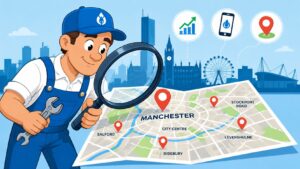
- Launch Core Location & Service Pages: Create at least three hyper-localised service pages for your most profitable offerings. A plumber in Manchester, for example, could create pages for "Boiler Repair in Didsbury" and "Emergency Plumber in Chorlton."
- Systemise Your Reviews: Set up a simple process to ask every happy customer for a review. All you need is a direct review link and a basic email template to send out after the job is done.
By the end of this phase, you should have a professional, compelling presence on Google that is primed to turn searchers into leads. The goal is simple: when someone finds you, they have every reason to take the next step. To see how to measure your return on these activities, our self-storage ROI calculator for SEO breaks down principles that apply to any local service business.
Months 4-9: The Growth Phase
With your foundation secure, it's time to actively expand your reach and start building some real momentum. This phase is about shifting from a passive online presence to an active one, where you begin to proactively attract new customers and cement your local reputation.
The focus now moves to creating content and targeted outreach. During these months, you should start seeing a tangible increase in website traffic and inbound enquiries.
Your local content isn't just about SEO; it's your digital portfolio. It proves your expertise and demonstrates your connection to the community, building the trust that search rankings alone cannot.
Here’s what to concentrate on:
- Consistent Local Content: Publish two pieces of locally-focused content per month. This could be a blog post detailing a recent project in a specific neighbourhood or a case study of a happy client.
- Local Link Building: Secure your first two high-quality local links. This could come from sponsoring a local charity fun run or joining your town's Chamber of Commerce.
- Launch Your First Paid Ad Campaign: Start a small, hyper-targeted Google Ads campaign. Focus it on your most valuable service and a tight geographical area to drive immediate, qualified leads.
This timeline shows you the key milestones for getting a local ad campaign off the ground.
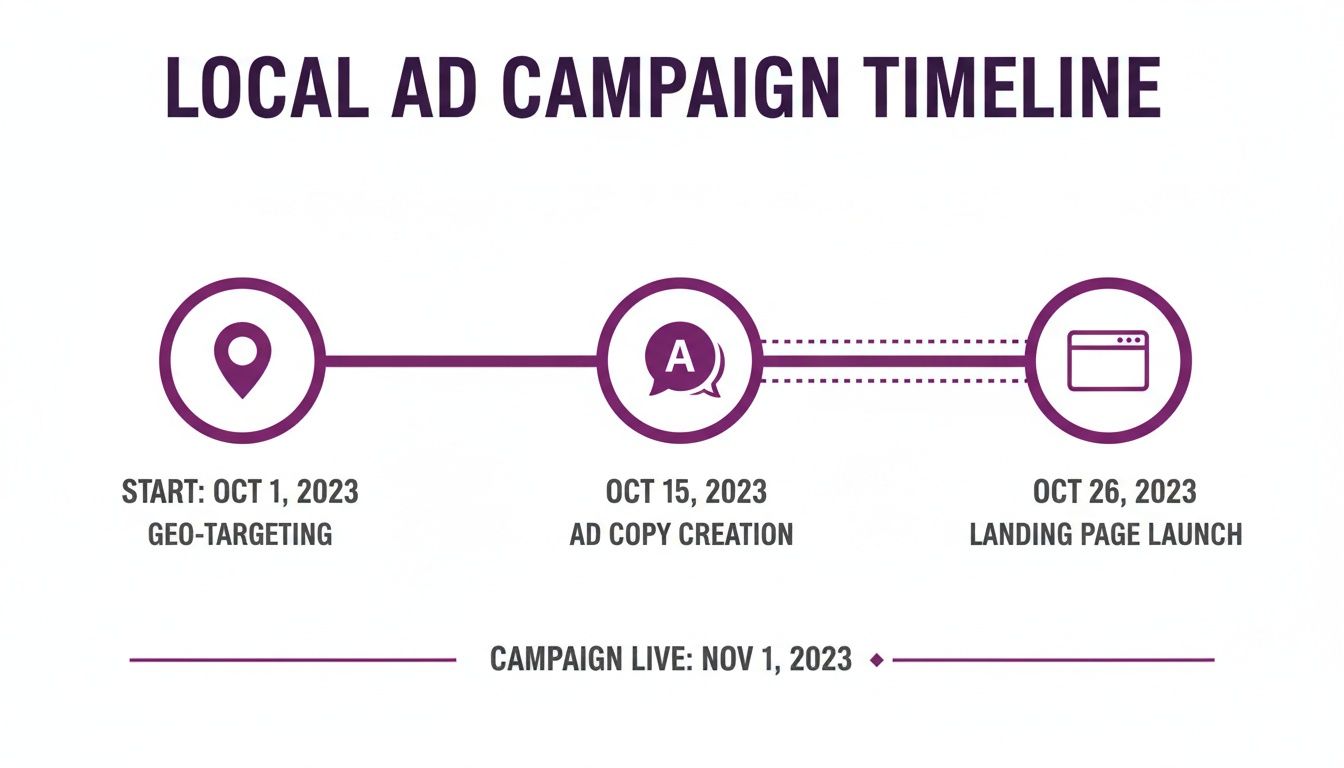
As you can see, a successful campaign needs careful planning, from precise geo-targeting and compelling ad copy right through to a dedicated landing page ready for launch.
Months 10-12: The Authority Phase
In the final quarter of the year, your focus shifts to establishing true market leadership. You have a solid foundation and consistent growth; now it's about becoming the go-to name in your niche and local area. This is where your marketing efforts really start to compound, creating a powerful moat around your business.
The key activities for this authority-building phase are:
- Public Relations & Media Outreach: Get your business mentioned in a local press outlet or featured on a popular local blog.
- Scale What's Working: Dive into your analytics from the past year. Double down on the marketing channels and content topics that have delivered the best return on investment.
- Launch a Retargeting Campaign: Use paid ads to stay in front of people who have previously visited your website but didn't convert, gently bringing them back into your orbit.
Local Marketing Action Plan and KPI Tracker
To help you stay on track, this table maps out the entire 12-month journey. It connects the key activities in each phase to the main KPIs you should be watching to gauge your success. Think of it as your single source of truth for the year ahead.
| Phase (Timeline) | Key Activities | Primary KPIs to Track |
|---|---|---|
| Foundation (Months 1-3) | GBP optimisation, local keyword research, on-page SEO, create 3+ core location pages. | GBP impressions & clicks, local pack rankings for core terms, website conversion rate. |
| Growth (Months 4-9) | Publish 2x local content pieces per month, start review generation, launch first local paid ad campaign. | Organic website traffic growth, new customer reviews, cost per lead (from paid ads). |
| Authority (Months 10-12) | Begin local link building (e.g., sponsorships), secure local PR, scale successful campaigns. | Number of referring domains, branded search volume, overall marketing ROI. |
Following this structured plan ensures your marketing spend isn't just an expense, but a direct investment in predictable, sustainable success. With the right tactics and a bit of patience, you can turn your local business into the obvious choice for customers in your area. For more actionable steps, these 10 Powerful Local Business Marketing Strategies for Growth offer some fantastic ideas.
Your Local Marketing Questions Answered
When you're running a local business, the world of online marketing can feel like it's full of more questions than answers. To cut through the noise, we’re tackling the most common hurdles we see business owners face, with straight, no-nonsense advice to help you make smarter decisions.
How Much Should a Small Business Budget for Online Marketing?
There’s no magic number here. But a sensible starting point for a UK small business is somewhere between 7-10% of your annual revenue.
If you’re just starting out, this could be a few hundred pounds a month focused squarely on the essentials, like getting your Google Business Profile in order and basic local SEO. For a more established business gunning for aggressive growth, this might scale up to several thousand.
The real key is to obsess over your return on investment. An investment of £1,000 per month that brings in £5,000 of new business isn't a cost—it's a growth engine. Start with a modest, consistent budget, track your results religiously, and then double down on the channels that are actually delivering.
How Long Does Local SEO Take to Show Results?
Local SEO is a marathon, not a sprint. While you can get some quick wins from optimising your Google Business Profile that bring in more calls within a few weeks, hitting those stable, high-ranking positions for competitive terms typically takes 4-6 months.
Your timeline will always depend on your industry, your location, and how consistently you put in the work.
The first three months are all about building your foundation—getting your website and GBP properly optimised. You can learn more about how a well-optimised profile impacts your business by downloading a free GBP report. By months 4-6, you should see a tangible lift in traffic and leads, with sustained top rankings often being locked in from the six-month mark onwards.
Think of your social media profiles as rented land; the platform owner can change the rules at any time, impacting your reach. Your website is the only digital asset you truly own and control.
Do I Need a Website if I Have a Strong Social Media Presence?
Yes. Absolutely. Your website is your digital flagship store—the central hub where you tell your story, showcase your work, and capture leads in a space you completely control. It’s where you convert all that social media interest into actual business.
Use your social channels to build a community and grab attention, but always, always drive that audience back to your website. It’s the single most important piece of digital real estate you will ever own and the true home of your brand online.
At Bare Digital, we help local businesses across the UK turn their online presence into predictable growth. If you’re ready to dominate local search and see measurable results, find out how we can help at https://www.bare-digital.com.