
A homeowner hears dripping after a storm, grabs a phone, and searches for “emergency roof repair near me”. That search happens in a market with serious weight behind it. The UK construction industry generated £144.5 billion in annual output in 2023, with specialised construction activities accounting for £79.7 billion, and roofing businesses usually sit inside that specialised segment. For local roofing companies, that means Google visibility isn't a vanity metric. It decides who gets called when the problem feels urgent.
This isn't a roundup of the “best” firms. It's an SEO teardown of live websites from real UK roofers and the tactics they use well. If you want a wider view of positioning, offers, and channels beyond search, Roofing company marketing gives useful context. Here, the focus is what helps local roofing companies turn searches into enquiries.
1. Morgan Asphalte
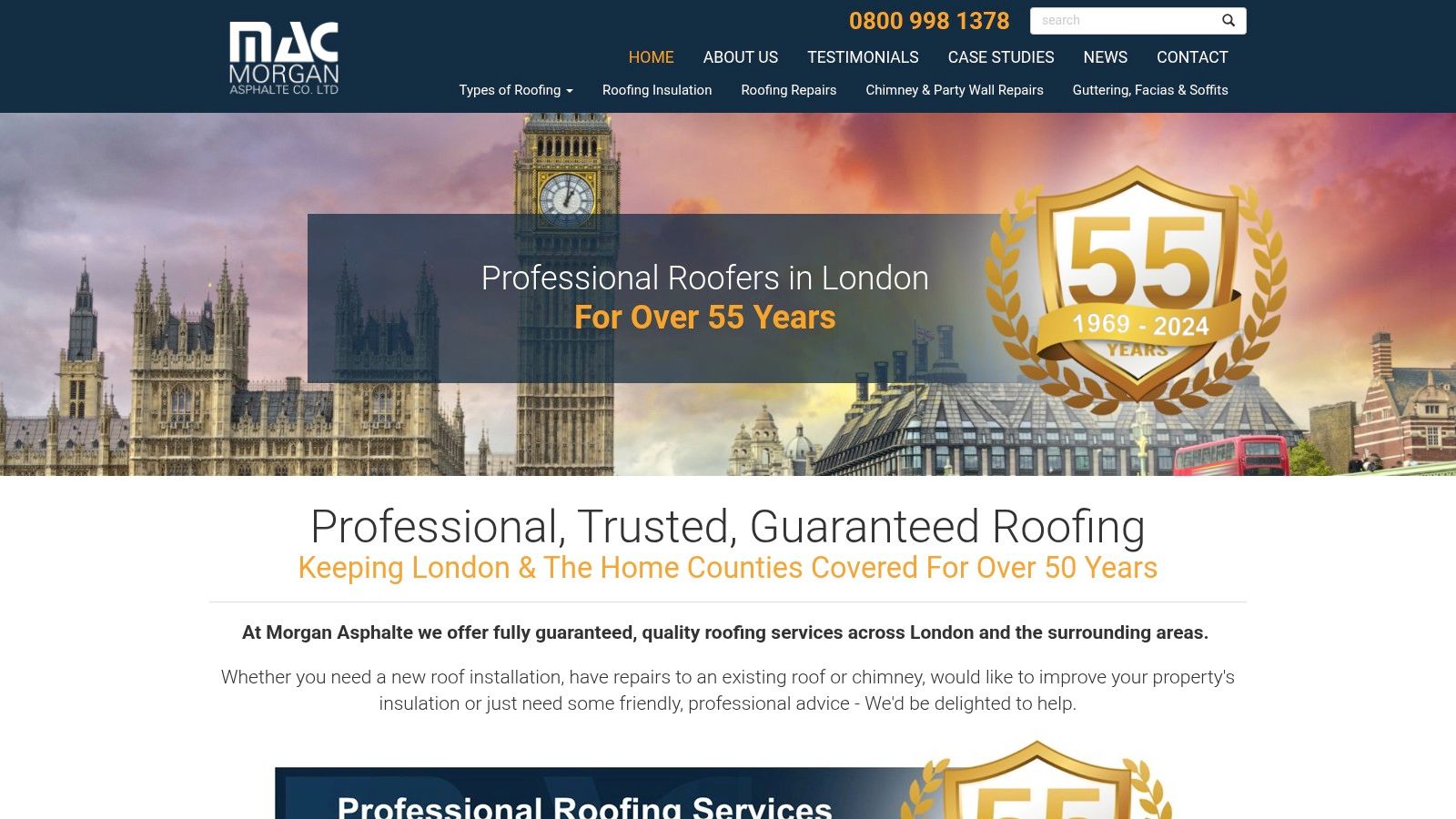
Morgan Asphalte is a useful first case study because the site understands what anxious buyers look for in roofing. They want proof before they want persuasion.
The homepage gives them that quickly. Long trading history, specialist roofing expertise, and recognisable accreditations appear early, which lowers hesitation for homeowners and commercial clients comparing several local roofing companies at once. A roofer that has been operating since 1969 is making a different claim from a site that only says “trusted experts”. One is specific. One is wallpaper.
Why this works in search
Roofing is a trust-heavy service. People are committing serious money, inviting a contractor onto the property, and hoping the job will still hold up after the next winter. Your website has to answer the quiet questions buyers ask before they call: How long have you been around? Are you qualified? Are you insured? Do you handle this type of roof?
Morgan Asphalte does that well. The site presents London specialism, broad system coverage, and compliance signals around safety and supervision. That combination helps both users and search engines understand the business clearly.
The demand is there, too. The Office for National Statistics reports 24.7 million dwellings in England in 2023, which is plenty of roof stock for strong local lead generation if your site looks credible and locally relevant.
Practical rule: Put years trading, trade memberships, insurance details, and what happens before a quote near the top of the page. Proof should not be hidden three scrolls down.
A few details are worth copying:
- History used as evidence: Specific trading history reduces doubt faster than generic trust language.
- Accreditations with context: NFRC membership, safety standards, and specialist credentials give visitors something they can check.
- Survey-led quoting: Some buyers prefer instant prices, but roofing often needs inspection first. That can reduce time-wasting enquiries and improve lead quality.
There is a trade-off. A site positioned like this will attract fewer price shoppers. It will usually attract better-fit enquiries, especially from clients who care about workmanship, compliance, and accountability.
One more point gets missed by plenty of roofers. If your website says “established and accredited” but your Google profile has weak reviews, missing categories, or old photos, the trust story falls apart before the visit starts. A quick Google Business Profile audit tool for local service businesses helps spot those gaps.
2. AJ Lucas Roofing
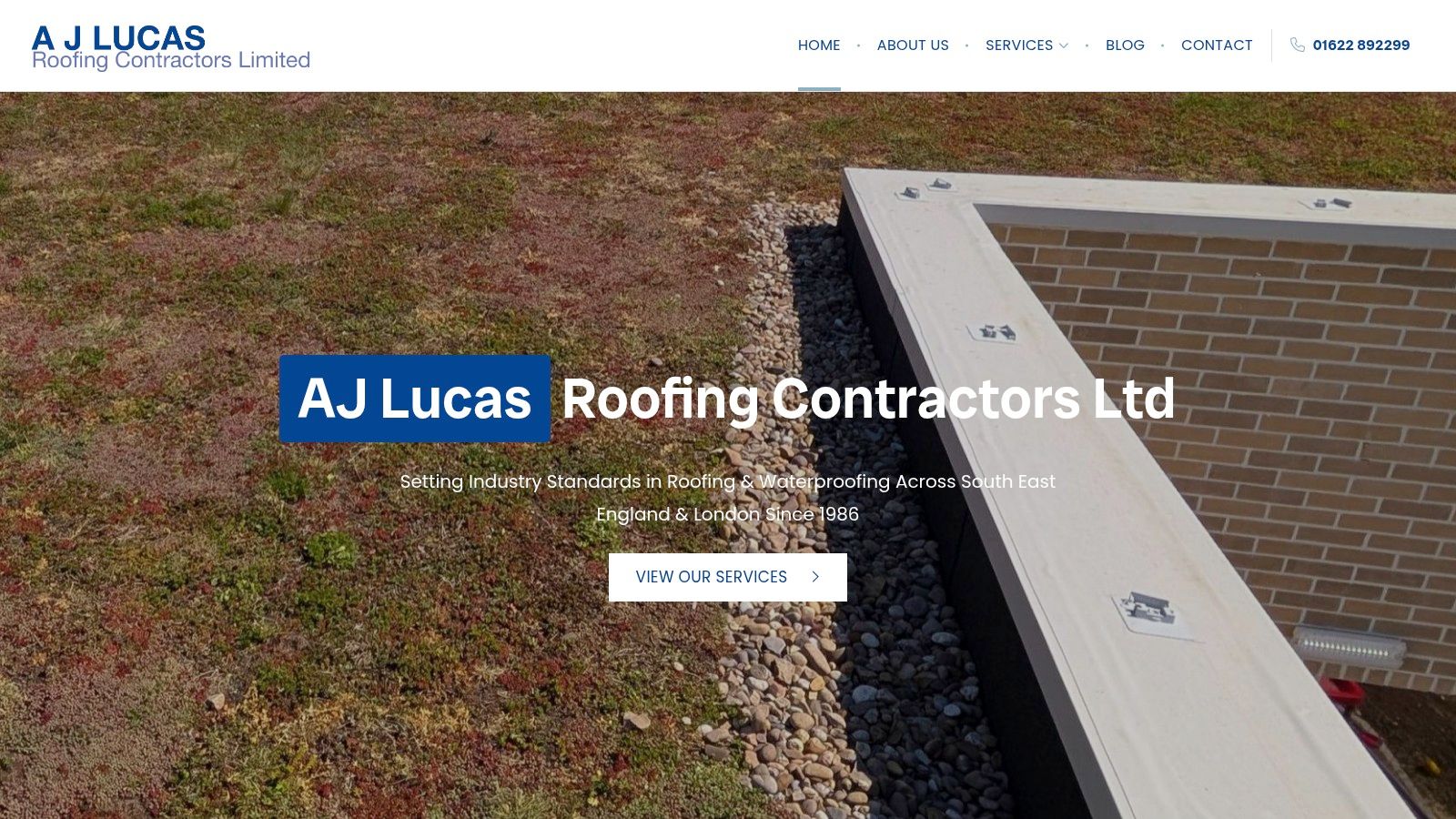
AJ Lucas Roofing doesn't sell “roofing” as one big generic service. It sells systems. That distinction matters.
If you handle flat roofs, green roofs, liquid systems, hot-melt, and felt, putting everything on one page is like opening a builder's merchant and labelling every aisle “materials”. Users don't search that way. They search for the thing they think they need.
The SEO lesson from specialist pages
AJ Lucas leans into flat and low-slope expertise with dedicated service coverage. That improves relevance for searches tied to specific systems and buyer intent. Someone looking for green roof installation is much further along than someone typing “roofer”.
This approach also helps local roofing companies avoid competing only on broad terms that are crowded and vague. Specialist service pages let you win smaller, better searches. In practice, those often convert more cleanly because the visitor already knows the category.
- System-specific targeting: Separate pages for single-ply, liquid, or sedum roofs create clearer keyword relevance.
- Manufacturer alignment: Named approvals from brands like IKO, Bauder, Alumasc, and Soprema strengthen credibility.
- Commercial fit: The site signals capacity for larger and more technical work, not only domestic repairs.
A lot of construction sites get this wrong. They create a services page with a long list and no depth. That rarely ranks well because each topic gets only a sentence or two. Good SEO for construction companies usually starts by splitting broad services into pages that match how buyers search.
A specialist page should answer three things fast: what the system is, when it's appropriate, and why your firm is qualified to install or repair it.
The limitation is also part of the positioning. AJ Lucas looks strongest for flat roofing and the South East or London. If you mainly want heritage pitched roof work in Yorkshire, this model is less directly transferable. The principle is still useful. Own a niche instead of describing yourself as “all roofing services for everyone”.
3. JTC Roofing
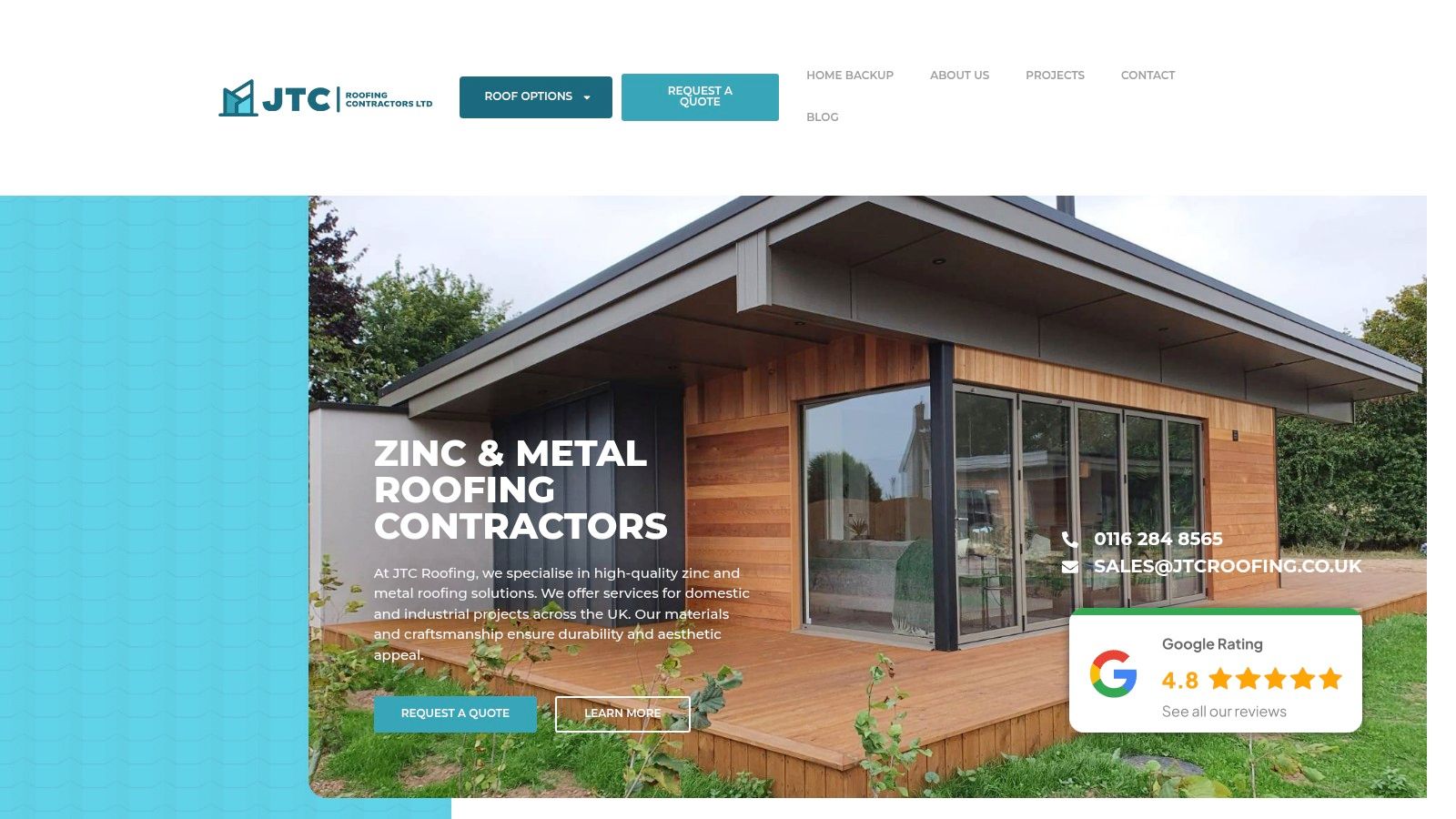
JTC Roofing takes a different route. The site pushes metal roofing and cladding expertise hard, especially zinc, lead, and heritage-related work. That's smart because premium material searches usually come from better-informed buyers.
This is one of the clearest examples of how local roofing companies can raise lead quality without chasing more traffic. You don't always need more clicks. You need clicks from people with the right scope, expectations, and budget.
Premium focus filters the wrong enquiries
Material-led positioning works because it changes the conversation before the phone rings. A homeowner who wants a cheap patch repair may bounce. An architect, developer, or owner of a period property may stay because the site speaks their language.
JTC also benefits from nationwide capability and sector visibility around metal and heritage systems. That gives the business room to target high-intent searches tied to specialist materials rather than broad “roofer near me” terms only.
A few practical takeaways:
- Lead with the material: If zinc, lead, copper, or heritage slate is your strength, make it obvious in headings and copy.
- Explain fit and finish: Premium buyers want details on appearance, lifespan considerations, and repair complexity.
- Use the right proof: Registers, heritage experience, and project photography matter more than generic claims.
For roofing firms that sell specialist fixings or accessories alongside installation, even related buyer journeys matter. Someone researching specification-level products may also need broader system advice, which is why niche product intent can complement service content. A useful example of that intent sits in searches around shop truss head roofing screws.
The downside is obvious. Metal roofing isn't the natural fit for very small routine repairs, and it will price above more conventional options. But from an SEO perspective, that's not a weakness. It's qualification. Good sites don't try to convert everyone.
4. Hodgson Sayers Ltd
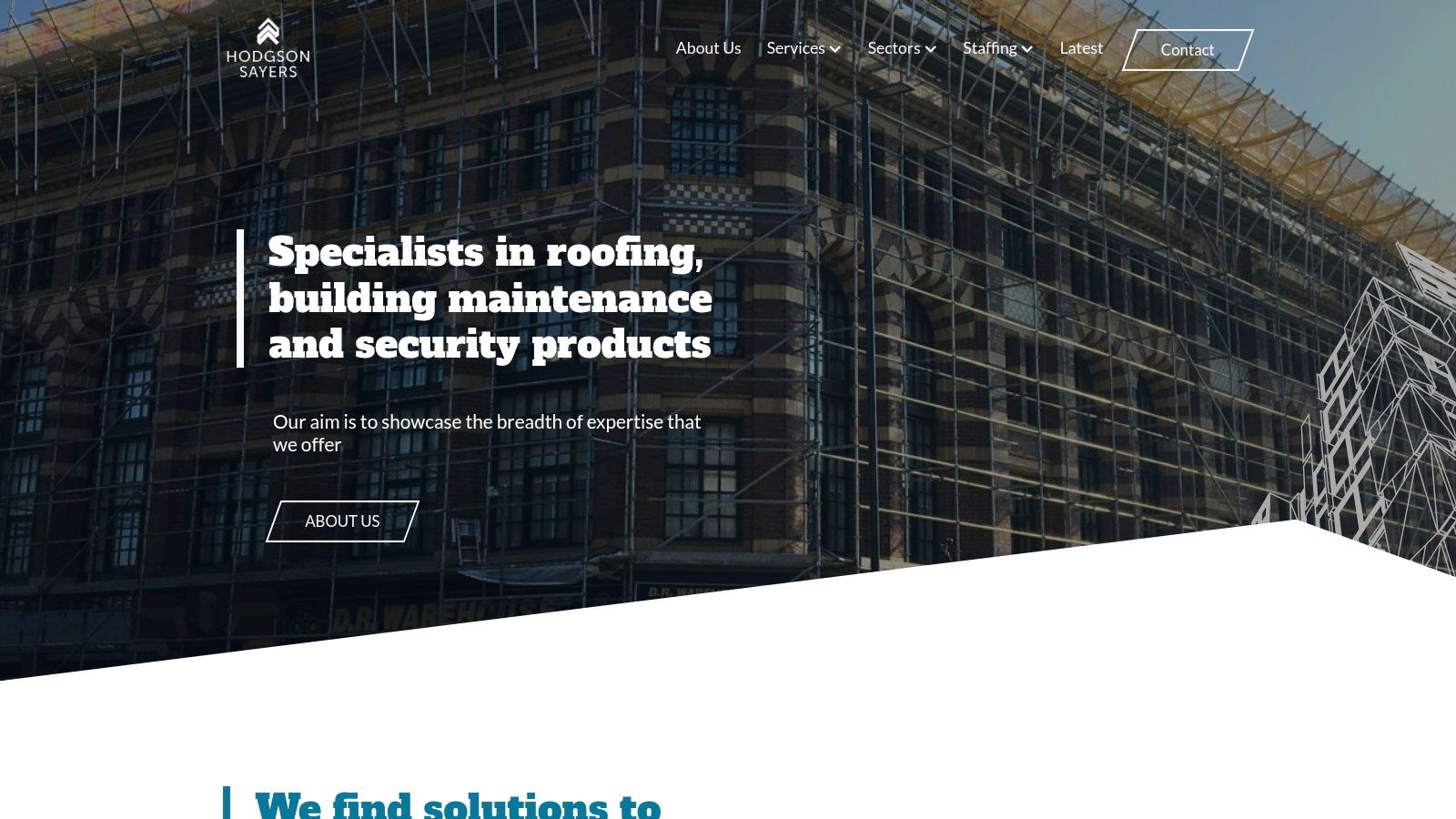
Hodgson Sayers Ltd shows what many roofing websites miss. A gallery isn't enough. Serious buyers want evidence in context.
This site works because it supports larger public-sector, healthcare, education, and heritage credentials with documented project material. That format does more than impress a visitor. It creates indexable pages around locations, building types, materials, and technical challenges.
Why case studies beat photo galleries
A gallery says, “We've done work.” A case study says, “We solved this kind of problem on this kind of building.” Those are very different trust signals.
For B2B and public-sector roofing, case studies also give procurement teams something closer to due diligence. If your page mentions governance, HSE processes, heritage constraints, or programme coordination, you're matching the language buyers use internally.
What works best: write case studies around the job, not around your company. Start with the building, problem, constraints, and solution.
This matters in a dense trades environment where standing out is hard. A broader benchmark shows the UK construction sector has roughly 3,000 people per 100,000 population employed in construction-related occupations. It's only a proxy rather than a roofing-specific figure, but the practical point is simple. In crowded local and regional markets, detailed proof beats generic claims.
Strong case study pages usually include:
- Location context: Town, region, or notable site type.
- Scope clarity: Repair, restoration, overlay, replacement, or multi-trade package.
- Technical detail: Materials used, heritage constraints, access issues, sequencing, and compliance.
The trade-off is that this style won't be ideal for every roofer. If you mostly handle domestic leak repairs, full-length formal case studies can feel heavy. But even then, short project pages are still useful. They give Google more to rank and buyers more to trust.
5. R. L. Lovatt Ltd
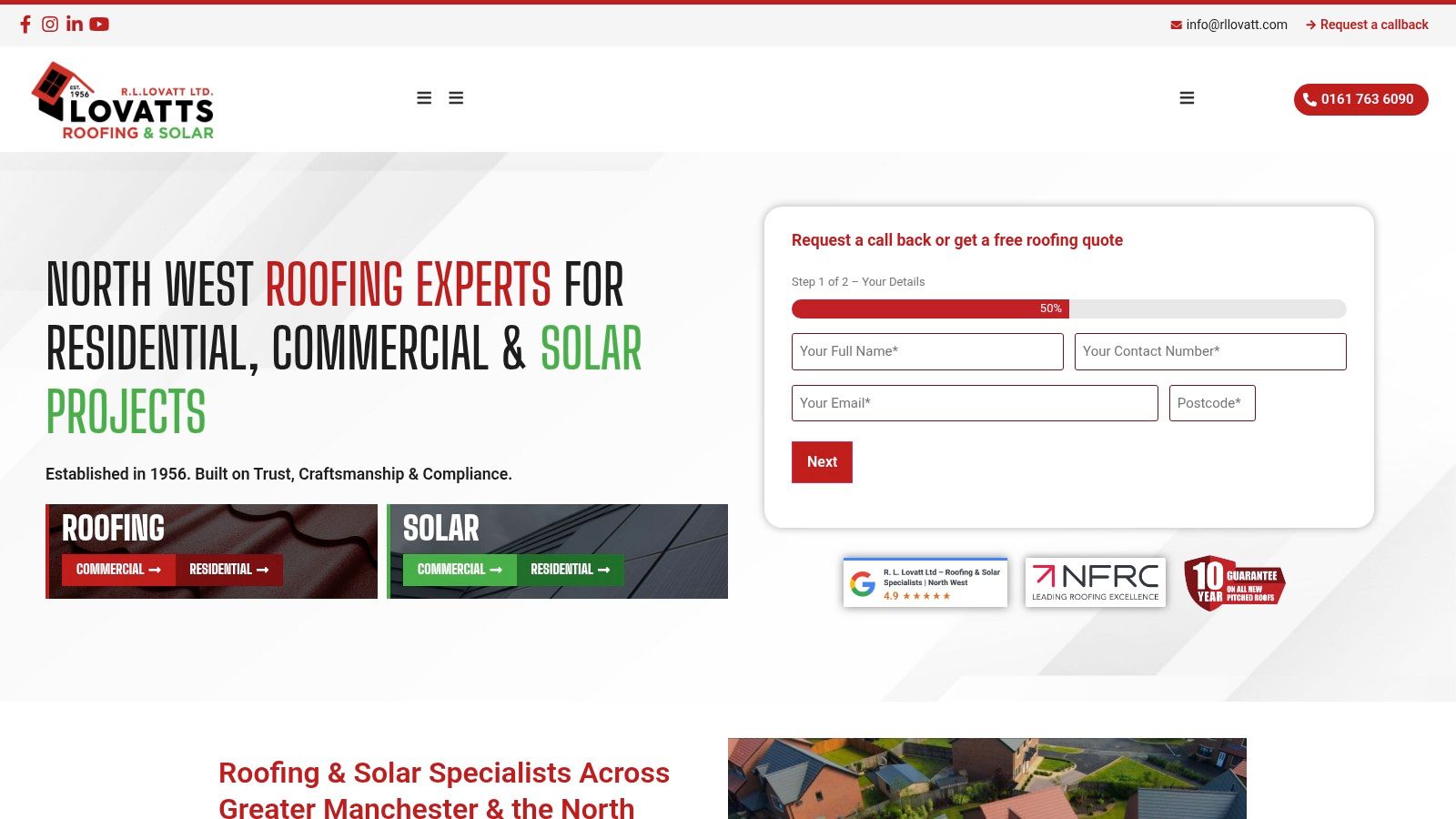
A roofer based in the North West wants more work in Bolton, Wigan, and Stockport. So the site adds those towns to the footer, maybe drops them onto a contact page, and waits for rankings to appear. They usually do not.
R. L. Lovatt Ltd shows the better play. The site has a clear regional identity, and that gives it a stronger base for town-specific visibility. For a roofing firm that serves a defined patch, that matters more than trying to look bigger than you are.
Hyper-local pages done properly
Google needs more than a list of place names. It needs a page that makes sense for that place. Homeowners do too. A good town page explains the actual work you do there, the roof types you see, and the problems that come up locally, whether that is ageing slate, recurring chimney issues, exposed ridges, or flat roof wear on extensions and garages.
That demand is steady. English housing stock needs ongoing repair and maintenance, and roofing problems often trigger a fast local search once the issue is visible. The practical point is simple. Search intent narrows quickly by town.
R. L. Lovatt has the right service spread for this approach, including slating, tiling, stone slating, flat roofing, and lead work. That gives the business room to build pages around genuine combinations of service and location, instead of publishing near-duplicate town pages with the same copy repeated.
A town page starts to work when it includes details like these:
- Local housing context: Victorian terraces, post-war semis, newer estates, rural properties, or stone-built homes.
- Material relevance: Slate, tile, stone slate, leadwork, or felt systems that show up in that area.
- Service intent: Roof repairs, full replacements, flat roof work, or specialist heritage-related jobs.
- Area proof: Nearby projects, local testimonials, crew availability, or photos that clearly match the place.
There is a trade-off. Hyper-local pages take time to do properly, and thin versions can weaken the site if every page says roughly the same thing. If you are building them now, use a practical local SEO checklist for service-area businesses so each page earns its place.
The rule I give roofing firms is blunt. Only create pages for towns you can serve confidently, quote profitably, and support with real proof. Owning your patch beats pretending to cover half the country.
6. J. Shearer Roofing Ltd
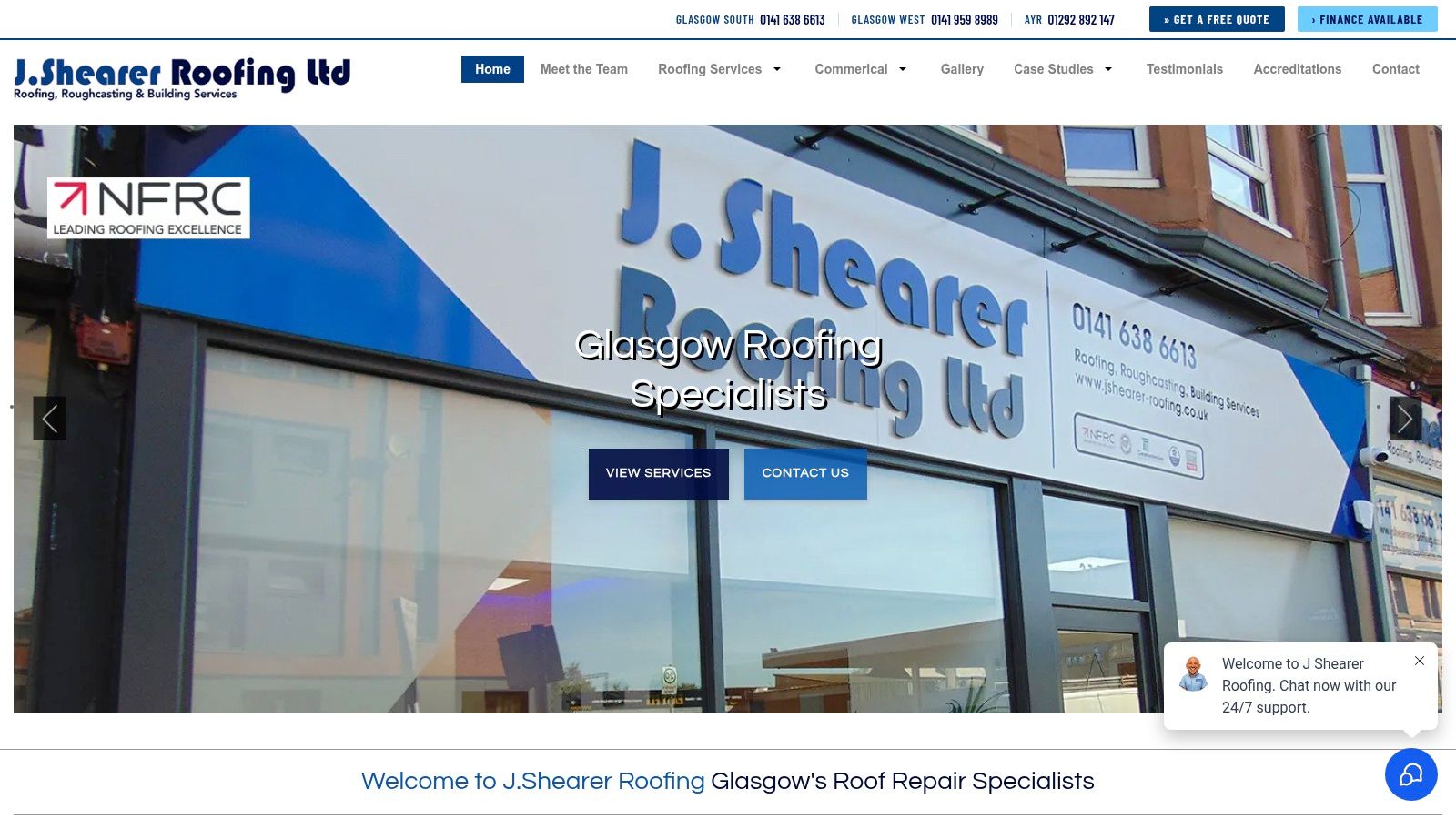
J. Shearer Roofing Ltd understands urgency. The site highlights repairs, storm damage response, diagnostics, and homeowner guidance. That's exactly where many roofing businesses leave money on the table.
When someone has a leak, they often don't start with “new roof contractor”. They start with the problem. Wet patch. Missing slate. Wind damage. Water ingress near chimney. If your site only talks about your company and not the customer's immediate problem, you miss those searches.
Answer the panic search first
This strategy works because it aligns with how people behave under pressure. They look for fast answers and quick reassurance before they commit to a quote request.
The angle matters even more now because weather risk is reshaping roofing demand. The Met Office reported that the UK's warmest year on record was 2022, and wider discussion around retrofit and resilience keeps pushing homeowners to think beyond short-term patching. Content around storm damage, roof leaks, insulation implications, and repair-versus-replacement decisions fits that reality better than generic sales copy.
Don't write “Our team delivers outstanding roofing solutions”. Write “What to do if your roof is leaking after heavy rain” and make the phone number visible on that page.
Useful content types for this approach include:
- Immediate-action guides: What to do after a leak or storm damage.
- Symptom pages: Causes of slipped slates, damp around chimneys, or recurring flat roof pooling.
- Regional emergency pages: Terms like emergency roof repair plus city or region.
For Scottish firms, traditional slate knowledge is a strong differentiator too. J. Shearer uses that well by connecting local housing stock with practical repair advice.
If you need external support building regional intent pages and urgent-service content, SEO services in Cambridge show the sort of local search framework that can be adapted across UK service areas.
7. Precision Roofing
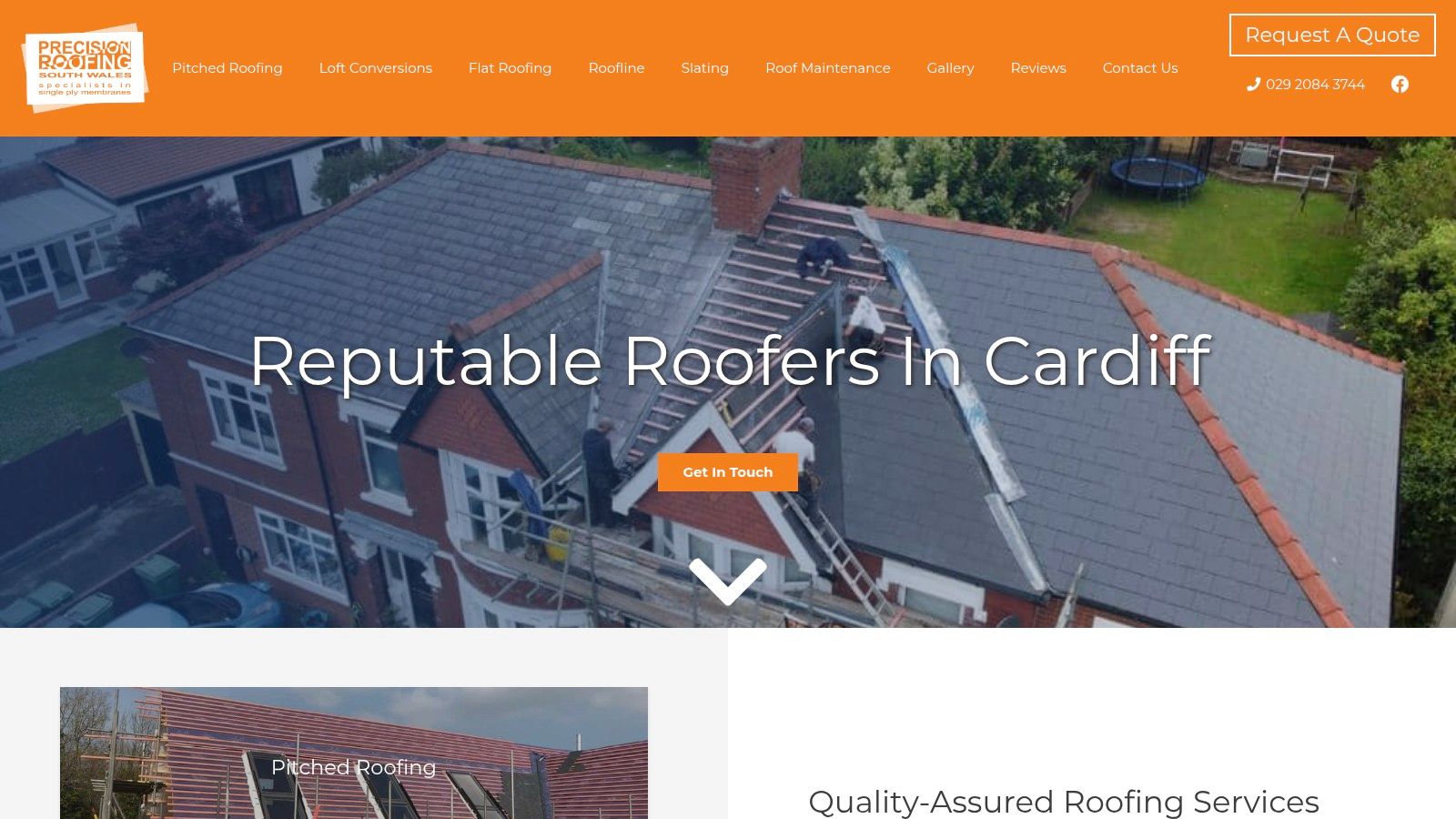
Precision Roofing gets the conversion layer right. Free quotes. No call-out fees. Guarantees. Clear service coverage. That matters because rankings alone don't pay for vans, labour, and materials.
I've seen plenty of local roofing companies improve rankings and still feel disappointed because the website makes contacting them harder than it should. On mobile, every extra second of hesitation costs leads.
Conversion signals that support SEO
Google's local systems don't reward a confusing site experience forever. If users click, hesitate, and leave, your visibility won't hold as well as a site that makes action easy.
Precision Roofing does a few simple things that many firms overcomplicate. It presents homeowner-friendly offers, gives people a reason to enquire now, and supports that with manufacturer partnerships and practical guidance.
What to copy from this style:
- Make contact frictionless: Click-to-call numbers should be obvious on mobile.
- Use offer language carefully: “Free quote” and “no call-out fee” reduce initial resistance.
- Repeat the CTA: Every major page should offer the same next step, whether that's a survey, quote, or callback.
A clean CTA setup also helps when legitimacy is top of mind. Home improvement buyers worry about deposits, paperwork, and rogue traders. Citizens Advice says it receives around 900,000 contacts a year from people facing problems with rogue traders, so local roofing companies should make legitimacy cues easy to find, not hidden on an about page.
If your site gets traffic but too few enquiries, start with the basics and contact Bare Digital for a second opinion on conversion gaps.
The trade-off with this style is that it's regional. Precision Roofing is a strong South Wales example, but the lesson travels well. Make the next step obvious and low-friction.
7-Point Comparison: Local Roofing Companies
| Company | Implementation Complexity 🔄 | Resource Requirements ⚡ | Expected Outcomes 📊 | Ideal Use Cases 💡 | Key Advantages ⭐ |
|---|---|---|---|---|---|
| 1. Morgan Asphalte: Build Trust with History & Accreditation | 🔄 Low–Moderate, document history & accreditations clearly | ⚡ Low, staff time to assemble credentials, update pages | 📊 Increased trust, lower bounce, improved local E‑E‑A‑T signals | 💡 Established contractors aiming to improve trust and local rankings | ⭐ Strong credibility from long history and safety accreditations |
| 2. AJ Lucas Roofing: Dominate Niches with Specialist Service Pages | 🔄 Moderate, build and maintain multiple focused service pages | ⚡ Medium, content, technical pages, manufacturer pages | 📊 Better ranking for high‑intent niche keywords and higher-value leads | 💡 Specialists in flat/green roofs targeting targeted search queries | ⭐ Niche authority with manufacturer approvals and long guarantees |
| 3. JTC Roofing: Attract High-Value Clients with Premium Material Focus | 🔄 Moderate, create material‑focused content and portfolios | ⚡ Medium, portfolio assets, technical content, nationwide ops | 📊 Attract architects/developers and higher‑margin projects | 💡 Premium/heritage metal roofing specialists seeking lucrative clients | ⭐ Deep specialism in metal systems and heritage repairs |
| 4. Hodgson Sayers Ltd: Win Contracts with In-Depth Case Studies | 🔄 High, produce detailed case studies with permissions and data | ⚡ High, time, documentation, client approvals and media | 📊 Strong B2B credibility and improved visibility for commercial tenders | 💡 Firms bidding for public‑sector or heritage projects | ⭐ Demonstrable governance, multi‑trade capability and heritage record |
| 5. R. L. Lovatt Ltd: Own Your Patch with Hyper-Local Landing Pages | 🔄 Moderate, create many localized pages with unique content | ⚡ Medium, local testimonials, landmarks, page maintenance | 📊 Better local pack visibility and more geo‑specific leads | 💡 Regional operators targeting town‑level search and map pack | ⭐ Regional authority with trade memberships and varied services |
| 6. J. Shearer Roofing Ltd: Capture Urgent Leads with Problem-Solving Content | 🔄 Low, produce FAQs, emergency guides and quick posts | ⚡ Low, content creation and simple landing pages | 📊 Capture crisis searches and convert urgent inbound leads | 💡 Companies offering rapid storm/repair responses | ⭐ Effective at top‑of‑funnel capture for emergency work |
| 7. Precision Roofing: Convert Traffic with Clear Calls-to-Action | 🔄 Low, UX tweaks and consistent CTA placement | ⚡ Low, implement clickable numbers, CTA buttons, forms | 📊 Higher conversion rates and more contact requests from traffic | 💡 Local businesses focused on converting existing site visitors | ⭐ Clear CTAs, free quotes and easy mobile contact increase conversions |
Turn These SEO Lessons into Local Leads
The common thread across these sites isn't flashy design. It's clarity. The firms that perform well in search usually make one thing obvious fast: why a customer should trust them for this specific roofing problem in this specific area.
Morgan Asphalte uses history and accreditations to reduce doubt. AJ Lucas builds topical depth with specialist service pages. JTC Roofing filters for better-fit leads by owning premium material expertise. Hodgson Sayers strengthens authority with real project evidence. R. L. Lovatt shows how to win town by town. J. Shearer captures urgent searches by answering problems first. Precision Roofing turns interest into action with clear CTAs.
This is an essential lesson for local roofing companies. SEO isn't one trick. It's alignment. Your pages need to match what buyers search, what they worry about, and what they need to see before they enquire. If your site reads like a generic brochure, it will struggle. If it behaves like a practical sales tool, it starts pulling its weight.
The commercial backdrop is there. Roofing sits inside a large construction economy, housing repair demand is ongoing, and weather-related urgency isn't going away. That means there's room to win, but only if your website proves relevance faster than the firms around you. For a broader playbook on turning attention into booked work, this home service lead generation strategy is a useful companion read.
Start with the biggest gaps. Check whether your service pages are too broad. Check whether your location pages are thin. Check whether your proof is vague. Check whether a mobile visitor can contact you in seconds. Small improvements in those areas often matter more than publishing another generic blog post.
If you want a practical starting point, Bare Digital offers a free SEO health check that shows where your visibility and conversion path are breaking down. For roofers competing in a crowded local market, that kind of diagnosis is usually more useful than another stack of abstract tips.
Bare Digital helps local roofing companies turn patchy Google visibility into steady enquiries. If you want sharper service pages, stronger location landing pages, a better Google Business Profile, and a site that converts more of the traffic you already earn, speak to Bare Digital.