
Online marketing is your secret weapon for pulling in customers right from your neighbourhood. It's all about making sure that when someone down the street needs what you offer, your business is the first one they find online—whether that's through a Google search, on social media, or anywhere else they're looking.
Build Your Local Foundation with Hyperlocal SEO
For any UK business with a local customer base, hyperlocal SEO isn't just a marketing tactic; it's the absolute bedrock of your online presence. This goes way beyond simply having a website. It’s about being strategically visible the exact moment a potential customer in your area starts searching. This is where your digital shopfront truly opens for business.
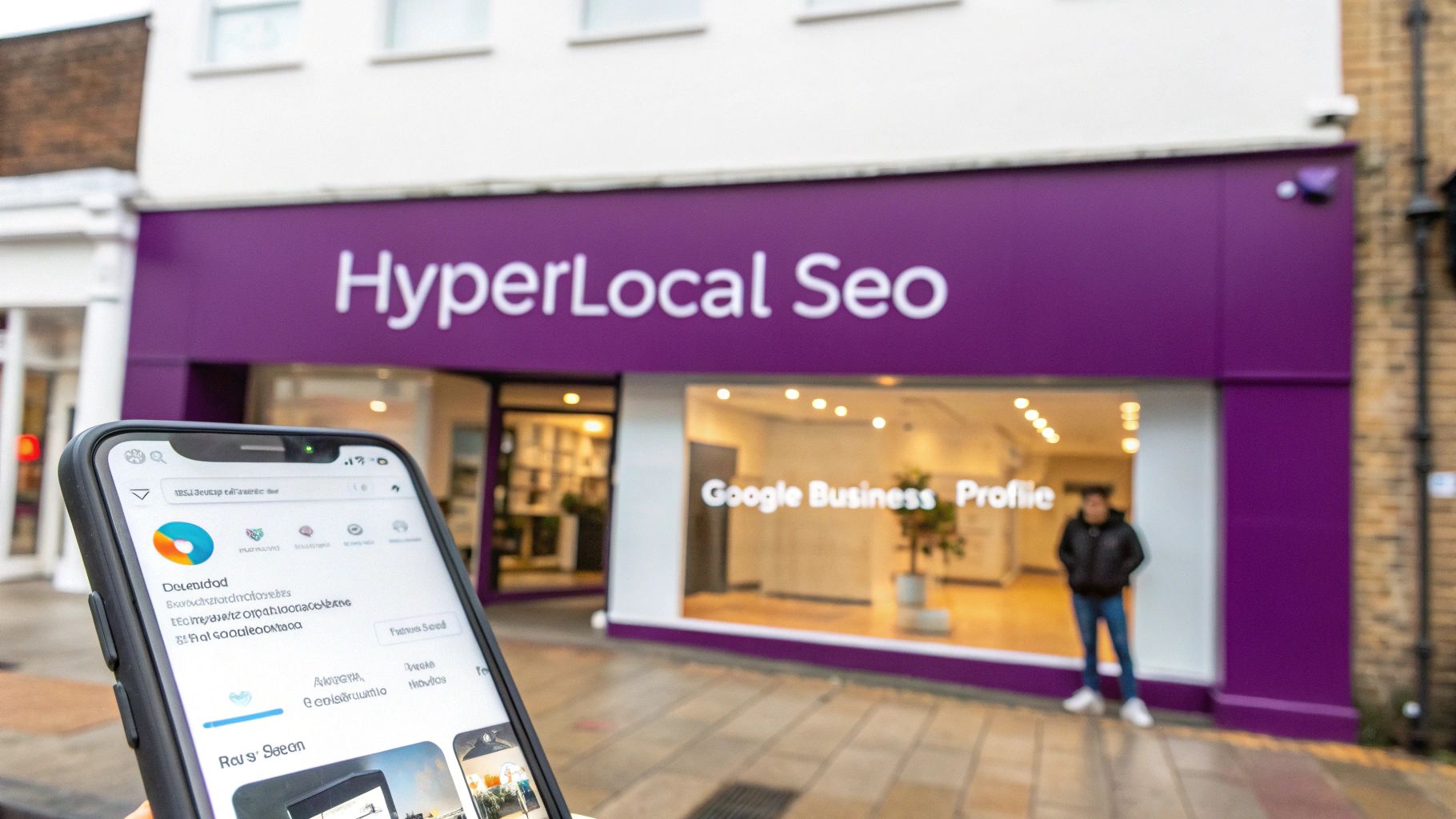
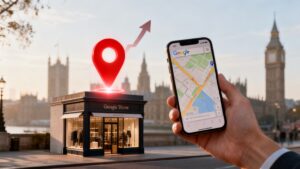
This screenshot from Google says it all. Your Business Profile is front and centre in local searches, putting your location, reviews, and contact info right where customers can see them.
Optimise Your Google Business Profile
If there’s one thing you need to get right in local SEO, it’s your Google Business Profile (GBP). This free tool is what gets you on Google Maps and into those valuable local search results. Think of a fully fleshed-out profile as a mini-website, giving customers all the crucial details at a glance.
A complete and accurate GBP sends massive trust signals to both Google and your customers. To get this right, nail these essentials:
- Fill Out Everything: Don't skip any sections. Services, products, accessibility info, business attributes—the more detail you give Google, the better it can match you to the right searches.
- Use Great Photos: Keep a steady stream of high-quality photos coming. Show off your premises, your team, your products, and your work in action. A profile with good photos can see a 35% increase in clicks through to the website.
- Leverage Google Posts: Use this feature to share updates, offers, and news. These posts show up directly in search results and are a brilliant way to catch someone's eye.
A well-tended Google Business Profile isn't just a static listing; it's a dynamic, interactive billboard. It signals to Google that you're an active, relevant, and trustworthy local business, which directly impacts how high you rank.
For a proper deep-dive, our guide on Google Business Profile optimisation will walk you through making the most of this powerhouse tool.
The Critical Role of NAP Consistency
In local SEO, consistency is everything. Your NAP—Name, Address, and Phone number—must be identical absolutely everywhere it appears online. That means your website, your GBP, and every single local directory.
Even tiny inconsistencies, like using "Ltd." on one site and "Limited" on another, can confuse search engines and water down your authority. It creates doubt about which information is correct, and that can really hurt your rankings.
Master Local Citations and Reviews
Beyond your GBP, you need to build local citations. These are simply mentions of your business on other websites, most often in local directories like Yell, Thomson Local, or industry-specific sites. Each consistent citation you get reinforces your location and proves your legitimacy to Google.
If your business operates from more than one spot, figuring out how to add multiple locations to Google Maps is essential. It ensures every one of your storefronts is easy to find and helps your hyperlocal SEO efforts work for all of them.
At the same time, you need to be actively managing your online reviews. Responding to both good and bad feedback shows you're engaged and builds trust within the community. Don't be shy about encouraging happy customers to leave a review—a steady flow of positive feedback is a massive signal to Google that you're a top local choice.
Engage Your Community with Local Social Media
It’s easy to get tunnel-vision on Google, but a huge part of marketing your local business happens where your customers actually hang out online. Social media isn't just a digital noticeboard to shout about your latest offer; think of it as your virtual town square. It’s the perfect place to build real relationships and become a recognised face in the local community.
The trick is to make your content feel less like marketing and more like a genuine conversation. This means shifting your mindset from purely selling to sharing, celebrating, and engaging with the people and places around you.
Weave Your Business into the Local Narrative
Authenticity is your superpower on social media. People connect with other people, not with faceless corporations. As a local business, you have a massive advantage here because you can share stories and updates that big national chains simply can’t.
So, what makes your area special, and how does your business fit into that picture?
- Collaborate with Your Neighbours: Team up with the bookshop next door or the florist across the road for a joint promotion. When you cross-promote, you introduce your business to their audience and strengthen the local independent scene at the same time.
- Celebrate Local Events: Is there a village fete, a weekend market, or a charity run coming up? Post about it, share photos, and show you’re getting involved. It shows you’re an active part of the community, not just a business in it.
- Showcase Customer Stories: With their permission, of course, share a photo or a kind comment from a happy customer. This kind of user-generated content is gold—it’s a powerful, real testimonial that resonates far more than any polished ad.
Platform-Specific Tactics for Local Impact
Not all social platforms are created equal, and each requires a slightly different game plan. For most local businesses, Facebook and Instagram are the best places to start, thanks to their visual nature and incredibly powerful local targeting tools.
To really maximise your visibility, you need to use the tools built into these platforms. For instance, when you post a picture of a new dish on Instagram, always geotag your business's location. It’s a tiny action, but it makes your post discoverable to anyone searching for content in your immediate area.
You should also get smart with local hashtags. Instead of a generic tag like #coffee, a cafe in Cambridge could get much more traction with #CambridgeEats or #CambridgeshireIndependents. These niche tags connect you with a smaller, but far more relevant and engaged, local audience.
Facebook Groups are one of the most underutilised tools for local businesses. Join and participate in local community groups (where the rules allow, of course). This lets you listen in on local conversations, offer helpful advice, and gently introduce your business without coming across as spammy.
Demystifying Paid Social Advertising
Paid social ads let you slice through the noise and put your message in front of a very specific local audience. The targeting options are so precise, you can make sure every penny of your budget is working hard. You can target users based on:
- Location: Show ads only to people within a 5-mile radius of your shop.
- Demographics: Target by age, gender, and other personal details.
- Interests: Reach people who have shown an interest in things related to your business.
What does this mean in practice? A local business could run a campaign for a special offer that is only seen by people within walking distance of its front door. This kind of targeting is a core part of any effective strategy for online marketing for local businesses.
The numbers back this up. Statistics show that 76% of small UK businesses use Facebook, and nearly 49% of UK shoppers make purchases influenced by what they see on social media. It’s clear there’s a direct line between a solid social presence and your bottom line.
Ultimately, a great social media presence is built on genuine interactions and providing real value. Do that, and you’ll naturally encourage the kind of positive word-of-mouth that builds a loyal customer base. Our guide on how to get more reviews has even more tactics for building that all-important social proof.
Drive Immediate Traffic with Local Paid Ads
SEO and organic growth are fantastic for the long game, but let's be honest: sometimes you just need the phone to ring now. This is where paid advertising comes in. It's one of the quickest and most direct ways to put your business in front of local customers who are ready to buy. Paid ads give you that instant visibility right when it counts.

We'll focus on the two heavy hitters for local businesses: Google Ads and paid social media campaigns. Both let you get incredibly precise with your budget, making sure every pound is spent reaching people who can actually become customers.
Mastering Google Ads for Local Intent
Think about it. When someone searches for "emergency plumber near me" or "best fish and chips in Bristol," they have an immediate problem to solve. Google Ads puts you right at the top of the page at that exact moment, ready to be the solution.
For a local business, the trick is to go beyond just bidding on keywords. You need to use the features Google built specifically for you. A solid local campaign really boils down to three things:
- Hyper-local Targeting: Set your campaigns to only show ads to people within a few miles of your shop or within specific postcodes. This is vital. It stops you from paying for clicks from people who are too far away to ever visit.
- Location Extensions: This brilliant feature automatically adds your address, a map, and the distance to your business right in the ad itself. It's a game-changer for mobile users who can get directions with a single tap.
- Call Extensions: Just as simple and just as powerful. This adds a clickable phone number to your ad. For any service business that relies on phone calls, this is non-negotiable. It makes it dead simple for a potential customer to get in touch.
Your keyword strategy is everything here. You have to think like a local. People don't just search for 'electrician'; they search for 'electrician in Hackney' or '24-hour electrician near me'. These longer, more specific phrases are usually cheaper to bid on and convert like crazy.
Getting the most from your ad spend means understanding how everything fits together. It's worth exploring different search engine marketing strategies to see how paid search complements your other marketing efforts.
Creating Targeted Facebook Ad Campaigns
While Google is great for capturing people who are already looking, platforms like Facebook are perfect for creating demand. You can introduce your business to a local audience that fits your ideal customer profile, even if they aren't actively searching for you.
Let's say you run a café in Manchester and you want to push a new lunchtime deal. With Facebook Ads, you could run a campaign targeting:
- Location: People who live or work within a 2-kilometre radius of your cafe.
- Interests: Users who've shown they're interested in things like "coffee," "local food," or who follow pages of other local restaurants.
- Behaviours: People whose online activity marks them out as "local foodies" or who often engage with nearby businesses.
That level of targeting is incredibly powerful and makes sure your promotion hits the right local audience. To really nail it, you need to understand the different types of Facebook advertising and which format works best for your goal. Whether it’s a simple boosted post or a more complex lead generation ad, you can get fantastic results on a modest budget—even starting with just £5 or £10 a day.
Create Content That Connects with Your Neighbourhood
Let’s be honest, powerful content isn't just for big national brands. For local businesses, it’s one of the sharpest tools in the shed. Good content lets you move beyond just selling your services and become the go-to expert in your area. This is exactly how you build a loyal following and turn one-off customers into people who rave about your business.
The aim here is to create content that’s genuinely valuable to your community. This simple shift positions you as a helpful resource, not just another business trying to make a sale. When you consistently offer useful information, you build trust and authority – two things you can't buy.
Go Beyond Your Service List
Your website should absolutely detail what you do, but your content marketing needs to cast a wider net. Think about the common questions, problems, and interests of your local customers that are related to what you do. That’s your content sweet spot.
A local garden centre, for example, could create far more buzz with a blog post on "The Best Plants for British Gardens" than with another generic service page. In the same way, a local accountancy firm could pull in new clients by publishing a helpful guide on "Tax Tips for Sole Traders in the UK."
This kind of content does two crucial things at once. It boosts your local SEO by targeting relevant, long-tail keywords that people in your area are actually searching for, and it builds a strong, authentic relationship with your community by being genuinely helpful.
For a deeper dive into crafting content that really works for local search, check out our guide on content marketing strategies for local SEO.
Ideas for Community-Focused Content
To get the ideas flowing, here are a few content angles that always seem to hit the mark with a local audience:
- Local Event Guides: Got a local festival, market, or charity event coming up? Create a blog post or social media series about it. It shows you’re invested in the community's culture.
- Neighbourhood Spotlights: Interview the owner of another local business you admire. This builds a sense of community and can open the door to some great cross-promotional opportunities.
- "How-To" Articles: Put together practical, step-by-step guides related to your field. A local decorator could write about "How to Perfectly Paint a Room," offering actionable advice that builds serious trust.
- Local History Pieces: Share interesting facts or stories about your town or a specific landmark. This kind of content connects your business to the shared identity of the neighbourhood.
Your Website Must Be Mobile-Ready
Look, creating brilliant content is only half the battle. People need to be able to actually read it without squinting and pinching their screens.
Mobile commerce now accounts for a staggering 60% of all e-commerce sales in the UK. This means a mobile-optimised website isn't a "nice-to-have" anymore—it's absolutely essential. If your site is a nightmare to use on a phone, you're slamming the door on a massive chunk of your potential customers.
What’s more, research shows that 75% of UK marketers feel digital marketing has helped build customer trust, a vital factor for any local business. A seamless mobile experience is a huge part of building that trust from the very first click.
Your First 90 Days: An Online Marketing Action Plan
https://www.youtube.com/embed/KcTI98JWLwE
Turning a solid strategy into day-to-day action is often the biggest hurdle. To help you cut through the noise, I’ve put together a straightforward plan to guide you through your first three months. Think of this as your roadmap, designed to take you from the initial setup phase to actively and confidently promoting your business online.
This 90-day plan is all about being practical and building on your progress. Each month has a clear theme, so your efforts stay focused instead of trying to tackle everything at once. It’s all about creating steady, measurable momentum.
The timeline below gives you a bird's-eye view of the journey, showing how the core focus evolves each month: first, getting your house in order, then building momentum, and finally, amplifying your reach.
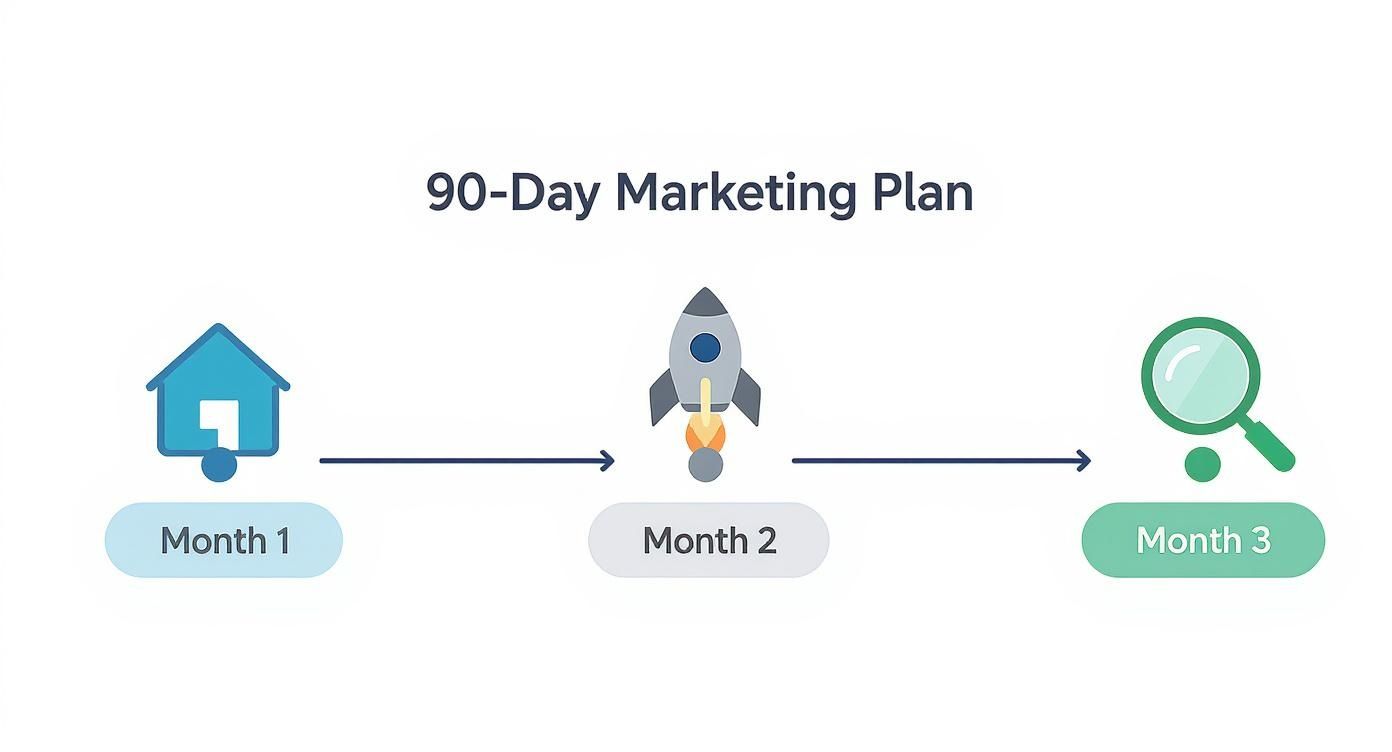
This visual guide makes it easy to see how the foundational work you do in the first month directly fuels the growth and analysis phases that come next.
Month 1: Get Your House in Order
The first 30 days are all about building a solid foundation. Before you even think about spending money on ads or churning out content, you need to make sure your core digital assets are properly set up and optimised. This is the groundwork that makes every future effort more effective.
Your primary focus should be on your most important local marketing tools. That means a complete, detail-rich Google Business Profile, a basic SEO check of your website to fix any glaring issues, and correctly branded social media channels.
Key activities for Month 1 include:
- Week 1-2: Google Business Profile Optimisation. Go through every single section of your profile and fill it out completely. Add high-quality photos, define your service area precisely, list all your services, and write a compelling business description.
- Week 3: Simple Website SEO Audit. Check that your website is mobile-friendly and loads quickly. Most importantly, ensure your NAP (Name, Address, Phone number) is 100% correct on your contact page and in the website footer.
- Week 4: Social Media Setup. Claim and set up profiles on one or two key platforms where your customers hang out (like Facebook or Instagram). Make sure the branding is consistent with your website and GBP.
Month 2: Build Momentum
With your foundations secure, the second month is all about building momentum. This is where you shift from setup to active promotion—you'll start creating content, engaging with customers, and even dipping your toes into paid advertising. Consistency is your main goal here.
You’ll kick off a regular content schedule, even if it’s just one blog post and a few social media updates per week. You'll also launch a small-scale ad campaign to start gathering data and actively encourage happy customers to leave you reviews.
This phase is critical. It’s where you start to see what actually resonates with your audience. Don't aim for perfection; aim for consistent activity and learning. The insights you gain now will shape your strategy for months to come.
Key activities for Month 2 involve:
- Week 5-6: Content Creation Kick-off. Write and publish your first two locally-focused blog posts. Create a simple content calendar for your social media posts and, most importantly, stick to it.
- Week 7: Launch a Small Ad Campaign. Set up a simple, locally targeted ad on Facebook or Google. Start with a tiny budget, maybe just £5-£10 per day, to test your messaging and see how your audience responds.
- Week 8: Actively Request Reviews. Implement a simple process for asking satisfied customers for reviews on Google. This could be a follow-up email with a direct link or a QR code on a receipt.
Month 3: Amplify Your Reach
The final month of this initial plan is all about amplifying what works and planning for the future. You’ve now got some real data to work with from your ads and content. It’s time to analyse that performance, double down on the tactics that are actually working, and get more proactive in your local online community.
This is the stage where you start refining your approach. Look at your ad metrics to see which copy or images performed best, then adjust your campaigns accordingly. You’ll also want to start engaging in local online spaces to build your reputation and plan your content for the next quarter based on everything you’ve learned. The goal is to move from reactive tasks to a proactive strategy, ensuring your online marketing efforts continue to grow.
Common Local Marketing Questions Answered
Stepping into online marketing can feel like you've suddenly got a million questions and no clear answers. To cut through the noise, I've rounded up some of the most common queries I hear from UK business owners, with straightforward advice to get you moving.
How Much Should a Local Business Spend on Marketing?
There’s no magic number here, but a good rule of thumb for most small UK businesses is to set aside 5% to 10% of your total revenue for marketing. The real trick is to be clever with where that money goes first.
Don't try to do everything at once. Start by focusing on the activities that will give you the biggest bang for your buck. That means getting your Google Business Profile fully dialled in (it’s free!) and then maybe dipping a toe into paid ads with a small, laser-focused local campaign on Google or Facebook. You could start with as little as £5–£10 a day just to test the waters and see what resonates.
The smartest way forward is to start small, track your return on investment like a hawk, and then double down on the channels that are actually bringing customers through your door. Don't just spend money; invest it where it works.
Is Local SEO or Social Media More Important?
This is the classic debate, but the truth is, they're both essential. They just do different jobs. It’s not about choosing one over the other; it’s about understanding their roles in your overall strategy.
Here’s how I explain it to clients:
- Local SEO is all about capturing existing demand. When someone types "emergency plumber near me" into Google, you need to be there. SEO makes sure you show up the moment a potential customer is actively looking for what you offer.
- Social Media is more about creating demand and building a community. It’s how you stay top-of-mind, so when that person eventually needs your service, your business is the first one they think of.
If your business is built on immediate, need-based services—think locksmiths or breakdown recovery—then local SEO is your absolute priority. But if you rely on community, repeat business, and brand loyalty—like a local café, boutique, or salon—social media is where you can really shine. The best strategies weave both together.
How Quickly Can I Expect to See Results?
The timeline for results really depends on where you're putting your effort. It helps to think about it in terms of short-term wins versus long-term, sustainable growth.
Paid advertising, like Google Ads or a boosted Facebook post, can get the phone ringing almost immediately. You can literally start generating traffic and leads within hours of launching a campaign. The catch? The second you stop paying, the leads stop coming.
On the other hand, organic strategies like SEO and content marketing are about building a solid foundation. Think of it as investing in your business's digital real estate. It can realistically take 3-6 months of consistent work to see a real shift in your search rankings and a noticeable uptick in organic traffic. The same goes for building a genuine following on social media; it takes time and real engagement.
The ideal approach? Use paid ads for that instant impact while you patiently build up your long-term organic presence in the background.
Do I Need a Website if I Have a Facebook Page and Google Profile?
Yes, one hundred percent. While a stellar Facebook page and a polished Google Business Profile are non-negotiable, your website is the only piece of digital turf that you actually own and control.
Think about it: social media platforms can (and do) change their algorithms, features, and rules without warning. Those changes can completely wreck your reach overnight. Your website is your digital HQ. It’s the one place where you can tell your full story, control your brand's image, capture email addresses for your own marketing list, and showcase everything you offer without being constrained by someone else's platform.
Ultimately, a professional website gives your business a level of credibility and authority that you just can't get from a social media profile alone. It's essential for building lasting trust with your customers.
Ready to stop guessing and start growing? Bare Digital offers a free, no-obligation SEO Health Check to show you exactly where the opportunities are for your local business.
Get Your Free SEO Proposal Today