

When people talk about organic search traffic, they're talking about the visitors who land on your website after finding you through a search engine like Google—without you paying for an ad.
Think of it this way: your website is a shop. Paid search is like paying to put a massive billboard on the busiest road in town. Organic search is like having your shop on the high street, in a spot everyone trusts and naturally walks past. You didn't buy the foot traffic; you earned it by having a great location and reputation.
Getting to Know Your Website Visitors
Let's stick with that shop analogy. You’ve got a few ways to get people through the door. You could hand out flyers (Paid Ads), rely on your regulars who already know where you are (Direct Traffic), or hope people hear about you on social media (Social Traffic).
Organic traffic is different. These are the people who are actively looking for something you sell. They’ve gone to the most trusted local directory—Google—typed in what they need, and found your shop listed right at the top. They chose to visit because you looked like the most relevant, trustworthy option.
They weren't distracted by a flashy advert; they were pulled in by a real need. This is why organic traffic is often considered the holy grail for businesses. It’s built on a foundation of trust and authority, not just a marketing budget.
Spotting the Difference in Your Traffic Sources
To really get a handle on what organic traffic is, it helps to see it side-by-side with the other ways people find you online. These aren’t just numbers on a chart; they represent people with different goals and mindsets. Nailing this distinction is the first step to building a solid online presence.
This diagram breaks down the main routes people take to get to your website.
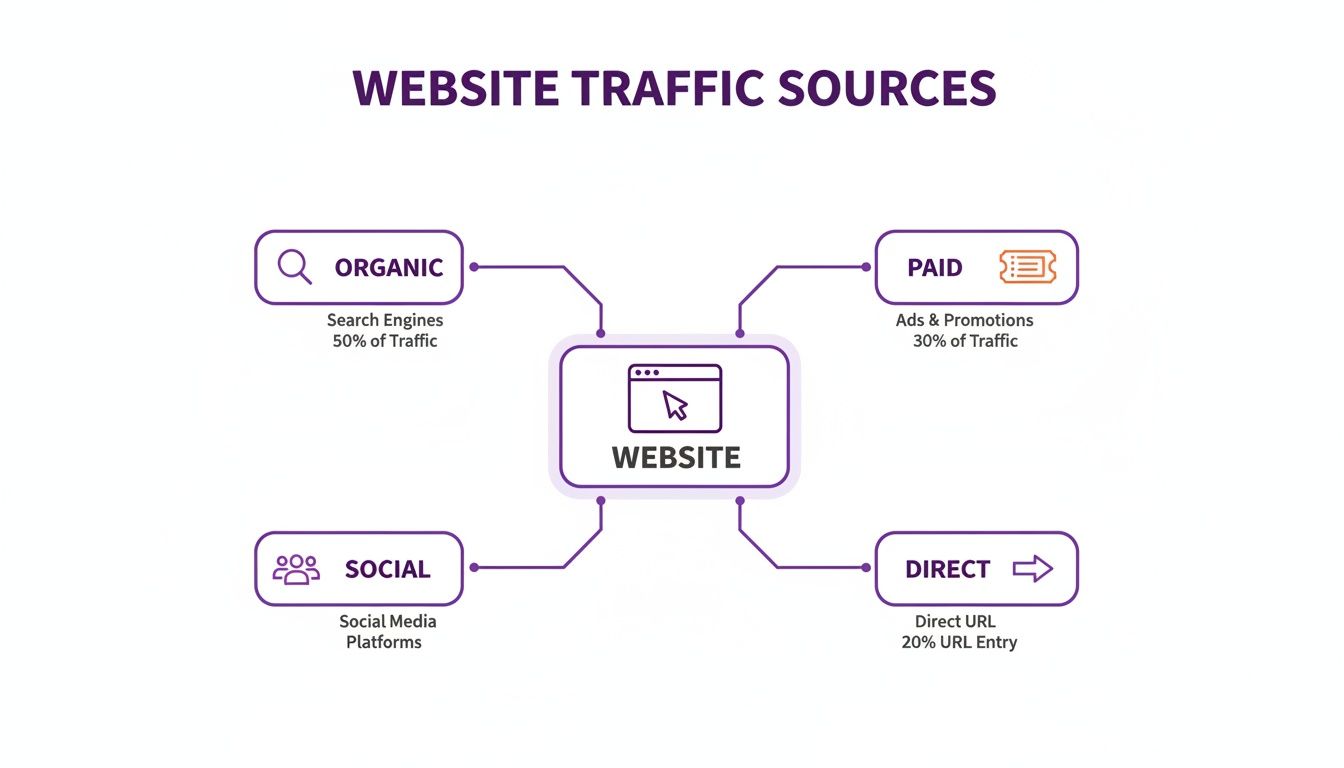
As you can see, organic is a huge slice of the pie for most businesses. To put it into context, here’s a clearer look at how each channel stacks up.
How Organic Traffic Compares to Other Channels
| Traffic Channel | How It Works | Primary Cost | Long-Term Value |
|---|---|---|---|
| Organic Search | Someone finds you through unpaid search results because your site was optimised (SEO) to be the best answer for their query. | Time and expertise. You invest in creating great content and a technically sound website. | High & Sustainable. Builds lasting authority and trust. It keeps delivering traffic long after the initial work is done. |
| Paid Search | You pay for an ad to appear at the top of search results for specific keywords (think Google Ads). | Direct Payment. You pay for every click or impression. When the money stops, so does the traffic. | Low & Immediate. Great for short-term campaigns, but it offers no lasting value once you turn off the ads. |
| Social Traffic | Visitors click through from platforms like LinkedIn, Facebook, or Instagram, either from your posts or someone else's. | Time spent creating content and engaging with your community. Can also involve ad spend. | Medium. Good for brand awareness, but traffic can be unpredictable and depends heavily on platform algorithms. |
| Direct Traffic | A user types your website address directly into their browser or uses a bookmark. They already know you. | Brand-building efforts. Strong performance in other channels often leads to more direct traffic. | High. This is your loyal audience and repeat customers—a fantastic sign of a healthy brand. |
The biggest takeaway here is intent. Someone who finds you through an organic search is actively looking for a solution. They are often far more qualified and ready to convert than someone who just stumbled upon an ad.
This is exactly why SEO is so vital. Data shows that organic search still drives around 53% of all website traffic and is far more cost-effective than paid ads. Even better, leads that come from SEO convert at a rate 8.5 times higher than those from traditional outbound marketing. It's not just about getting visitors; it's about getting the right visitors.
Understanding what your customer is actually trying to achieve is the key. To get that right, you need to understand what is search intent and how it should shape your entire SEO strategy from the ground up.
Why Organic Traffic Is a Business Asset
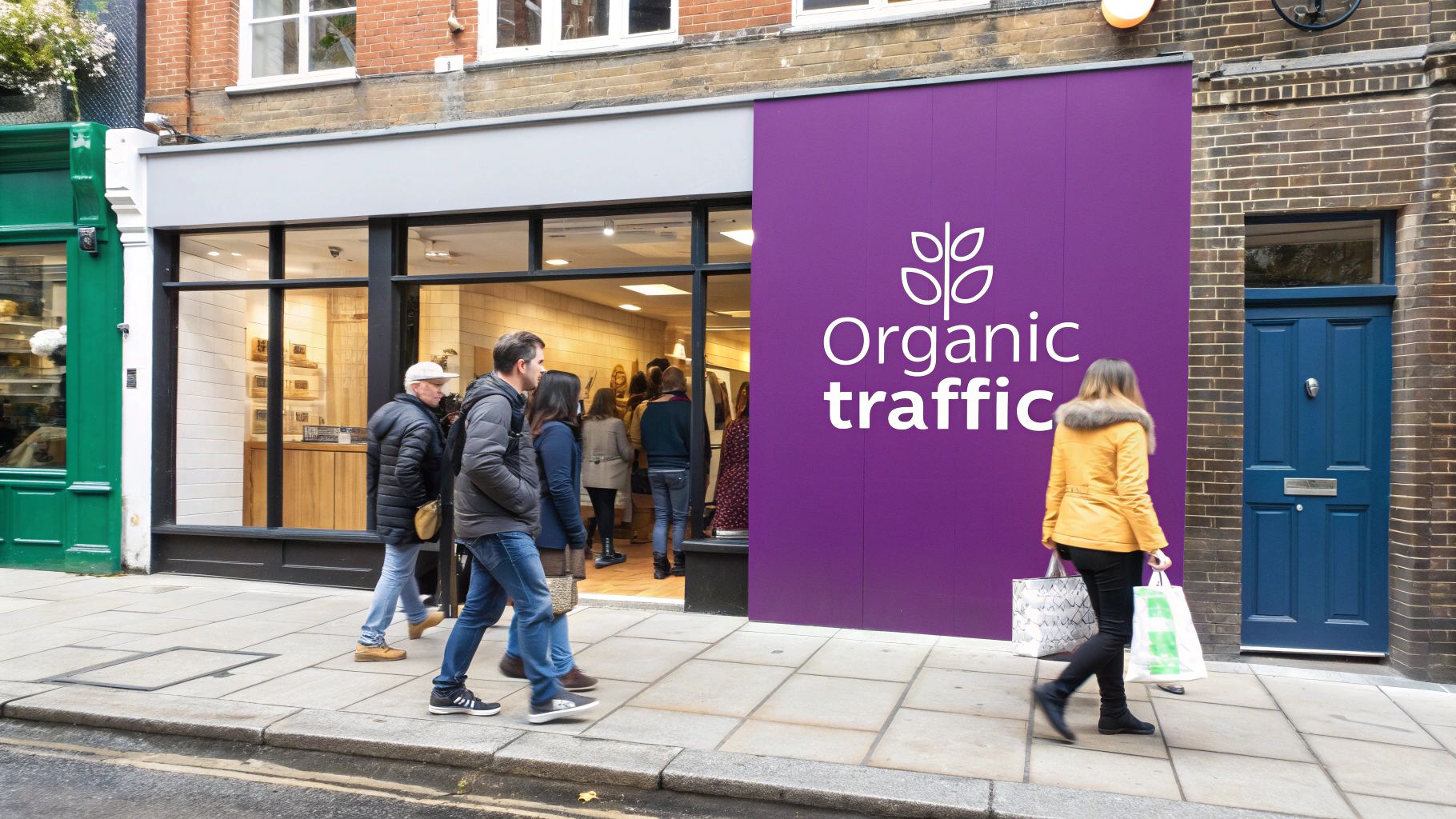
When you start to understand what organic search traffic really is, you realise it’s not just another number in your analytics reports. It's a core business asset. This traffic represents genuine interest from people who are actively looking for the exact answers, products, or services you offer.
Unlike paid campaigns that disappear when the budget runs out, organic traffic is earned. It's built on a foundation of trust and authority. Every single visitor who lands on your site organically is proof that search engines like Google see you as a credible source. Think of it as building a strong foundation for your digital presence—one that supports sustainable growth and stands firm against market shifts.
This has never been more important. The competition for attention online is fierce, with new features like AI Overviews and zero-click searches changing how people find information. In this environment, every organic click that brings a user to your website is a hard-won victory.
Building Sustainable Brand Authority
Organic visibility is a powerful endorsement. When your business consistently shows up in the top unpaid search results, it tells users you’re a trusted voice in your field. This builds a kind of brand equity that paid ads just can't buy.
People instinctively trust organic results more than sponsored links. It’s just human nature. This inherent trust means visitors from organic search are often more engaged, stick around longer, and are far more likely to become loyal customers. It creates a virtuous circle: visibility builds trust, and that trust reinforces your visibility.
Over time, this authority compounds, making it easier to rank for new keywords and attract an even bigger audience without having to constantly increase your marketing spend.
"Organic traffic is the digital equivalent of word-of-mouth marketing at scale. It’s earned, trusted, and has the power to deliver consistent, qualified leads long after you’ve stopped paying for ads."
This perception of authority translates directly into higher-quality leads. These aren’t just passive browsers; they are active problem-solvers who have identified your business as a potential solution.
A Cost-Effective Engine for Long-Term Growth
While SEO certainly requires an upfront investment of time and resources, its long-term return is pretty much unmatched. A single, well-optimised blog post can continue to pull in organic traffic for months, or even years, delivering value long after it was published. Contrast that with a paid ad, where the traffic dries up the second you stop paying.
This makes organic traffic an incredibly cost-effective marketing channel. The initial effort you put into creating valuable content and ensuring your website is technically sound pays dividends over and over again. Your investment actually appreciates over time, much like a well-chosen financial asset.
However, the game is changing. Recent data shows that in the UK, the growth rate of organic search traffic has seen a massive 86% decline since Google rolled out its AI search features. Monthly growth plummeted from 26.3% to just 3.7% post-rollout, signalling a major shift in user behaviour and fewer clicks through to websites. You can dig into the full findings on these traffic shifts at PPC Land.
This makes having a focused, effective SEO strategy more critical than ever to capture those remaining, highly valuable clicks.
How to Measure Your Organic Traffic Performance
You can't improve what you don't measure. So, let's move from theory to practice and look at the essential tools that turn abstract data into actionable insights for your business. Figuring out how to track your organic traffic is the first real step toward growing it on purpose.
The two most critical platforms for this are completely free: Google Analytics 4 and Google Search Console. Think of them as your website's dashboard and its health monitor. Analytics tells you what visitors do once they land on your site, while Search Console reveals how they found you in the first place.
Using them together gives you the full picture of your organic search performance. It helps you make decisions based on real data, not just guesswork.
Finding Your Organic Traffic in Google Analytics 4
Google Analytics 4 (GA4) is where you can see everyone who visits your website, neatly sorted by how they got there. Once you know where to look, isolating your organic traffic is pretty straightforward.
Here’s the quick way to find this crucial data:
- Log in to your GA4 account and head to the 'Reports' section in the left-hand menu.
- Under the 'Life cycle' dropdown, click on 'Acquisition'.
- Finally, select the 'Traffic acquisition' report.
This report breaks down your visitors by channel. You're looking for the row labelled 'Organic Search'—that's your goldmine. It shows you exactly how many people found your site through unpaid search results.
Here's an example of what the GA4 dashboard looks like when you first log in.
This overview screen gives you a quick snapshot of user activity, but the real power is in digging deeper into specific reports like 'Traffic acquisition'.
A common mistake is just glancing at the total number of visitors. By filtering for 'Organic Search', you get a crystal-clear view of how your SEO efforts are paying off, separate from the noise of paid ads or social media campaigns.
Uncovering Insights with Google Search Console
While GA4 shows you what’s happening on your site, Google Search Console (GSC) tells you what happens before someone even clicks. It’s packed with invaluable data, straight from Google, about how your website is performing in the search results.
The most important report in GSC is the 'Performance' report. It breaks down four key metrics that tell the complete story of your organic visibility.
-
Clicks: This one’s simple—it’s the number of times someone actually clicked your link from a Google search result. It's the most direct measure of the organic traffic you're getting.
-
Impressions: This is how many times your website showed up in someone's search results, even if they scrolled right past it. If you have high impressions but low clicks, it could be a sign that your page title or description isn't grabbing enough attention.
-
Average Click-Through Rate (CTR): This is just the percentage of impressions that turned into a click (Clicks ÷ Impressions). A higher CTR means your search listing is doing a great job of standing out.
-
Average Position: This shows your average ranking for all the keywords your site appears for. It’s a useful indicator, but remember it's an average across thousands of different searches and locations, so don't get too hung up on the exact number.
Getting to grips with these metrics is fundamental. For instance, any comprehensive SEO audit report guide will lean heavily on GSC data to spot ranking opportunities and figure out what’s going wrong.
By checking these numbers regularly, you can spot trends, see which keywords are actually driving traffic, and measure whether your optimisation work is hitting the mark. Pulling these insights into a clear report makes all the difference, and our guide on creating a monthly SEO report template can help you present this data cleanly to your team or stakeholders.
Actionable Strategies to Increase Your Organic Traffic
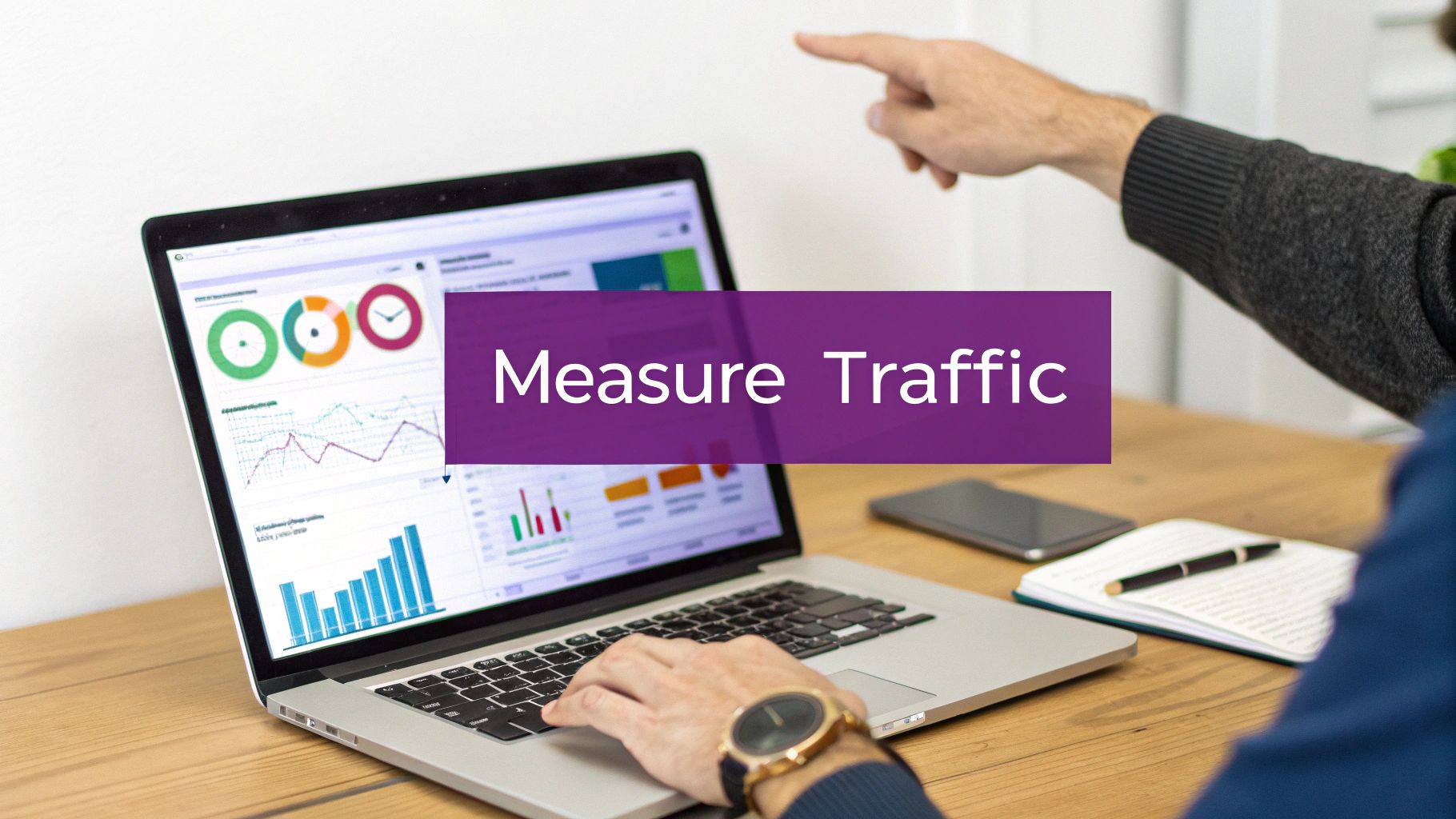
Alright, you know what organic traffic is and you’ve got the tools to measure it. That's the foundation. Now for the fun part: the playbook for getting more of those high-value visitors to your site.
Growing your organic traffic isn't about some secret hack or silver bullet. It’s about building a solid, coordinated strategy around four key pillars. Think of it as a flywheel—get each part spinning, and they’ll all work together to create some serious momentum. We'll cover getting your site technically sound, creating content that actually helps people, winning over local customers, and building your reputation online.
Let's dig into the practical steps you can take for each one.
Pillar 1: Get Your Technical SEO Foundations Right
Before you even think about writing a blog post, you need to make sure your house is in order. Technical SEO is all about making it dead simple for search engines like Google to find, crawl, and understand your website. If they can’t, even the most brilliant content will be lost in the digital ether.
Think of it like the plumbing and wiring in a house. It’s not the flashy part anyone sees, but if it’s not working right, nothing else matters. The essentials here are site speed, mobile-friendliness, and security—these are non-negotiable for Google today.
A site that’s technically solid just works better for your visitors, and Google rewards that positive experience with better visibility. For anyone running an online shop, digging into ecommerce SEO best practices is a great next step.
Quick Tech SEO Checklist:
- Site Speed: Does your website load in under 3 seconds? Use Google's PageSpeed Insights to test it and get clear recommendations.
- Mobile-Friendliness: How does your site look and feel on a phone? Google ranks you based on your mobile site first, so this is critical.
- Secure Connection (HTTPS): Check your URL. Does it start with
https://? Security protects your visitors' data and is a confirmed ranking signal.
Pillar 2: Create Killer Content with On-Page Optimisation
With a solid technical base, you can now focus on what your visitors actually see: your content. This is where you answer the questions your potential customers are typing into Google. It’s the very heart of attracting organic traffic—being genuinely helpful.
On-page optimisation is the art of fine-tuning individual pages to rank higher and attract clicks. This means using the right keywords in your page titles and headings, writing meta descriptions that make people want to click, and structuring your content so it’s a breeze to read.
"The best SEO strategy isn't about tricking search engines. It's about creating content so good that users feel compelled to share it and other websites feel compelled to link to it."
When you take this approach, you build trust and authority, signalling to Google that you’re a genuine expert. That’s the kind of stuff that wins in the long run.
Quick On-Page SEO Checklist:
- Keyword Research: Do you know the exact phrases your target audience uses when they search?
- High-Value Content: Does your content answer a searcher’s question better than anything else currently on page one of Google?
- Optimised Titles & Headings: Do your page titles and H1/H2 headings include your main keyword and clearly explain what the page is about?
Pillar 3: Win Over Customers with Local SEO
If you have a physical location or serve a specific area—like we do here in Cambridgeshire—then local SEO is non-negotiable. This is all about optimising your online presence to show up when people nearby are looking for you. When someone searches for "plumber near me" or "best café in Cambridge," you need to be the business they see first.
The absolute cornerstone of local SEO is your Google Business Profile (GBP). This free tool is your ticket to appearing in Google Maps and the local search results pack. A complete, optimised profile packed with positive reviews and up-to-date info is one of the most powerful tools a local business has.
Quick Local SEO Checklist:
- Claim & Verify GBP: Have you claimed and fully verified your Google Business Profile?
- Consistent NAP: Is your business Name, Address, and Phone number (NAP) identical everywhere online, from your website to local directories?
- Gather Customer Reviews: Are you actively asking happy customers to leave you a review on your GBP listing?
Pillar 4: Build Authority with Off-Page SEO and Link Building
Finally, off-page SEO covers everything you do outside of your website to improve your rankings. The biggest piece of this puzzle is link building—the process of getting other reputable websites to link back to yours.
Think of a link from a quality, relevant website as a vote of confidence. The more of these "votes" you collect, the more authoritative your site looks to Google. This isn't a numbers game; it’s about earning quality links from credible sources in your field. This process builds up your website's overall authority, making it easier for all of your pages to rank well.
Getting these four pillars to work in harmony requires a plan. To see how it all fits together, check out our guide on how to create an SEO strategy that drives real business results.
Quick Off-Page SEO Checklist:
- Competitor Backlink Analysis: Do you know who is linking to your top competitors? There are often easy opportunities there.
- Local Citations: Is your business listed in key local and industry-specific online directories?
- Content Promotion: Are you actively sharing your best content with journalists, bloggers, and influencers in your niche to earn natural links?
Your Quick-Start Organic Traffic Checklist
To bring it all together, here’s a simple checklist you can use to audit where you currently stand. It covers the key actions from each pillar, giving you a clear path forward.
| SEO Pillar | Key Action | Why It Matters |
|---|---|---|
| Technical SEO | Ensure site loads in under 3 seconds. | A slow site frustrates users and hurts your rankings. |
| On-Page SEO | Create content that's better than page one. | High-quality, helpful content is what Google wants to rank. |
| Local SEO | Fully optimise your Google Business Profile. | This is the #1 way to appear in local map searches. |
| Off-Page SEO | Earn quality links from relevant websites. | Links are a primary signal of trust and authority to Google. |
Use this table as your starting point. Tackling even one action from each pillar will put you light-years ahead of the competition and on the right track for sustainable organic growth.
Essential Tools to Support Your SEO Efforts
Trying to grow your organic traffic without the right data is like driving blind. You need the right tools in your corner to turn confusing numbers into a clear, actionable game plan. These platforms are what separate guesswork from a proper, data-driven SEO strategy.
Think of them like a mechanic's diagnostic equipment. You wouldn't trust someone who just listens to your engine and takes a wild guess. They plug in a computer to see what's really happening under the bonnet. SEO tools do the exact same thing for your website, helping you pinpoint problems and spot opportunities for growth.
Core Analytics and Performance Monitoring
We've already mentioned the two most important tools, both offered by Google for free. They're the absolute, non-negotiable starting point for understanding how your website is performing.
- Google Analytics 4 (GA4): This is your window into what visitors do after they land on your site. It answers questions like, "Which pages keep people engaged?" and "Which content actually leads to enquiries or sales?"
- Google Search Console (GSC): This tells you how people find you in the first place. It’s your direct line to Google, showing which keywords you’re ranking for, your click-through rates, and any technical issues the search engine has spotted.
Getting comfortable with these two platforms gives you a powerful baseline for measuring whether your SEO work is actually paying off.
Advanced Platforms for Keyword Research and Audits
While Google's tools are essential, dedicated SEO platforms give you a serious competitive edge. They let you peek at what your competitors are doing, uncover new keyword ideas, and run deep technical health checks on your site.
Two of the heavyweights in this space are SEMrush and Ahrefs. Think of them as the Swiss Army knives of the SEO world. Their key features let you handle:
- Keyword Research: Find out what your audience is actually searching for, see how hard it is to rank for those terms, and discover what keywords your competitors are winning with.
- Competitor Analysis: Get a clear blueprint for success by seeing exactly which pages and keywords are sending traffic to your rivals.
- Backlink Auditing: Analyse who is linking to your site—and more importantly, to your competitors'—to help you build a powerful link-building strategy.
For a really deep dive into technical problems, a tool like Screaming Frog's SEO Spider is a game-changer. It crawls your website just like Googlebot does, flagging everything from broken links and missing page titles to duplicate content. It's crucial for keeping your site's technical foundations solid.
The right tool doesn't just give you data; it gives you clarity. It helps you move from "what should we do?" to "this is exactly what we need to do next" by highlighting the most impactful opportunities first.
Picking the right platform can feel overwhelming, as each one has its strengths. To make it easier, our detailed SEO tools comparison breaks down the features, costs, and benefits of the industry's top contenders.
With these tools in hand, you can build a solid, data-backed plan for real, sustainable growth. Start by auditing your current performance, and let the numbers guide your next move.
Frequently Asked Questions About Organic Traffic
To wrap things up, let's tackle some of the questions that always come up when businesses start getting serious about organic search. These quick, no-nonsense answers should clear up any last bits of confusion and lock in what we've covered.
What Is the Difference Between Organic and Direct Traffic?
Think of it this way: organic traffic is someone finding you through a search on Google because they needed a solution to a problem. They didn't know your name, but they found your link in the unpaid results and clicked.
On the other hand, direct traffic is when someone already knows you. They type your web address straight into their browser or click a bookmark they’ve saved. Organic visitors are often discovering you for the first time; direct visitors are already familiar with your brand.
How Long Does It Take to See Results from SEO?
Unlike flipping a switch on a paid ad, SEO is a long game. You might spot some small wins and flickers of movement within the first 3 to 6 months, but it generally takes a solid 6 to 12 months of consistent work to see significant, lasting growth.
The exact timeline depends on things like how competitive your industry is, where you're starting from, and the resources you put in. Building organic visibility is like planting a tree—it takes patience, but the long-term rewards are well worth it.
Can I Do SEO Myself or Do I Need to Hire an Agency?
You can absolutely get started with DIY SEO. By focusing on the fundamentals—like creating genuinely helpful content and optimising your Google Business Profile—you can make some real headway.
But as you grow, things get more complicated. Technical SEO, deep-dive competitor analysis, and strategic link building often demand specialist expertise. An agency can speed up your results and help you sidestep common mistakes, which is especially true in crowded markets where a deep understanding of Google's algorithm is make-or-break.
For many small businesses, a hybrid approach works wonders. Handle the on-page content and social media in-house, and bring in a specialist for the technical heavy lifting and strategic direction.
Is Organic Traffic Really Free?
This is a huge misconception. While you're not paying Google for every single click like you do with paid ads, organic traffic is far from free. It requires a serious investment of time, expertise, and resources.
The costs come from:
- Content Creation: Time and skill spent writing high-quality blog posts, guides, and service pages.
- Technical Optimisation: Making sure your site is fast, secure, and easy for search engines to crawl and understand.
- Link Building: The outreach and relationship-building needed to earn backlinks from reputable sites.
- Tools: Subscriptions for keyword research, rank tracking, and site audit software.
The crucial difference is that this investment builds a lasting asset. The content you create today can keep bringing in traffic for years, making its long-term return on investment blow most paid channels out of the water. SEO is a cost-effective strategy, but it’s an investment, not a freebie.
Ready to turn your website into a growth engine? At Bare Digital, we create SEO strategies that drive the right kind of organic traffic. Get your free, no-obligation SEO Health Check today and find out what’s possible for your business.