

Digital marketing gets sold like a switch you flip. Build a website, run a few ads, post on Instagram, then wait for enquiries to roll in. That advice sounds tidy, but local service businesses rarely live in tidy markets.
A wedding venue in Yorkshire, a funeral director in Kent, or an architect in Bristol doesn't need vague “online visibility”. They need qualified local enquiries from people ready to book, call, or visit. That's where the disadvantages of digital marketing show up fast. Costs rise before rankings do. Tracking gets messier just when you need clean answers. One platform change can knock your best lead source sideways.
The bigger problem is that most advice treats digital marketing like a universal system. It isn't. Local businesses work inside postcode-level competition, review-led trust, and map-driven buying behaviour. A caterer isn't trying to go viral. They're trying to appear when someone nearby searches with intent and compares three options in ten minutes.
That's why a local SEO-first approach usually gives UK service businesses a steadier base than chasing every channel at once. Bare Digital's model fits that reality well because it ties search visibility, Google Business Profile work, and location intent back to actual enquiries instead of vanity metrics.
Below are eight disadvantages of digital marketing that matter in the business world, plus the practical fixes that stop them turning into wasted budget.
1. High Competition and Rising Customer Acquisition Costs
The first problem is simple. Everyone can buy attention now, so attention costs more.
For a local business, that means you're often bidding against firms with deeper pockets for the same search terms, the same map pack visibility, and the same seasonal demand. A wedding venue, self-storage operator, or building contractor can burn through budget quickly if paid search becomes the default answer to every lull in leads.
DataReportal estimated that in 2024 the UK had roughly 19.0 million active ad-block users aged 16 to 64, representing about 36.8% of the online population, according to this discussion of ad-blocking as a disadvantage of digital marketing. That matters because you can pay for reach and still miss a large share of the audience before your ad even has a chance to compete.

What this looks like on the ground
A funeral home might pay for broad service terms and discover the clicks aren't from immediate-need searches. A wedding venue might chase generic phrases and attract browsers, students, or suppliers instead of couples planning viewings. The spend looks active, but not efficient.
The fix isn't to abandon paid media. It's to stop treating broad visibility as the goal.
- Narrow intent first: Target place-led and service-led searches, such as town names, venue type, or service modifiers, rather than broad category terms.
- Use Maps as a cost-control channel: A strong Google Business Profile often captures local intent without forcing you to pay for every visit.
- Protect margin: Review campaigns like you'd calculate total variable costs. If each click, landing page, call handling step, and follow-up costs money, weak keywords become expensive fast.
What tends to work better
Local SEO reduces your dependence on auctions you can't control. When Bare Digital builds location pages, strengthens internal linking, and improves Google Business Profile relevance, the business gets a second route into local demand that doesn't disappear the moment spend pauses.
That's especially useful in sectors where every square mile has overlap. A business expanding into nearby towns can't outbid everyone forever. It needs compounding visibility. For operators with multiple facilities or postcode targets, a focused service like SEO for self-storage operators becomes more sensible than trying to brute-force growth with ads alone.
Practical rule: If one lead source gets more expensive every quarter, build a second one you own.
2. Dependence on Algorithm Changes and Platform Policy Shifts
Digital marketing often feels measurable and controllable, right up until a platform changes the rules.
Google adjusts ranking systems. Meta changes what gets reach. Google Business Profile suspensions happen. Review visibility shifts. Features appear, disappear, and move around the page. Local businesses don't get a vote on any of it, yet they still carry the risk.
That dependency is one of the most overlooked disadvantages of digital marketing because many businesses confuse presence with control. A busy profile or strong ranking can vanish from prime visibility if a platform reweights trust signals, proximity, category interpretation, or content quality.
The local risk is sharper than most guides admit
A wedding venue doesn't just lose “traffic” when visibility drops. It can lose viewing requests during a peak booking period. A funeral home can lose urgent calls if a profile issue interrupts local pack visibility. An interior designer can slip behind firms with stronger reviews, fresher imagery, or better local relevance.
For local service firms, this platform dependency is also reputation-sensitive. Guidance discussed in this overview of platform-controlled visibility and local revenue risk highlights how a negative review cluster, a suspended profile, or a sudden platform shift can suppress leads quickly.
How to reduce the damage
The answer isn't “keep up with the algorithm” as if there's a trick. The answer is resilience.
- Diversify lead paths: Don't rely only on organic rankings, only on Maps, or only on Meta ads.
- Build owned assets: Your website service pages, email list, enquiry database, and review generation process are more stable than rented reach.
- Strengthen trust signals: Real photography, complete service information, location relevance, and steady review acquisition help weather changes better than thin pages and stock content.
A venue business is a good example. If your Google visibility dips but your site still ranks for local non-brand searches, your reviews remain strong, and your enquiry process is clean, the impact is manageable. If all demand flows through one profile and one ad account, the business is exposed.
That's why local authority-building matters more than clever hacks. A service built around SEO for wedding venues should focus on durable assets: location pages, review strategy, local links, and content that reflects real buyer questions.
Don't build your whole pipeline on land you rent from Google, Meta, or any other platform.
3. Attribution and Measurement Complexity
Digital marketing presents an awkward truth. People assume online means perfectly trackable. It doesn't.
A local customer journey is usually messy. Someone sees your Google Business Profile, checks your reviews later, visits your site from a branded search, asks a partner, then calls from their mobile. Which channel gets the credit? If you're honest, often none of them gets clean credit.
The measurement problem is getting worse, not better. UK marketers are losing deterministic tracking as privacy rules and platform changes reduce data quality, as noted in this piece on why attribution is weakening for local campaigns. That's especially painful for small businesses that need to know which actions produced calls, map views, and forms.
A practical tool can still help narrow the fog. Bare Digital's Google Business Profile audit tool is useful here because it gives you a clearer view of one of the channels that often influences enquiries before analytics ever records a neat conversion path.
Here's a useful explainer on the reporting side of the problem:
Where businesses go wrong
They over-credit the last click. If the contact form says “organic search”, the business assumes SEO did all the work. If the phone call followed an ad click, the ad gets all the praise. Both readings can be wrong.
A funeral director may get an enquiry from a family member who searched several times over days from different devices. An architect may win a project after a prospect reads three articles, checks reviews, and returns direct. A wedding venue may get a branded search conversion driven by earlier map exposure.
- Tag everything you can: UTM discipline still matters for campaigns, emails, and social posts.
- Track actual enquiries: Phone calls, forms, direction requests, and bookings matter more than pageviews.
- Use CRM notes properly: Ask new leads how they found you, then record the answer consistently.
What works in practice
You won't get perfect attribution, so aim for decision-grade attribution. That means enough clarity to know what to keep, what to trim, and what needs more time.
Bare Digital's local SEO approach suits this because it isn't built around one fragile metric. It looks at map visibility, organic intent, review signals, and conversion pathways together. That's more useful for a local business than pretending one dashboard can explain every sale with scientific precision.
4. Skill Gap and Technical Expertise Requirements
Most local businesses don't fail at digital marketing because they're lazy. They fail because the job has gradually become six jobs.
You need technical SEO, content planning, call tracking, Google Business Profile management, review handling, conversion improvements, reporting, and some grasp of paid media. On paper that sounds manageable. In reality it usually lands on an owner, office manager, or general marketing assistant who already has a full-time role.
Why DIY often stalls
A wedding venue manager might handle open days, supplier relationships, and booking enquiries all week, then try to “do SEO” on Friday afternoon. A construction firm owner might update service pages between site visits. A funeral home administrator might post on Facebook because nobody else has time.
None of that means they're careless. It means digital marketing punishes fragmented attention.
The common pattern is familiar. The website has duplicate title tags, weak service-page structure, no local landing pages, inconsistent NAP details, and a Google Business Profile that was set up once and then left alone. Nothing is catastrophically wrong, but nothing is strong enough to win.
The practical way to close the gap
You don't need to master every platform yourself. You need to know what deserves specialist handling.
- Keep strategy close to the business: You know the customers, seasonality, and sales reality better than any platform does.
- Outsource specialist work: Technical audits, structured local SEO, and content planning usually justify expert help.
- Standardise recurring tasks: Reviews, posts, image uploads, service updates, and citation checks should follow a process.
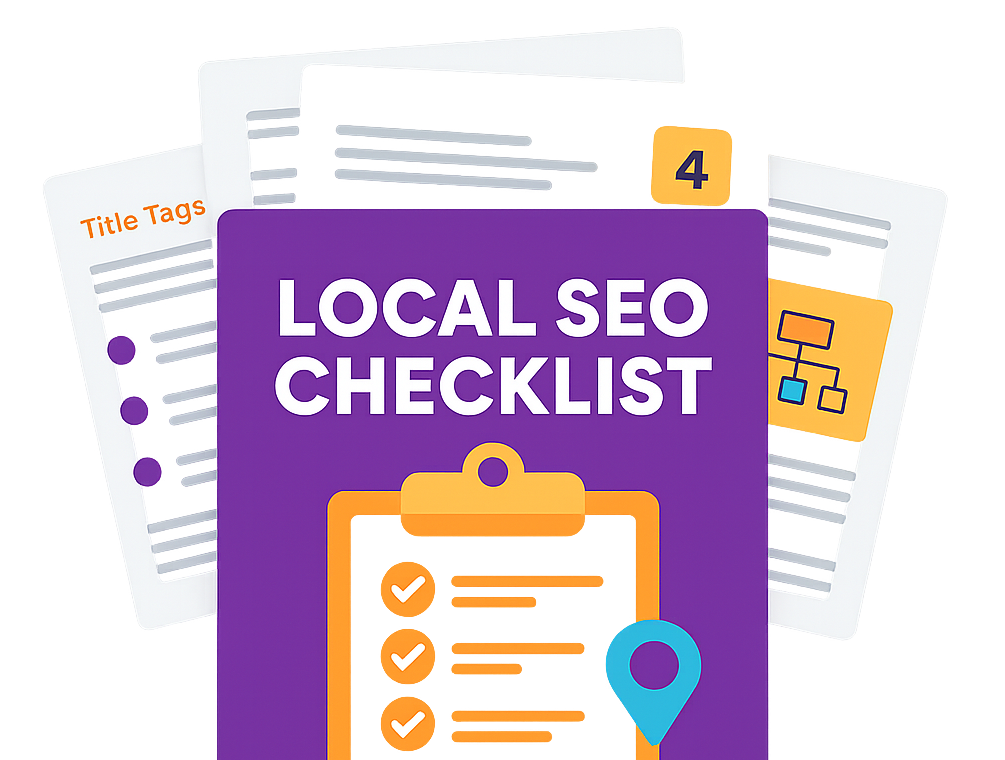
Bare Digital's local SEO checklist for UK businesses is the kind of framework that helps here because it turns a vague “we should market more online” problem into a clear action sequence.
The best use of your time isn't learning every platform. It's making sure somebody is doing the important work properly.
A local service business wins when the owner supplies insight and the specialist supplies execution. That division is usually healthier than half-DIY, half-neglect.
5. Time Lag and Long-Term ROI Expectations
Digital marketing often asks for patience at the exact moment a business wants speed.
That's one of the hardest disadvantages of digital marketing to explain to owners who need leads now. Organic visibility compounds slowly, especially in local markets where trust, reviews, and geographic relevance matter. You can improve pages this month and still wait months for rankings, map visibility, and enquiry volume to settle into something reliable.

Why businesses get frustrated early
The work happening first is often invisible to customers. Technical fixes, page rewrites, internal links, service-area targeting, schema, and review processes don't feel dramatic. But they're usually the groundwork that makes later gains possible.
That can be uncomfortable for a business owner who compares SEO with paid ads. Ads can generate immediate visits. SEO often improves the underlying system so that future enquiries cost less and arrive more consistently.
A caterer in a seasonal market or a wedding venue heading into booking season may not want to hear “give it time”. Fair enough. The better answer is to split the job between short-term demand capture and long-term asset building.
A better way to manage the lag
- Separate quick wins from compounding work: Google Business Profile improvements and local page fixes can surface earlier than broader content gains.
- Report leading indicators: Rankings, map visibility, review growth, and enquiry quality help show movement before revenue fully catches up.
- Blend channels: Paid search can bridge the gap while local SEO grows.
Expectations matter as much as tactics. A business that expects instant compounding usually quits too soon. A business that understands the sequence can budget sensibly and judge progress properly.
If you want a grounded view of whether the investment could make sense over time, a tool like Bare Digital's SEO ROI calculator for self-storage businesses shows the kind of thinking local operators need. Not hype. A rough commercial model tied to visibility, leads, and return.
6. Privacy Regulations and Data Compliance Burdens
Digital marketing used to lean heavily on tracking. Now that tracking is constrained, businesses still carry the compliance work but get less certainty in return.
In the UK, the UK GDPR and the Data Protection Act 2018 came into force in 2018, and the ICO has required organisations to justify tracking, consent, and data use more carefully, especially for cookies and behavioural targeting, as summarised in this explanation of privacy limits and measurement weakness in digital marketing. That doesn't just affect large brands. It hits smaller service businesses that rely on local enquiries and need clean reporting.
Why this becomes a burden for SMEs
A photographer, architect, or care provider may use cookie banners, forms, email systems, analytics, and ad platforms without having a proper handle on consent, retention, and vendor relationships. The tools are easy to install. The governance around them isn't.
You then get two headaches at once. First, data quality drops because some visitors refuse consent or block tracking. Second, your responsibilities increase because personal data is still being processed somewhere in the stack.
For local businesses without in-house legal or data teams, this creates friction. Marketing decisions get slower, reporting gets fuzzier, and nobody feels fully confident about whether the setup is both effective and compliant.
How to stay practical
This is one area where “good enough” is risky. The safer route is a simpler stack and clearer rules.
- Reduce unnecessary tools: If you don't need five trackers, don't run five trackers.
- Use first-party data carefully: Enquiry forms, CRM records, and consented email follow-up are more durable than heavy dependence on behavioural targeting.
- Document processes: Cookie handling, privacy notices, data-sharing with agencies, and retention practices should be written down.
For many local firms, the smart move is to shift effort towards channels that rely less on invasive tracking in the first place. Local SEO, strong service pages, review generation, and a well-managed Google Business Profile can all drive demand without leaning so heavily on fragile behavioural data.
7. Content Creation Demands and Quality Consistency
Content looks cheap from the outside because publishing is easy. Good content isn't cheap.
A local service business needs more than occasional blog posts. It needs service pages that match intent, location pages that aren't duplicated filler, review responses that sound human, Google Business Profile posts, fresh photos, FAQs, and trust content that answers the objections buyers have.
The hidden cost is consistency
A wedding venue may publish a few polished articles, then go quiet during peak season. A construction company may upload project photos in bursts but never turn them into location-relevant case pages. A funeral home may avoid publishing because the topic requires care and tone, which is understandable, but silence then leaves competitors to own the search space.
That is the core issue. Content isn't just writing. It's planning, research, approval, formatting, optimisation, and maintenance.
The wrong answer is churning out thin pages stuffed with towns and keywords. Those pages rarely build trust. For local services, they often make the business look smaller and less credible than it really is.
What good content looks like for local firms
- Answer real buying questions: Parking, availability, pricing approach, service areas, response times, accessibility, and what happens next.
- Use proof, not fluff: Real photography, team information, examples of work, and local detail beat generic promotional copy.
- Build reusable assets: One strong venue guide or service explainer can support search, social, email, and sales conversations.
A lot of owners think they need more content. Usually they need fewer, better pages with clearer local intent.
Bare Digital's local SEO style fits this well because it pushes content toward ranking and conversion at the same time. That means pages built for “near me” and area searches, blog topics rooted in actual demand, and on-page updates that support Google Maps visibility instead of existing in a separate silo.
Publish less if you need to. Just make every page earn its place.
8. Fragmented Customer Journeys and Cross-Channel Complexity
Customers don't move in straight lines anymore. Your systems still expect them to.
A person might discover a business through Google Maps, read reviews later, click an Instagram profile, visit the site on mobile, then phone from a desktop search the next day. If your information, messaging, and tracking aren't aligned, the customer experiences one business while your team sees five disconnected fragments.
Where local businesses feel the friction
This is common in service businesses where trust builds across several touchpoints. A couple planning a wedding venue visit may compare brochures, Instagram images, map directions, review sites, and email replies. A family looking for a funeral director may move between search results, website pages, and a direct phone call in a short, stressful window.
Problems show up fast:
- Inconsistent offers: One price point or message appears on the website, another in ads, another on social.
- Broken handoffs: Form enquiries sit in one inbox while Facebook messages go unanswered.
- Disconnected reporting: Calls, forms, map actions, and booked appointments never get stitched into one view.
How to simplify the journey
The fix is operational, not just promotional.
- Map the journey: List the touchpoints buyers use before they enquire.
- Create one source of truth: Opening hours, service descriptions, locations, imagery, and core offers should match everywhere.
- Join up follow-up: Website leads, phone calls, and social messages need one process, not three.
A unified local SEO partner is often stronger than a stack of separate freelancers. If one person runs ads, another posts on social, and nobody owns search visibility or conversion flow, the business gets noise instead of momentum.
Bare Digital's model is useful because it starts with local search intent and then connects the supporting pieces around it. For UK service firms, that usually produces a cleaner customer journey than trying to chase every channel equally.
8-Point Comparison of Digital Marketing Drawbacks
| Drawback / Risk | Implementation complexity 🔄 | Resource requirements ⚡ | Expected outcomes ⭐📊 | Ideal use cases 💡 | Key advantages (mitigation) ⭐ |
|---|---|---|---|---|---|
| High Competition and Rising Customer Acquisition Costs | High, saturated auctions and multi-location fragmentation | High, increased PPC budgets; steady investment in long-tail SEO & GMB | Short-term costliness; long-term reduced CPC if local SEO succeeds | Local service providers needing local dominance and cost control | Focused local SEO & GMB lowers dependency on expensive PPC; effective for niche queries |
| Dependence on Algorithm Changes and Platform Policy Shifts | High, unpredictable updates requiring constant monitoring | Medium–High, authority-building, diversification, regular audits | Volatile traffic/ad performance; durable authority reduces downside | Businesses that rely on search/maps and need resilient visibility | Diversify channels and build E-E-A-T to withstand updates; increases long-term stability |
| Attribution and Measurement Complexity | High, multi-touch journeys and siloed analytics | High, CRM integration, GA4 mastery, tracking setups | Attribution ambiguity initially; clearer ROI after proper setup | SMBs with long sales cycles that need end-to-end tracking | Centralised analytics and CRM bring clearer multi-touch crediting and budget optimisation |
| Skill Gap and Technical Expertise Requirements | Medium–High, multiple specialist disciplines required | High, training, hiring or agency fees; tool subscriptions | DIY often underperforms; specialist input improves outcomes quickly | SMBs lacking in-house specialists should outsource critical tasks | Outsourcing or managed services fills gaps, reduces costly mistakes, speeds impact |
| Time Lag and Long-Term ROI Expectations | Medium, requires staged planning and expectation management | Moderate, ongoing retainers, content and optimisation costs | Slow initial ROI (3–12 months) but compounding long-term gains | Businesses that can invest for sustained growth or need hybrid quick wins | Blended paid+organic approach yields immediate leads while organic compounds value |
| Privacy Regulations and Data Compliance Burdens | High, legal requirements and documentation overhead | Moderate–High, CMPs, DPAs, legal reviews and audits | Reduced targeting precision but lower legal/reputational risk | Regulated or multi-jurisdiction SMBs prioritising compliance | Proper compliance prevents fines, builds trust, and future-proofs data practices |
| Content Creation Demands and Quality Consistency | Medium–High, continuous planning, production and review cycles | High, recurring editorial, video and production costs | Strong content drives SEO & engagement; poor content wastes budget | Businesses seeking organic authority and lead-gen via content | Cornerstone content + batching/repurposing improves ROI and maintains consistency |
| Fragmented Customer Journeys and Cross-Channel Complexity | High, many touchpoints and integration needs | Moderate–High, CRM, integrations, processes and staff coordination | Fragmentation wastes spend; unified systems improve conversion and experience | Multi-touch service businesses (venues, trades, healthcare) | Integrated agency/CRM approach unifies data, reduces duplication and improves conversion |
Turning Drawbacks into Digital Dominance
The disadvantages of digital marketing are real. They aren't excuses to ignore online growth, but they are reasons to stop treating digital as a magic machine that prints leads on demand.
For UK local service businesses, the pattern is usually the same. Paid reach gets more expensive. Tracking gets less reliable. Platform dependence creates sudden risk. Content demands pile up. Internal teams get stretched, and reporting starts to look precise while hiding major blind spots. If you run a wedding venue, funeral home, architecture practice, or trade business, you've probably felt at least half of that already.
The good news is that most of these problems become manageable once you stop trying to win everywhere at once. A local SEO-led strategy is usually more durable because it focuses on the moments that matter most. Nearby searches. Google Maps visibility. Review trust. Service pages built for actual local intent. Content that answers pre-enquiry questions. Cleaner conversion paths once a visitor lands.
That doesn't mean ignoring paid media, email, or social. It means putting them in the right order. Your website and Google Business Profile should be the foundation. Reviews should be part of operations, not an afterthought. Location pages should reflect real service areas, not copy-and-paste town names. Reporting should tie back to calls, forms, and booked work, even if attribution is imperfect.
I'd also be careful with agencies or consultants who promise smooth certainty. Digital rarely works that way now. The stronger partner is the one who can explain trade-offs plainly, set realistic timelines, and build assets you still benefit from if ad costs rise or a platform shifts. That's far more valuable than another pitch about “explosive growth”.
If you want something that compounds, invest in visibility you own more of. That usually means local SEO, Google Business Profile optimisation, technical fixes, review strategy, and content built around buyer intent. Those channels won't remove every disadvantage, but they do reduce your exposure to the worst ones.
And if you're layering in newer tools, keep the same mindset. Use them where they sharpen execution, not where they distract from fundamentals. Even something like an AI-powered LinkedIn growth tool only helps if the underlying message, targeting, and business process already make sense.
Bare Digital's approach is well suited to this reality. The value isn't just better rankings. It's turning local search into a steadier commercial system, one that can keep producing enquiries even when digital gets noisier, pricier, and harder to measure.
If your business depends on local enquiries, Bare Digital can help you build a stronger search foundation instead of chasing short-term spikes. Their team focuses on Google Business Profile optimisation, local SEO, location landing pages, content, and reporting that links visibility to real business outcomes, so you can grow with more clarity and less wasted spend.