
You're probably in one of two situations right now. Your business is good, your customers are happy, and referrals still come in, but Google makes it look like you barely exist. Or you've already paid for SEO before, saw a few ranking reports, and still couldn't tie the work to actual phone calls, bookings, or quote requests.
This is the core concern for anyone seeking a SEO agency in London UK. They're not usually looking for another generic marketing supplier. They're trying to solve a local visibility problem inside one of the most competitive business environments in the country.
A London business doesn't need vague “more traffic” promises. It needs the right people in the right borough, postcode, or service area finding the business at the moment they're ready to act.
Your London Business Is Invisible to Local Customers
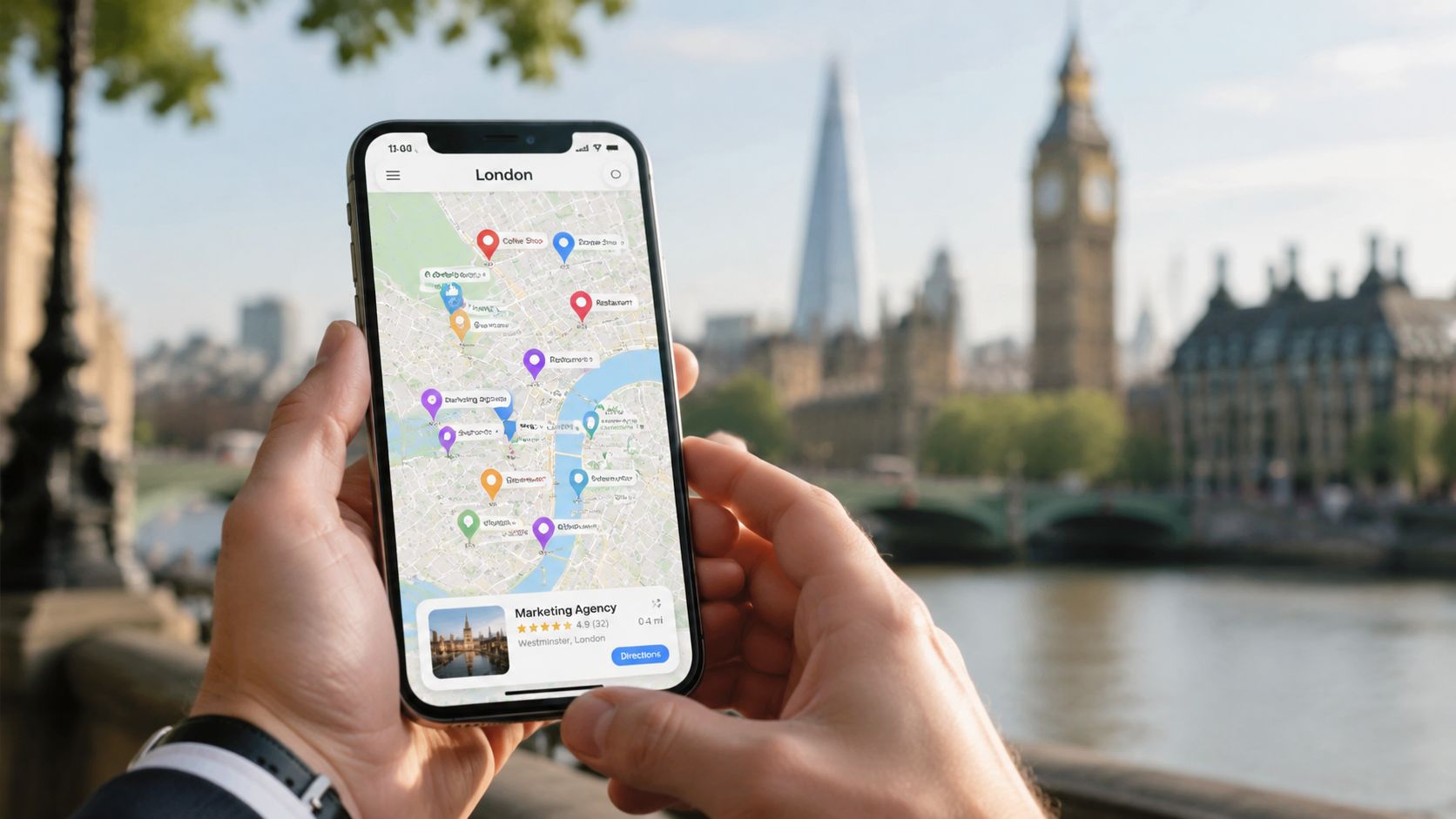
A customer in Islington searches for your service. Another one in Wimbledon searches the same thing an hour later. A third uses Google Maps and adds “near me”. If your business doesn't appear in those local results, you're invisible in the moments that matter most.
That's why local SEO matters so much in London. It isn't broad brand marketing. It's the process of making your business visible when someone nearby is actively looking for what you sell.
What local invisibility actually looks like
Most businesses don't notice the problem at first because they still have a website, a Google Business Profile, and maybe even a few decent rankings for branded terms. But local search failure usually shows up in more practical ways:
- Maps silence: Your profile exists, but it doesn't appear often enough for postcode-level searches.
- Poor service-area matching: You serve several areas, but Google can't clearly connect your site and profile to those locations.
- Weak local intent signals: Your pages talk about services in general, not where you provide them or who they're for.
- Low enquiry quality: You get the occasional form fill, but not enough of the calls or bookings that turn into revenue.
A specialist agency fixes those gaps by aligning your website, profile, locations, and content around the way local customers search.
Practical rule: If someone a few streets away can't find you for a high-intent local search, your online presence isn't doing its job.
Where the work usually starts
The first job isn't “doing SEO”. It's diagnosing why Google doesn't trust your local relevance strongly enough.
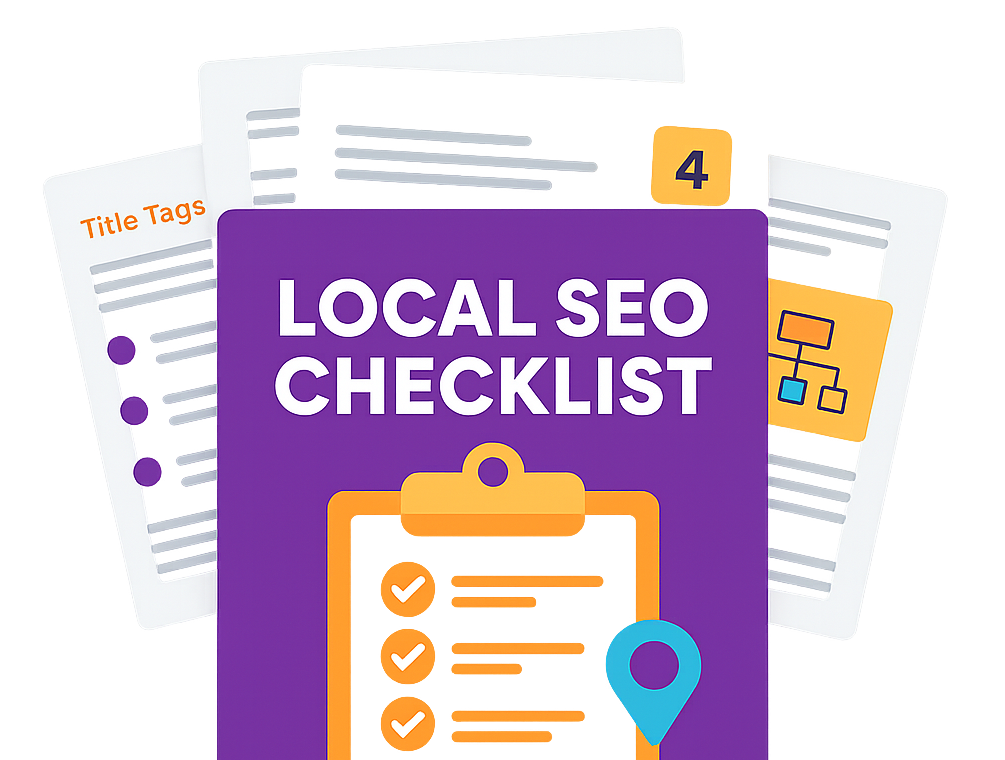
That usually means checking your Google Business Profile, your key service pages, your location signals, and the technical issues that stop search engines from understanding your site properly. If you want a grounded starting point, this local SEO checklist for UK businesses is the kind of framework worth using before spending money blindly.
In London, competition is intensified as customers have options close by. If your competitor in the next postcode has cleaner location pages, a stronger profile, and clearer local signals, they often win the click, the call, and the booking.
Why a London Specialist Outperforms a General Agency
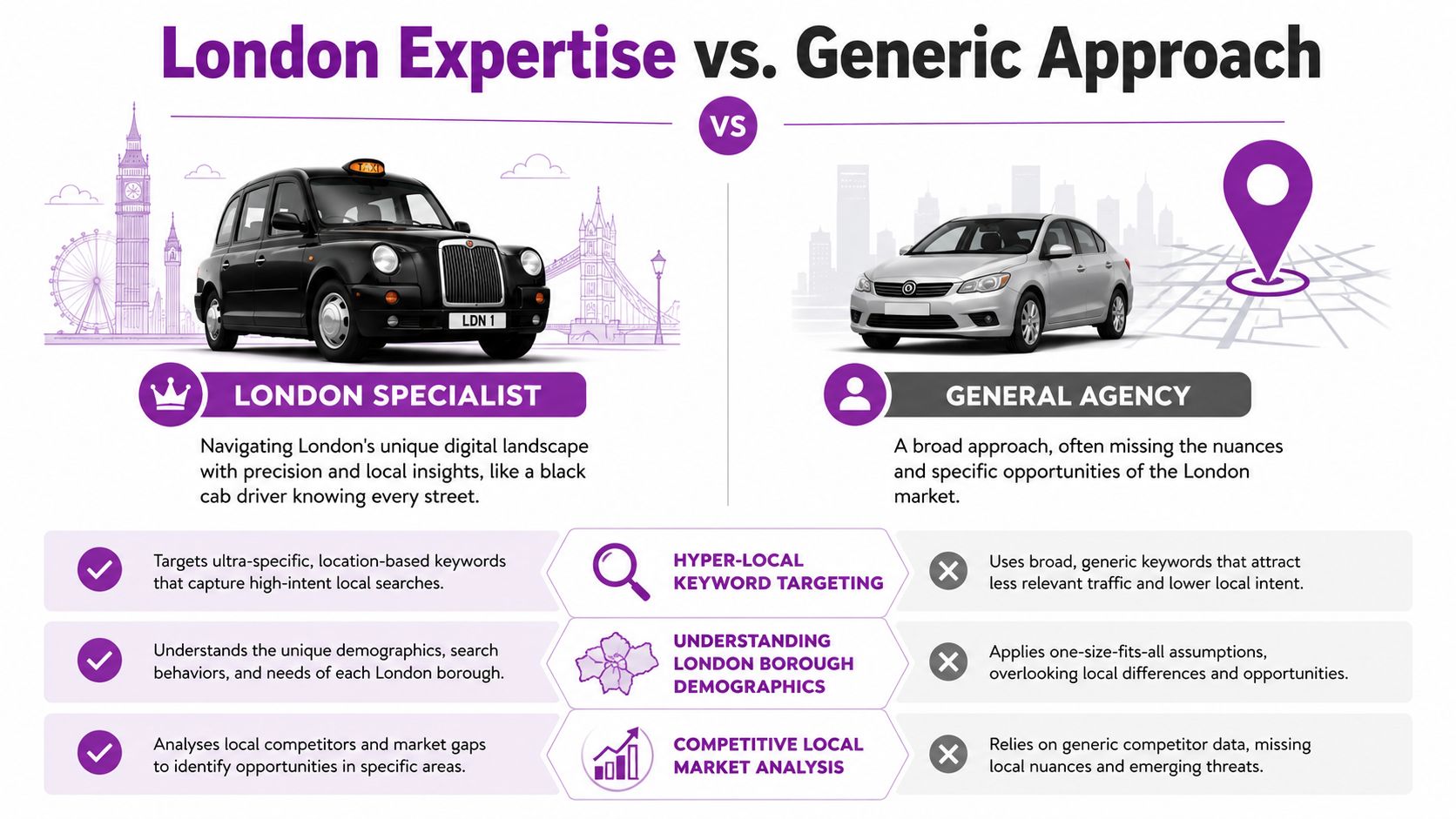
A general agency might understand SEO rules. A London specialist understands how those rules play out across boroughs, postcodes, and service areas that behave like separate markets.
That's the difference between a tourist following satnav and a London black cab driver. Both can move from A to B. Only one knows where the shortcuts are, which routes slow down at certain times, and which streets matter for the destination.
Local expertise changes the quality of leads
The hard truth is that better rankings don't automatically mean better business. The trade-off for London SMEs is between SEO pricing and lead quality. As noted in Directive's analysis of London SEO agency buying considerations, the key question isn't just whether rankings improve, but whether those rankings turn into qualified calls, booked jobs, or store visits in a specific postcode or service area.
That distinction matters because London search behaviour is fragmented. “Accountant London” is broad. “Tax accountant Canary Wharf” is different. “Emergency plumber E8” is different again. The agency that understands local intent will shape the campaign around conversion potential, not vanity traffic.
What a specialist sees that a broad agency often misses
A London-focused agency typically gets sharper results because it reads the local map properly.
- Borough-level intent: Search behaviour differs between areas. The language, competition, and urgency can shift from one part of London to another.
- Service-area reality: A business may not need citywide visibility. It may need dominance in a smaller, profitable patch.
- Local competitor patterns: In London, you're rarely competing against one clear rival. You're competing against chains, independents, directories, and map-pack incumbents.
- Lead filtering: Not all visibility is useful. Better to rank where buyers are likely to book than attract irrelevant clicks from outside your service radius.
A useful way to think about this is organisational fit. If you're weighing whether to build internally or outsource, this guide on understanding marketing team options gives a sensible framework for comparing capability, speed, and focus.
The local audit should be brutally specific
A proper local review shouldn't stop at “your rankings need work”. It should ask harder questions.
| Question | Why it matters |
|---|---|
| Are your target searches tied to the right postcodes or boroughs? | Broad targeting often brings weak enquiries |
| Does your Google Business Profile match your actual service footprint? | Misalignment hurts local visibility |
| Are your location pages distinct and useful? | Thin pages rarely convert well |
| Are you showing up where people take action? | Calls and direction requests matter more than raw impressions |
One practical starting point is a Google Business Profile audit tool for local visibility checks. It helps surface the kind of profile weaknesses that often block map-pack visibility before a campaign even starts.
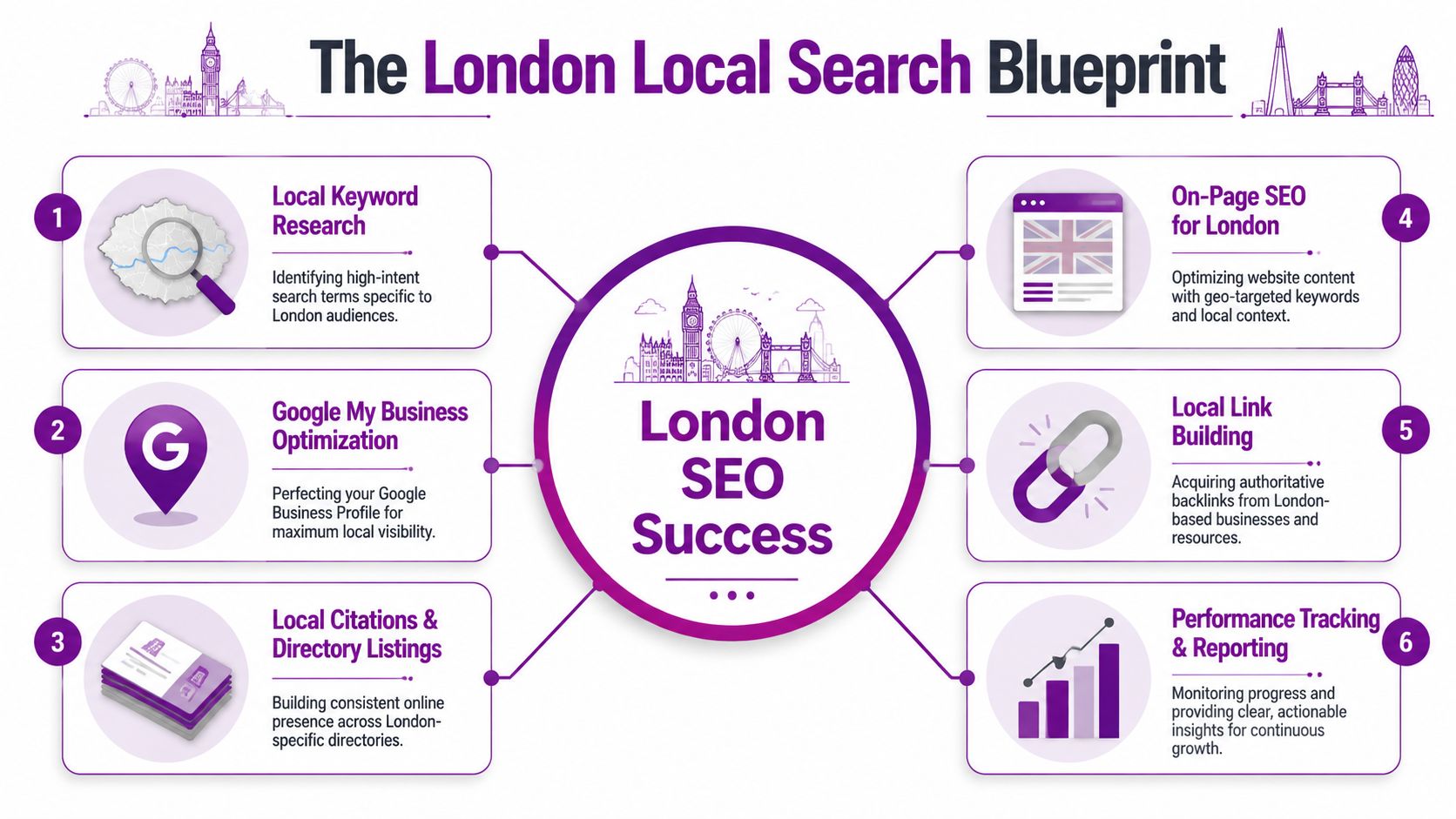
Our Blueprint for Dominating London Local Search
Local SEO works best when the moving parts support each other. A Google Business Profile without strong location pages is weak. Location pages without technical SEO are shaky. Content without local intent usually drifts into generic traffic.
The structure below is the blueprint most London businesses need.
Start with Google Business Profile and local intent
For local UK campaigns, Google states that local results are primarily influenced by relevance, distance, and prominence, which is why profile categories, service areas, and location pages matter so much for map-pack visibility, as explained in Finn Partners' local SEO guidance.
That means your Google Business Profile is not a side asset. It's your digital shopfront.
If the wrong primary category is selected, if the services are vague, or if the profile doesn't align with your actual landing pages, you create friction. Google struggles to connect the business to the searches you want to win.
A strong setup usually includes:
- Tight category targeting: The primary and secondary categories need to reflect the actual commercial offer.
- Service alignment: Services listed in the profile should match what appears on key pages.
- Location support: Area pages and profile geography should reinforce each other, not conflict.
Your profile should answer one question fast. Why should Google show this business for this local search in this area?
For businesses that want benchmark reporting on profile performance, Bare Digital's GBP reporting workflow is one example of how agencies can track local actions against campaign work.
Build the website Google can actually understand
Technical SEO is where a lot of London campaigns often fail. The issue isn't only page speed. It's crawlability, indexing, XML sitemap optimisation, redirect-chain removal, canonical tags, and structured data. Those are the technical fixes agencies prioritise because they help search engines discover and interpret pages properly, especially on multi-location sites, as outlined in Seventh Element's technical SEO guidance.
That matters even more if your website has many service pages, borough pages, and blog articles competing for attention.
A practical blueprint usually looks like this:
Keyword mapping
Match each core service to clear local intent. Don't let five pages chase the same search.On-page refinement
Tighten titles, headings, internal links, FAQs, and service copy so each page has one job.Location landing pages
Build pages for genuine service areas. Each page should reflect local demand, not just swap out place names.
After the structural work, content supports the commercial pages. If your team needs a sharper editorial process, these master SEO content strategies are useful for keeping informational content aligned with business goals instead of cannibalising service pages.
Here's a short walkthrough that illustrates how local search foundations fit together in practice:
Authority still matters, but relevance matters first
Link acquisition helps, but only when the local fundamentals are already in place. Too many businesses chase authority before they've fixed relevance.
The right order is usually:
- clean profile signals
- strong service and location pages
- sound technical foundations
- then authority building
That sequence is why some campaigns finally start producing better enquiries. They stop trying to look big everywhere and start looking highly relevant where the business sells.
How Different London Businesses Win with SEO
The mechanics of SEO stay broadly similar. The winning strategy changes by business model. A trades firm, a clinic, and a venue don't need the same search footprint, and they shouldn't be measured the same way either.
A wedding venue in West London
A wedding venue doesn't need random traffic from people casually browsing inspiration. It needs couples actively comparing places they could visit, shortlist, and book.

For a venue in Richmond or nearby, the work usually centres on high-intent service pages, local modifiers, image search visibility, and trust signals that support booking decisions. A broad article about weddings won't do much on its own. A tightly built venue page targeting local commercial intent often does.
If you operate in that space, this guide to SEO for wedding venues shows how search visibility connects more directly to viewing enquiries and tour bookings.
A plumber in East London
The plumber's version of local SEO is faster and more transactional. Someone with a leak in Hackney doesn't want to read a thought-leadership article. They want a business that appears immediately, looks credible, and answers the phone.
That changes the priority stack:
- Map-pack visibility first: Customers often choose from the local pack without deep research.
- Urgency-focused pages: Service pages need clear location and service relevance.
- Conversion friction removal: Tap-to-call, clear coverage, and immediate trust matter more than long copy.
For urgent trades, the winning page often feels less like a brochure and more like a dispatch desk.
A clinic in Kensington
Healthcare and appointment-led businesses play a different game. They need visibility, but they also need confidence. Searchers often compare providers carefully before acting.
For clinics, the local SEO strategy usually leans on:
| Area | Why it matters |
|---|---|
| Treatment-specific pages | Searches often focus on the exact service, not the clinic brand |
| Trusted local relevance | Area association helps Google and patients understand who you serve |
| Reputation signals | Reviews, profile quality, and page clarity affect decision-making |
| Enquiry tracking | Clinics need to measure bookings and consultation requests, not just visits |
The key pattern across all three examples is simple. The SEO work only becomes valuable when it supports a business outcome. For one company that's phone calls. For another it's showroom visits. For another it's booked consultations.
Understanding London SEO Packages and Investment
SEO pricing in London confuses a lot of businesses because the market is broad. Some providers offer entry-level packages that look cheap. Others quote strategy-led retainers that seem expensive until you see what's included.
The reason for the spread is straightforward. London has a concentrated SEO market, and pricing reflects different levels of depth, competition, and service scope. Clutch's London agency market overview notes that typical UK local SEO retainers fall between £1,650 and £5,500 per month, while some agencies advertise entry points around £500 per month and bespoke projects starting from £3,000.
What you're actually paying for
A low monthly fee usually buys activity, not necessarily strategic depth. That might mean light profile work, a few directory tasks, and basic reporting.
A stronger retainer tends to include more of the work that shifts local performance:
- Technical fixes: So search engines can crawl and index the right pages cleanly.
- Local page development: So service areas have proper landing pages instead of thin placeholders.
- Content support: So your commercial pages are reinforced with useful, targeted content.
- Authority work: So your site gains trust in a competitive local market.
- Measurement: So you can judge calls, forms, and local actions rather than stare at ranking screenshots.
Sample SEO packages for London businesses
Below is a simple comparison model. The exact deliverables vary by agency, but this is the right way to think about package fit.
| Feature | Growth Package | Advanced Package | Accelerate Package |
|---|---|---|---|
| Best fit | Single-location local business | Established business in a competitive area | Multi-location or highly competitive London brand |
| Google Business Profile work | Core optimisation and updates | Ongoing optimisation and deeper local targeting | Full management across locations or service areas |
| On-page SEO | Core service pages | Service pages plus supporting local pages | Full page set with broader location coverage |
| Technical SEO | Priority issue fixes | Ongoing technical refinement | Broader technical management across the site |
| Content | Light support | Regular service-supporting content | Larger content programme tied to local growth |
| Link building | Foundational authority work | Steady authority development | More aggressive authority-building and local relevance work |
| Reporting | Core KPI review | Deeper lead-focused reporting | Broader performance and multi-location visibility tracking |
How to choose without wasting money
The right package depends on operational reality, not ego.
Choose based on:
- Service radius: A small local footprint doesn't need the same build-out as a multi-borough business.
- Competition level: Some sectors need more authority and stronger content from day one.
- Site condition: A messy site often needs technical work before content spend makes sense.
- Lead value: Higher-ticket services can justify deeper local investment faster.
If you need to model return more practically, tools like this SEO ROI calculator for location-based businesses help turn monthly spend into a clearer commercial discussion.
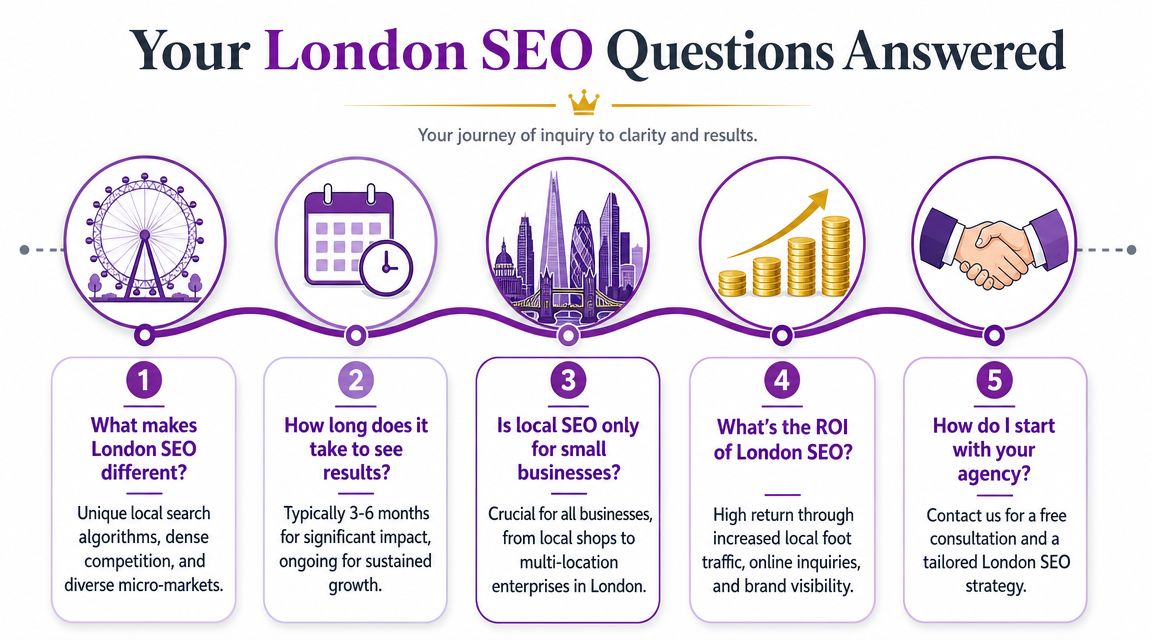
Your Questions About London SEO Answered
These are the questions business owners usually ask once they stop looking for generic traffic and start looking for qualified local enquiries.
How long does London SEO take
Long enough to do properly. Local SEO usually starts with foundational fixes, then profile alignment, page improvements, and authority work. Some changes can improve visibility earlier than others, but sustainable gains come from consistency.
The more competitive the postcode and sector, the more patience you need. A business in a quieter niche won't face the same pressure as one competing against entrenched firms across central London.
Can I do local SEO myself
You can do parts of it yourself. Many business owners can improve their Google Business Profile, tighten service descriptions, collect better reviews, and update core pages.
The difficulty is knowing what not to do.
DIY local SEO often goes wrong in a few predictable ways:
- Page overlap: Too many pages target the same intent.
- Weak location pages: Businesses create near-duplicate area pages that add no value.
- Profile mismatch: The site says one thing, the profile says another, and Google gets mixed signals.
- Poor measurement: Owners track rankings but not calls, form fills, or booked jobs.
If your time is better spent serving customers, DIY SEO can become expensive even when the software is cheap.
What should reporting look like
Useful reporting shows whether visibility is producing commercial action. It shouldn't bury you in jargon or flood you with meaningless graphs.
A solid local SEO report usually answers these questions:
- Are your key service and location pages becoming more visible?
- Is your Google Business Profile generating more meaningful actions?
- Which searches and areas are producing the strongest enquiries?
- What work was completed, and what changed because of it?
Is local SEO only for small businesses
No. It matters for single-location firms, multi-location service brands, practices, venues, and regional businesses trying to build stronger map-pack presence.
The core principle stays the same. Google needs clear evidence that your business is relevant to a local search, credible enough to show, and useful for the person making that search.
Start Your Growth with a Free SEO Health Check
Delaying local SEO has a cost. It usually doesn't show up as a dramatic collapse. Instead, it becomes apparent in the calls that go elsewhere, the bookings your competitors collect, and the postcode-level searches where your business should appear but doesn't.
That matters even more because SEO is already a substantial business category in the UK. The UK SEO and internet marketing consultancy market was valued at £19.2 billion in 2023, with Artios reporting a projected rise to up to £25 billion by 2028 in its UK SEO agency market statistics. That isn't a sign of hype. It's a sign that digital visibility has become part of normal business growth planning.
A free SEO health check is the sensible first move because it gives you clarity before commitment. You can see where your profile, pages, technical setup, and local targeting are helping or hurting performance. With this insight, you can then judge whether the next step should be profile work, technical fixes, location pages, authority building, or a combination.
If you want a practical review of where your London visibility is breaking down, start with Bare Digital. A health check gives you a clearer picture of how your business appears in local search, where qualified leads are being lost, and what to fix first.