
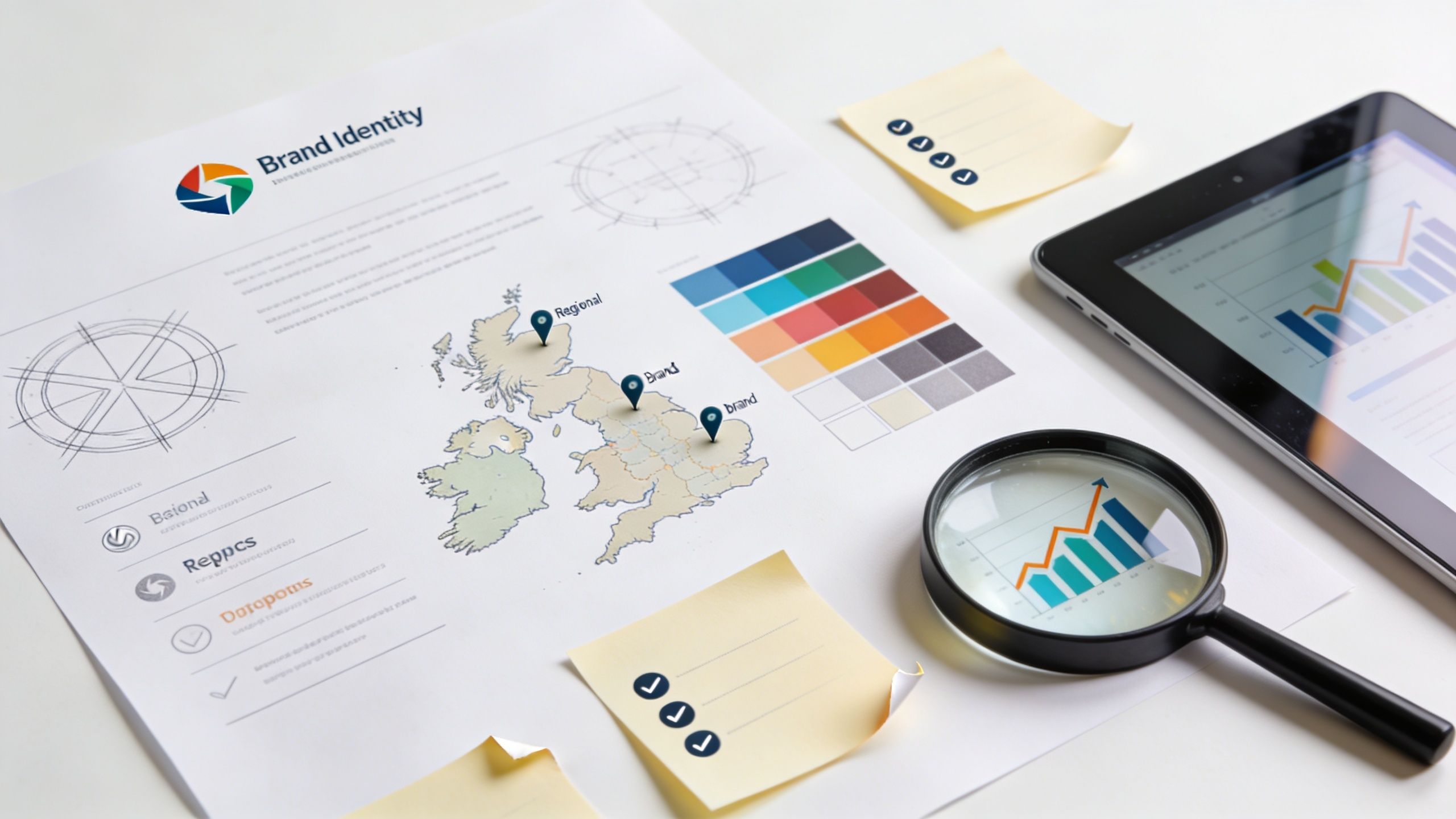

What makes a local business feel established before anyone has called, clicked, or walked through the door?
For many UK service businesses, brand starts in Google results, map listings, review sites, and business profiles. A prospect often forms an opinion in under a minute. They scan your opening hours, star rating, service area, photos, and whether your details match across the web. That first impression is your brand in practice.
This article takes a broader view of what an example of brand really looks like for local firms. A logo still matters, but it is only one part of the picture. Local authority is built through digital signals that search engines and customers both read. Your Google Business Profile, Trustpilot reviews, Apple Maps listing, schema markup, local pages, and citations all work like signposts pointing to the same business. When those signposts agree, trust rises. When they conflict, people hesitate.
That matters because local buying decisions are rarely abstract. Someone searching for a wedding venue in Guildford, a funeral director in Solihull, or a builder in Cambridge is not judging your colour palette in isolation. They are judging whether you look real, relevant, and reliable in their area.
A strong local brand is easier to understand than many guides make it sound. It comes down to ten practical systems that help customers find you and feel safe choosing you. If you want to assess one of the most visible signals first, start with a Google Business Profile audit for local service businesses. If your business depends on visual trust, property presentation, or location credibility, this guide on Street View for real estate shows how imagery can shape perception before contact.
Brand also continues after the click. Clear replies, polite follow-up, and reliable service confirm the promise your search presence made in the first place. That is why practical resources such as Recepta.ai's guide on client interaction matter. Good branding for a local business is not just how you look. It is how consistently your digital signals and customer experience tell the same story.
1. Google Business Profile
What do people see before they ever speak to you?
For many local service businesses, the answer is your Google Business Profile. That listing often acts like your digital shopfront. It gives potential customers a quick read on whether you look current, credible, and active in the area you say you serve. If the photos are old, the opening hours are wrong, or the category is off, people do not separate that from your brand. They assume the business itself may be just as disorganised.
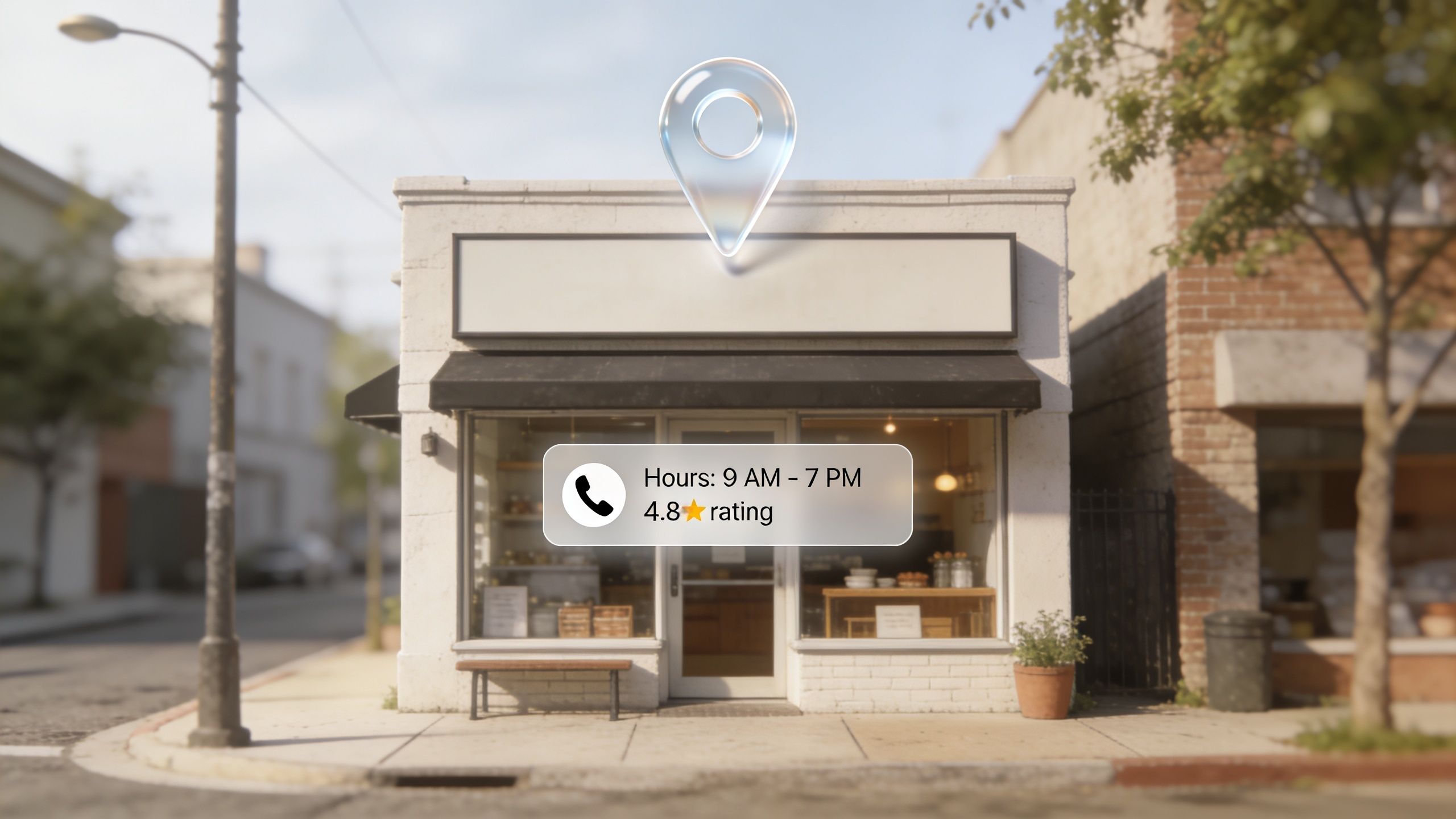
Local branding is not only about logos and colours. For a wedding venue, brand shows up in polished photos, accurate event details, and timely updates about viewings. For a funeral home, it shows up in calm imagery, clear service information, and thoughtful answers to common questions. For a construction firm, it shows up in project photos tied to real towns and service areas, which makes your reputation feel grounded rather than generic.
What strong GBP branding looks like
A strong profile is clear, consistent, and specific. Your business name, address, and phone number should match your website exactly. Your main category should describe what you do, not what you hope Google might reward. Your services, description, and photos should all point in the same direction, like signposts leading to the same place.
That consistency helps customers and search engines at the same time. A person scanning results wants quick reassurance. Google wants clean signals it can trust. When both get the same answer, your profile has a better chance of earning attention in the Map Pack and converting that attention into enquiries.
A practical example makes this easier to grasp. A multi-location wedding venue business can use Google Business Profile to give each site its own local identity while still keeping the parent brand consistent. The venue names, categories, imagery, Q&A, and service details all need to reflect the reality of each location. Done properly, GBP becomes more than a listing. It becomes one of the clearest examples of brand for a local business because it combines visibility, proof, and place.
A few habits usually make the biggest difference:
- Use recent photos: Show the premises, team, and real service experience, not only polished marketing shots.
- Choose categories carefully: Start with the core service, then add relevant secondary categories only where they fit.
- Keep details current: Hours, phone numbers, booking links, and service areas need regular checks.
- Reply to reviews and questions: Your tone in those replies shapes trust before a customer ever contacts you.
- Publish useful updates: Posts about seasonal services, open days, or recent work show that the business is active.
If you want to check whether your profile sends the right signals, this Google Business Profile audit tool helps spot gaps in local visibility and setup.
Visual trust matters here as well. For property-led businesses, hospitality brands, and any company selling a physical location, this guide on Street View for real estate shows how imagery can shape confidence before the first click or call.
2. Trustpilot
What do potential customers find when they look for proof that your business does what it says?
For many local service firms, they find Trustpilot before they ever call, book, or request a quote. That makes it part of your brand, not a side note. Your logo, website copy, and photos set expectations. Reviews test whether the actual experience matches them.
Trustpilot matters because it turns private service moments into public evidence. A clean website can promise reliability, but review patterns show whether people felt informed, respected, and looked after. For a local business, that is often the difference between being considered and being ignored.
Why Trustpilot matters for local authority
Branding for service businesses works a lot like reputation in a village. People may first notice the shop sign, but they decide based on what neighbours say after using the service. Online, Trustpilot fills that role at scale.
This is especially important for businesses where trust comes before the sale. A funeral director, accountant, home care provider, or wedding supplier is not selling a product on a shelf. They are asking people to believe that the experience will be handled well. Reviews help remove some of that uncertainty.
Trustpilot also supports search visibility indirectly. Strong, specific reviews can improve click confidence from branded searches, and they give you real customer language you can reuse on service pages, FAQs, and location content. If you specialise in visual, trust-led services, this matters just as much for niche sectors such as SEO for photographers, where reassurance often shapes the enquiry before rankings do.
The useful question is not "do we have reviews?" It is "what story do our reviews tell, again and again?"
If the recurring phrases are "turned up on time", "kept me informed", "clear quote", and "friendly team", your brand is becoming easier to trust. If reviews mention poor communication, surprise costs, or a mismatch between the sales promise and the delivered service, Trustpilot is showing you where the brand breaks down.
A simple review process usually works better than occasional bursts of asking:
- Request reviews at the right moment: Ask soon after the service is completed or after a positive follow-up.
- Prompt useful detail: Encourage customers to mention communication, timeliness, outcome, and professionalism.
- Reply with care: Thank happy customers properly. Respond to criticism calmly and specifically.
- Spot repeated themes: Use reviews to identify what customers value most, then reflect that language on your website.
Trustpilot works best as a feedback loop. It helps you see whether your brand promise holds up in real life, then sharpen the parts of your marketing that already ring true.
That is why it is one of the clearer examples of brand for a local business. It shows that brand is not only how you present yourself. It is how consistently other people describe the experience after you are gone.
3. Apple Maps
How often do you check how your business appears on an iPhone?
Many UK business owners put their energy into Google and leave Apple Maps untouched. That creates a gap in the brand experience. If a customer uses Siri, taps a map result from an iPhone, or follows directions through CarPlay, Apple Maps may be the first version of your business they see.
That matters because brand is not just your logo, colours, or van signage. For a local service business, brand is also the set of digital signals that tell people, "yes, this company is real, current, and easy to trust." Apple Maps is one of those signals.
Why Apple Maps shapes perception
A map listing works like a shopfront sign on a busy road. If the sign is wrong, faded, or points to the wrong entrance, people hesitate. The same thing happens online. Wrong opening hours, an outdated phone number, or weak imagery can make a good business look careless.
Apple Maps is especially useful for service businesses that rely on location intent. A wedding venue can show up for nearby searches on an iPhone. A funeral director can guide families to the correct branch without extra confusion. A trades business can make it easier for customers to call, get directions, and confirm they are dealing with the right company.
The practical lesson is consistency. Your business name, address, phone number, category, website, and photos should line up with what appears on your site and other listings. If each platform presents a slightly different version of the business, trust drops before the enquiry even starts.
A local photographer shows this clearly. If the Apple Maps listing uses strong imagery, points to the right website, and matches the business details on every other platform, the company feels organised and premium. If you want a closer look at how local visibility shapes perception in creative services, Bare Digital's guide to SEO for photographers is a useful reference.
Keep the job simple. Claim the listing, verify it, upload real photos, and review it whenever your hours, phone number, or service area changes. Small corrections here strengthen the wider brand because they remove doubt at the exact moment a customer is deciding whether to contact you.
4. Facebook Business Manager
What happens after someone finds your business on Google and wants a second opinion?
For many local service businesses, they check Facebook. They are not always looking for polished branding in the traditional sense. They are looking for signs of life. Recent posts. Real photos. Replies to comments. Clear service details. Facebook Business Manager matters because it helps you control those signals across your Facebook page, ads, messages, and team access from one place.
That is why it belongs in a serious list of examples of brand. For a plumber in Leeds, a dog groomer in Bristol, or a solicitor in Manchester, brand is not just a logo on a van. It is the full digital trail that tells people, "Yes, this business is active, organised, and trustworthy."
Facebook as a trust check
Facebook often works like a shop window people glance at before walking in. If the page looks abandoned, confidence drops. If it shows current work, local involvement, and consistent details, the business feels more reliable.
This matters most for services where trust comes before the sale.
A wedding venue can post event photos, seasonal offers, and open-day reminders. A builder can share completed projects by area and answer practical questions in comments. A funeral director can use the page carefully for notices, community support, and clear contact information. Each example shows the same principle. Your Facebook presence should match the standard of service people expect when they contact you.
The job of Business Manager is simple. It keeps ownership, permissions, ad accounts, and connected assets under control, which is especially useful if a staff member leaves or an agency helps with campaigns. That is less exciting than design work, but for local brands it often matters more. A business cannot look dependable online if nobody can access the right page or respond to enquiries quickly.
A strong local setup usually includes:
- Accurate business information: Your page name, phone number, website, and opening times should match your other branded assets.
- Recent local content: Share actual jobs, team updates, customer FAQs, and community activity rather than stock graphics.
- Message handling: Treat Messenger like a front desk, not an afterthought.
- Clear admin control: Use Business Manager so the right people can manage the page without sharing personal logins.
If you are tightening up the wider local picture as well, this local SEO checklist for service businesses helps connect Facebook with the other trust signals customers and search engines use.
Facebook is not where local authority starts. It is where many people verify it. For UK business owners, that makes it part of the brand system, not a side channel.
5. Local SEO
Local SEO is one of the clearest examples of brand because it turns your business identity into something search engines can understand and rank. If branding is a promise, local SEO is how you publish that promise in the right places, with the right wording, for the right towns and postcodes.
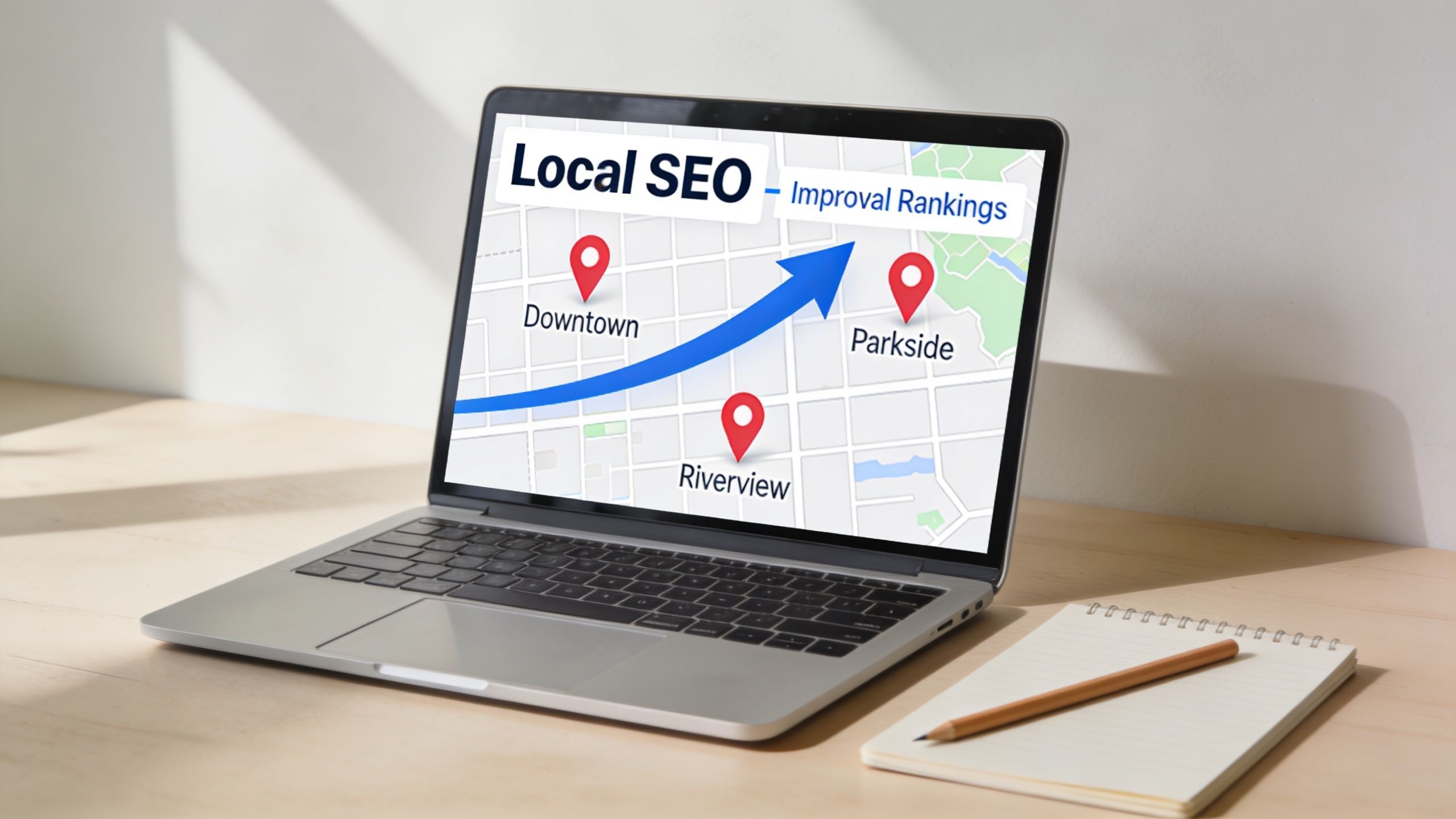
A lot of owners think local SEO starts with keywords. It doesn't. It starts with clarity. What do you do, where do you do it, and why should someone trust you over nearby alternatives?
The brand signal behind rankings
For service businesses, local SEO combines technical health, page structure, reviews, content, citations, and links. A builder in Cambridge, a therapist in Birmingham, and a caterer in Kent all need different messaging, but the brand principle is the same. Show relevance and reduce doubt.
Many brand examples show a greater emphasis on practicality than on visual elements. A clean logo matters, but a dedicated page for each service area often matters more. So does mobile usability. So does page speed. So does whether your title tags and headings reflect what people search for.
The strongest approach is usually layered:
- Location pages: Give each town or branch its own focused page.
- Service intent: Match pages to terms real customers use.
- Technical fixes: Remove crawl, speed, and indexing issues that weaken trust with Google.
Strong local brands don't appear everywhere by accident. They structure their websites so each location and service has a clear home.
If you want a practical framework, Bare Digital's local SEO checklist is a useful starting point for auditing the basics.
The key mindset shift is this. Local SEO isn't separate from branding. It's branding translated into search signals.
6. Google Analytics 4
A brand strategy that can't be measured usually turns into guesswork. That's where Google Analytics 4 earns its place.
GA4 doesn't make your brand look better on its own. What it does is show you which pages, locations, and enquiries are moving the business forward. For a local service company, that means you can stop treating all traffic as equal. A page that brings casual visits isn't the same as one that drives calls and booked consultations.
What GA4 tells you about brand performance
A wedding venue can track brochure downloads, form submissions, and calls from local landing pages. A construction company can compare quote requests by town. A funeral home can measure whether informational pages lead to meaningful contact rather than quick exits.
One of the strongest examples in the verified data comes from a Midlands funeral home network. Bare Digital's Advanced package combined GBP authority work, hyper-local keyword research, blogs, backlinks, and technical fixes. After six months, the campaign generated 42 sales enquiries and delivered a 9.2x ROI on a £2,400 investment, as described in this agency work example reference.
That's the primary purpose of GA4. It helps connect brand activity to business outcomes. Not just traffic. Not just impressions. Enquiries, phone calls, and sales value.
A practical GA4 setup should include:
- Defined conversions: Calls, form submissions, booked meetings, and downloads.
- Location-based views: Segment users by area served or landing page location.
- Search integration: Tie organic landing pages to conversion quality, not only visit volume.
Use the data to sharpen the brand, not just report on it. If one town page converts better than the others, check the copy, proof points, and page structure. There's usually a reason.
To help visual learners, here's a quick explainer on the platform:
7. Schema Markup
What does Google see when it reads your website. A polished local business, or a set of pages it has to guess its way through?
Schema markup helps remove that guesswork. It is structured data added to your site that labels the important parts of your business, such as services, opening hours, FAQs, reviews, and location details, in a format search engines can process clearly.
For local service businesses, that matters because brand is not just your logo or colour palette. Brand is also the set of signals that confirm who you are, where you operate, and what you offer. Schema strengthens those signals behind the scenes.
Why structure strengthens local authority
A good analogy is shelf labelling in a shop. If every product is labelled properly, shoppers find what they need faster and trust the store more. Schema does the same job for search engines. It labels your digital shelves.
A wedding venue might mark up event information and FAQs. A funeral home can add structured answers to common planning questions. A therapist might combine LocalBusiness schema with Service schema so Google can understand both the practice location and the treatments offered.
That clarity can support richer search results and help search engines connect your service pages with your business details. For firms investing in local SEO services in Cambridge, schema is often one of the technical pieces that helps location pages make more sense in local search.
It also improves first impressions before the click. If your search result shows clear business details, relevant FAQs, or service information, your brand appears organised and credible from the outset.
A practical order for implementation looks like this:
- Start with LocalBusiness schema: Add your business name, address, phone number, opening hours, and category.
- Add Service schema: Use it on service pages so each offer is clearly defined.
- Use FAQ or Event schema selectively: Only mark up content that is genuinely visible on the page and useful to searchers.
One caution matters here. Schema has to match the page itself. If your markup says one thing and the visible content says another, you create confusion instead of trust.
Clear branding works on two levels. People need to understand your business quickly, and search engines need to classify it accurately. Schema helps with the second part, which makes the first part easier.
8. Directory Citations and Local Listings
What makes a local business look established online before a customer even visits the website? In many cases, it is the pattern of consistent business details across the web.
Directory citations and local listings are often treated as admin work. For local service businesses, they are a brand signal. If your company name, address, phone number, opening hours, and service categories match across trusted platforms, you look credible to both search engines and potential customers. If those details conflict, the opposite happens. A wrong phone number or an old address creates the same impression as a shop sign with missing letters. People hesitate.
This is why citations belong in a list about brand, not just local SEO. Your brand is not only your logo or colour palette. It is the digital trail that proves your business is real, active, and reliable in the places people check.
Consistency builds confidence
The right directories depend on the trade. A wedding venue may need accurate profiles on Hitched and regional venue directories. A builder may rely on Checkatrade, Yell, and local trade sites. A therapist may need mainstream listings as well as specialist healthcare directories.
The goal is accuracy in the places your customers already trust.
That matters even more for businesses where reassurance affects the buying decision. In healthcare, home care, legal services, and funeral services, clear listings help reduce doubt. A business with mismatched contact details can look disorganised, even if the service itself is excellent.
A useful citation clean-up usually involves three steps:
- Audit existing listings: Find duplicates, old profiles, and inconsistent versions of your business name.
- Standardise your core details: Keep your name, address, phone number, website, and opening hours identical wherever possible.
- Prioritise high-value platforms: Start with the directories and maps platforms that customers use, then update industry-specific sites.
There is also a direct connection to your wider local authority. Listings work best when they point to a page that clearly matches the area and service being searched. A page about SEO services in Cambridge shows how a local service page can support that regional relevance.
Citations are not flashy, and they rarely feel exciting. They work more like the foundations under a house. No one compliments them first, but everything above them depends on being solid.
9. Content Marketing and Location Pages
What does your brand say before anyone picks up the phone?
For a local service business, the answer often sits on your website. Brand is not just your logo, colours, or tone of voice. It is the set of digital signals people see while deciding whether to trust you. Content and location pages are part of that system. They help Google understand where you work, and they help potential customers judge whether you understand their problem.
A good location page works like a well-briefed receptionist. It should answer three questions quickly. Do you serve this area? Do you offer the specific service I need? What should I do next?
That is why useful local content builds brand strength in a very practical way. It creates familiarity before contact. It shows how you work. It gives people a reason to trust you before they enquire.
The strongest approach usually has two parts. First, location pages for the towns or areas you serve. Second, supporting content that answers real pre-sale questions. A construction company, for example, might pair town-specific service pages with articles about planning timelines, renovation stages, or common project mistakes. A strong SEO strategy for construction companies often depends on that mix, because it gives both users and search engines clearer local context.
Here is what strong local content usually includes:
- Real local detail: Name the area clearly and match the page to the service offered there.
- Useful buying information: Explain options, costs, timelines, risks, or what to expect.
- Clear proof of relevance: Add examples, case studies, testimonials, or FAQs tied to that service and place.
- Simple next steps: Make it easy to call, book, or request a quote.
The difference between weak and strong pages is usually intent. A thin page repeats place names because it wants rankings. A strong page helps someone make a decision.
That matters for branding. If your Cambridge page, your boiler repair guide, and your contact process all feel clear and consistent, people read that as competence. If they feel vague, copied, or generic, people read that as risk.
A photographer might create separate pages for Cambridge, Ely, and Newmarket, then publish articles about venue choices or seasonal shoots. A funeral home might write clear guidance on immediate next steps for families in specific areas, with careful language and local contact details. An architect might explain planning constraints by district, which shows local knowledge long before the first consultation.
Useful content does more than fill a blog. It helps build local authority, trust, and search visibility, which is what brand really means online for many UK service businesses.
10. Link Building and Authority Development
What makes a local service brand look established online when two firms offer the same service, in the same town, at a similar price? Often, it is who is willing to mention them.
Links work like public references. A logo and colour palette may shape first impressions, but links show whether other organisations trust your business enough to put your name on their own website. For local service businesses, that is branding in its practical digital form. It strengthens search visibility, yes, but it also builds the kind of authority people feel before they enquire.
The best links usually come from real-world connections. A local paper covering a charity event you supported. A trade body member profile. A supplier page listing approved installers. A regional business group linking to a case study or resource on your site. Those mentions place your business in relevant local and industry context, which is far more useful than collecting random links from unrelated websites.
Earn links that match the business you want to be
A wedding venue can earn links from florists, photographers, and caterers through preferred supplier pages. A builder might get coverage after completing a notable project or supporting a community initiative. A funeral home may be referenced by carefully chosen local organisations or professional bodies where trust and discretion matter.
Helpful businesses also attract mentions more naturally. If your site answers common questions clearly, if your process is easy to understand, and if customers speak well of working with you, partners and local publishers have a stronger reason to cite you. Good link building often starts with being useful offline and clear online.
A few rules keep authority building sensible:
- Choose relevance over volume: One link from a respected local or industry site can do more than dozens of weak directory links.
- Give people something worth referencing: Useful guides, detailed service pages, original local research, or practical FAQs are easier to cite.
- Start with relationships: Outreach works better when there is already a real reason for the connection.
- Keep the destination strong: If someone clicks through, the page should confirm trust fast with clear services, proof, and contact details.
For trades and contractors, Bare Digital's SEO for construction companies explains how authority signals support a wider local search strategy.
A healthy backlink profile is often a visible record of trust. Other organisations are willing to associate their name with yours in public.
Top 10 Local Brand Tools Comparison
A local brand is built from signals people and search engines can verify. This table compares the ten tools and tactics in that light. Use it like a priority map. If your business were a high street shop, some of these would be your signage, some your word of mouth, and some the records that prove you are established and easy to trust.
| Tactic / Tool | Implementation Complexity 🔄 | Resource Requirements ⚡ | Expected Outcomes 📊 | Ideal Use Cases 💡 | Key Advantages ⭐ |
|---|---|---|---|---|---|
| Google Business Profile (GBP) | Low. Ongoing management still matters for claiming, optimisation, and monitoring | Low. Time, photos, and review management | Strong local visibility, better map pack presence, and more direct enquiries | Brick and mortar businesses and local service firms targeting "near me" searches | Direct impact on Google Maps visibility, free to use, drives calls and visits |
| Trustpilot | Low. Easy to set up, but review collection needs regular follow-up | Medium. Email outreach and reputation management | More trust, stronger social proof, and profile visibility in search results | Service businesses that benefit from independent reviews | Third-party credibility, trusted review format, and useful brand reassurance |
| Apple Maps | Low. Claiming is simple, with fewer optimisation options than Google | Low. Accurate NAP details, photos, and attention to iOS user feedback | Better visibility for iPhone, Siri, and Apple ecosystem users | Businesses serving areas with strong iOS usage or voice search demand | Access to Apple users, lighter competition than Google Maps |
| Facebook Business Manager | Medium. Setup, posting, messaging, and ads all need handling | Medium to High. Content production, admin time, and possible ad spend | Community engagement, local lead generation, and event visibility | Visual, event-led, or community-focused businesses such as venues, photographers, and trades | Large audience reach, Instagram connection, and direct messaging for enquiries |
| Local SEO | High. Technical work, on-page improvements, citations, and links take steady effort over time | High. SEO knowledge, content, link acquisition, and tools | Long-term organic visibility, stronger map performance, and high-intent leads | Any SME that wants sustained local search visibility and enquiries | Strong long-term return from local search and rankings that can hold over time |
| Google Analytics 4 (GA4) | Medium. Event tracking and conversion setup need careful configuration | Medium. Analytics knowledge, integrations, and sometimes call tracking | Clearer attribution, conversion tracking, and channel-level ROI measurement | Businesses that need to measure which local campaigns lead to calls or forms | Detailed data on user behaviour and conversions, with close integration across Google tools |
| Schema Markup (Structured Data) | Medium. Usually needs developer input, with JSON-LD often preferred | Low to Medium. One-off setup plus occasional updates | Better click-through rates and eligibility for richer search results | Websites that want clearer service, FAQ, or event information in search | Helps search engines interpret your business clearly and can improve SERP appearance |
| Directory Citations & Listings | Medium. Requires auditing, submissions, and regular consistency checks | Medium. Time, or listing management tools and services | Better local authority and stronger map visibility through consistent business data | Multi-location firms and local service businesses | Reinforces trust through consistent NAP data and creates extra discovery points |
| Content Marketing (Blogs & Location Pages) | Medium to High. Needs planning, writing, optimisation, and promotion | High. Writers, SEO input, promotion, and upkeep | Gradual traffic growth, more authority, and more opportunities to rank for local intent | Businesses that want to educate buyers, target long-tail searches, and strengthen brand presence | Builds expertise signals, supports local relevance, and attracts useful links over time |
| Link Building & Authority Development | High. Requires outreach, PR, and relationship building | High. Content assets, outreach time, and PR skill | Better domain authority, ranking gains, and referral traffic | Businesses in competitive local markets that need stronger credibility signals | Difficult for competitors to copy and valuable for long-term search performance |
The key point for UK business owners is simple. Brand strength online is rarely one tool doing all the work. It is the combined effect of visible, consistent, trustworthy signals across search, maps, reviews, content, and measurement.
If you are deciding where to start, begin with the signals customers see first, then add the layers search engines use to confirm authority. That usually means your Google Business Profile, review platform, listings, and local pages first. Analytics and schema then help you measure and clarify what is already in place.
Build Your Local Brand, One Signal at a Time
What does a strong local brand look like online?
For many UK business owners, it is not a logo, a colour palette, or a slogan on its own. It is the pattern people and search engines see every time your business appears. Your Google Business Profile, reviews, map listings, service pages, tracking setup, and technical signals all leave clues. Put together, those clues form your brand in the local search market.
A useful way to view it is this. Local branding works like a chain of evidence. One signal says you exist. Another says you are active. Another says customers trust you. Another confirms where you work and what you do. Search engines compare those signals across platforms, and potential customers do the same in a quicker, more instinctive way.
That is why the strongest local brands are built in layers, not in isolation. Google Business Profile gets you into the places people search first. Trustpilot and other review platforms add public proof. Apple Maps and directory citations widen your footprint. Local pages and content explain your services in the places you want to win. Schema markup gives search engines cleaner context. GA4 shows which of those efforts produce calls, forms, and bookings.
Consistency still matters commercially. If your opening hours differ across platforms, or one location page uses a different phone number from your listings, trust starts to fray. A homeowner looking for a plumber in Leeds or a solicitor in Croydon is not studying your brand guidelines. They are asking a simpler question. Does this business look real, reliable, and easy to contact?
Start with the signals that shape first impressions and buying confidence:
- Get your core profiles into shape: Make sure your Google Business Profile, Apple Maps, and Facebook business details are complete and current.
- Keep business data consistent: Use the same business name, address, phone number, and service details across your website and listings.
- Create one useful location page first: Build a page that clearly explains services, area coverage, proof, and contact options for one target location.
- Measure enquiries properly: Set up GA4 so calls, form submissions, and booking clicks are recorded against the pages and channels that drove them.
- Add technical trust signals next: Use schema markup and citation work to help search engines confirm what customers already see.
This step-by-step approach matters because each signal supports the next. Better listings improve discovery. Better reviews improve response rates. Better pages improve conversion. Better tracking helps you decide what to fix, expand, or stop. Over time, your local brand becomes easier to find, easier to verify, and easier to choose.
If you want outside help, Bare Digital is one UK-based option for businesses that need support with local SEO, Google Business Profile optimisation, content, technical fixes, and reporting tied to outcomes. The practical goal stays the same whichever route you choose. Build local authority one clear signal at a time.
For a broader perspective on visibility and positioning, this article on how to boost your brand's visibility is also worth a read.
If you want help turning these brand signals into local rankings and enquiries, Bare Digital offers UK-focused local SEO support, including Google Business Profile work, location pages, technical fixes, content, and authority building. A practical first step is reviewing your current visibility and identifying which signal is holding the business back.






