

You're good at the work. You answer the phone, turn up, solve messy problems, and leave customers relieved. But if your phone isn't ringing as often as it should, the issue often isn't your plumbing. It's your visibility.
This is the current state of local SEO for plumbers in the UK now. A homeowner with a leak, no hot water, or a blocked toilet doesn't sit down and compare ten companies over coffee. They grab a phone, search fast, and pick from what Google puts in front of them. If you're missing from that shortlist, someone less reliable but better positioned gets the job.
The good news is that local SEO for plumbers is still one of the clearest digital channels for generating calls. It rewards businesses that get the basics right, stay consistent, and build pages around real service areas instead of trying to game the system. The tricky part, especially in the UK, is doing that across multiple towns and postcodes when you only have one real base.
Your Digital Shopfront Is No Longer Your Website
A lot of plumbers still think their website is the centre of their online presence. It isn't.
Your Google Business Profile is usually the first thing a potential customer sees. Before they visit your site, they're judging your reviews, checking your hours, scanning your photos, and deciding whether to call straight from the map result. For urgent work, that decision happens fast.
Google has reported that 76% of people who search for something nearby on a smartphone visit a related business within a day, and 28% of those searches result in a purchase, which is why local visibility can turn directly into booked work for plumbers (Valve+Meter's local SEO guide for plumbers).
Maps replaced directories
Years ago, trades relied heavily on directories and referrals. Referrals still matter, but search behaviour has changed. Discovery is now map-led. That means the battle is often won or lost inside Google Maps and the Local Pack, not on page three of a generic search result.
For plumbers, that shift matters more than it does for many other businesses because demand is often urgent and local. A customer searching “emergency plumber in Swindon” or “boiler repair near me” doesn't want a brand story. They want a trusted local option that looks available now.
The plumber who appears credible at the moment of need usually gets the call. Not the plumber with the prettiest website.
What this means in practice
If you're trying to improve local SEO for plumbers, stop treating your website as the only asset that matters. Think in this order:
- Map visibility first: Show up where local intent is strongest.
- Trust signals second: Reviews, accurate details, and recent activity make people comfortable calling.
- Website support third: Your site validates what your profile promises and expands your reach into service and location searches.
If you want another practical take on boosting plumber leads with local SEO, it's worth comparing approaches and noticing how often the same fundamentals keep coming up. The details vary, but the businesses that win tend to own their map presence, not just their homepage.
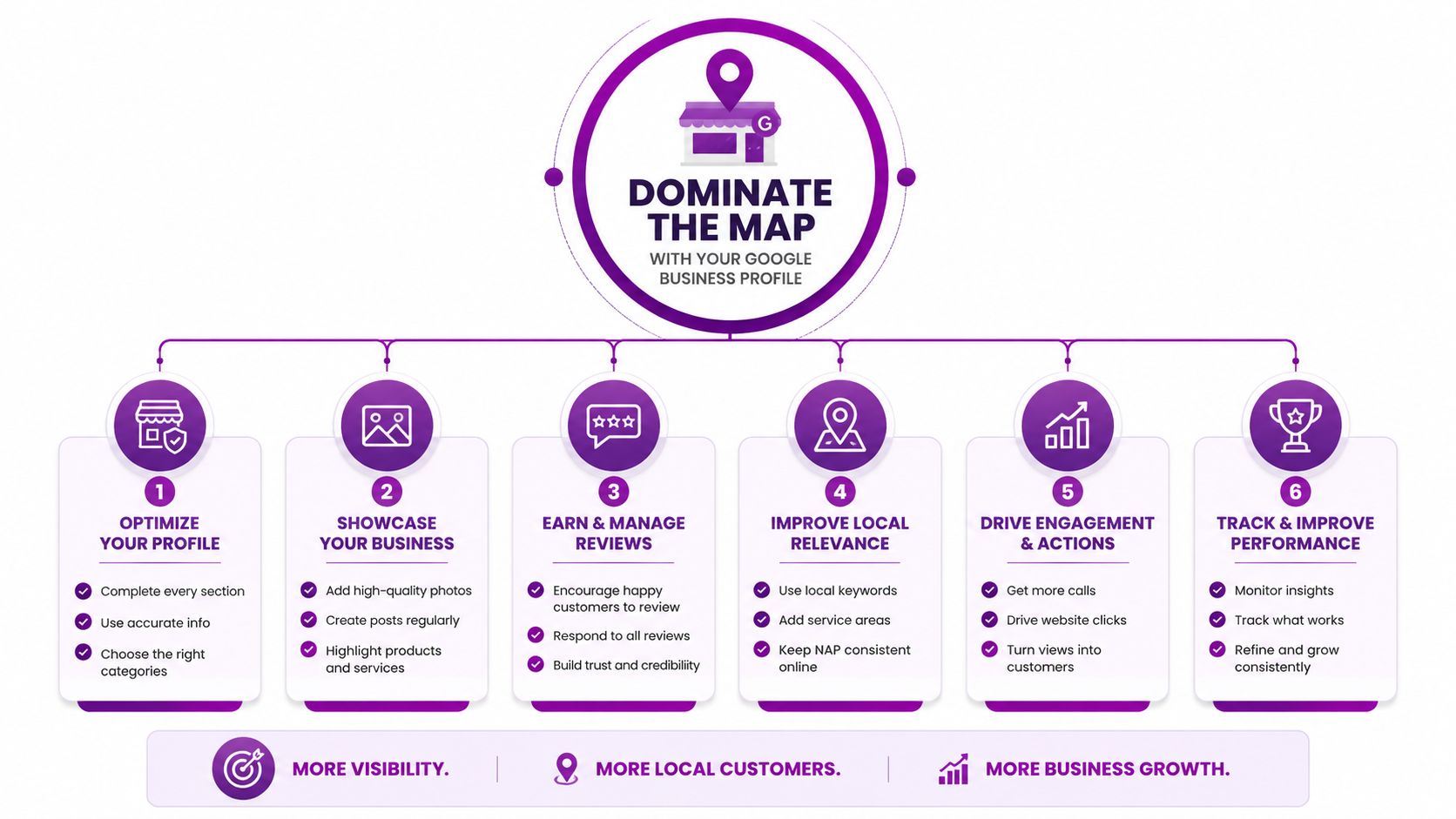
Dominate the Map with Your Google Business Profile
For most UK plumbers, this is the most impactful local SEO task on the list.
Google's own UK consumer research found that 46% of people use search engines to find local businesses, so incomplete or inconsistent business data reduces your chances of being found in the first place (local SEO guidelines for plumbers). If your profile is half-filled, outdated, or inconsistent with your website, you're making Google's job harder and your own lead flow weaker.
Get the core details right
This sounds basic because it is. It's also where many profiles fall apart.
Your business name, phone number, website, business category, and service setup must match reality. Don't add extra keywords to your business name. Don't list services you don't offer. Don't use a tracking number in one place and your main line somewhere else unless you know exactly how that affects consistency.
Use your profile to reflect how the business operates:
- Primary category: Pick the category that best fits your core trade.
- Service areas: Add the towns or areas you serve.
- Hours: Include normal opening hours and emergency availability if relevant.
- Description: Write like a real business owner, not like a keyword generator.
Fill the profile properly
A complete profile gives both Google and customers more to work with. That includes services, business description, attributes, and photos. Many plumbers claim a profile and then stop after the absolute minimum. That leaves ranking opportunity on the table.
Photos matter because they make the listing feel active and real. Upload branded vans, team photos, before-and-after work where appropriate, and clear job-related images. Avoid stock images. They look generic because they are generic.
Here's the practical checklist I'd use:
- Claim and verify the profile
- Choose the most accurate main category
- Add each core service individually
- Write a clear description with natural location and service language
- Upload recent photos regularly
- Check your phone number, site link, and service areas
Use the features most plumbers ignore
Google gives you more than a digital business card. Use it.
The Q&A section is one of the easiest wins. Add your own common questions and answer them clearly. Think like a customer: do you offer emergency callouts, do you cover certain towns, do you work weekends, what systems do you service?
Posts can also help keep the profile fresh. They won't rescue a weak profile on their own, but they do show activity. Use them for emergency availability, seasonal reminders, or highlighting a specific service.
Practical rule: If a customer could ask it on the phone before booking, answer it on your profile first.
Check consistency against your website
Your Google Business Profile should align with your website footer, contact page, and main local landing pages. If your profile says one thing and your site says another, Google gets mixed signals.
That's why a profile audit is useful before you start tweaking pages. If you want a benchmark for what to review, a Google Business Profile audit tool can help you spot gaps in completeness, trust signals, and local relevance.
What doesn't work
A few common mistakes keep showing up:
- Keyword stuffing the business name: It can get suspended or filtered.
- Adding every nearby town to every field: That usually looks forced.
- Uploading a batch of images once and never touching it again: Stale profiles feel neglected.
- Ignoring duplicate listings: Duplicates split authority and confuse users.
A strong profile isn't clever. It's complete, accurate, active, and aligned with the rest of your local footprint.
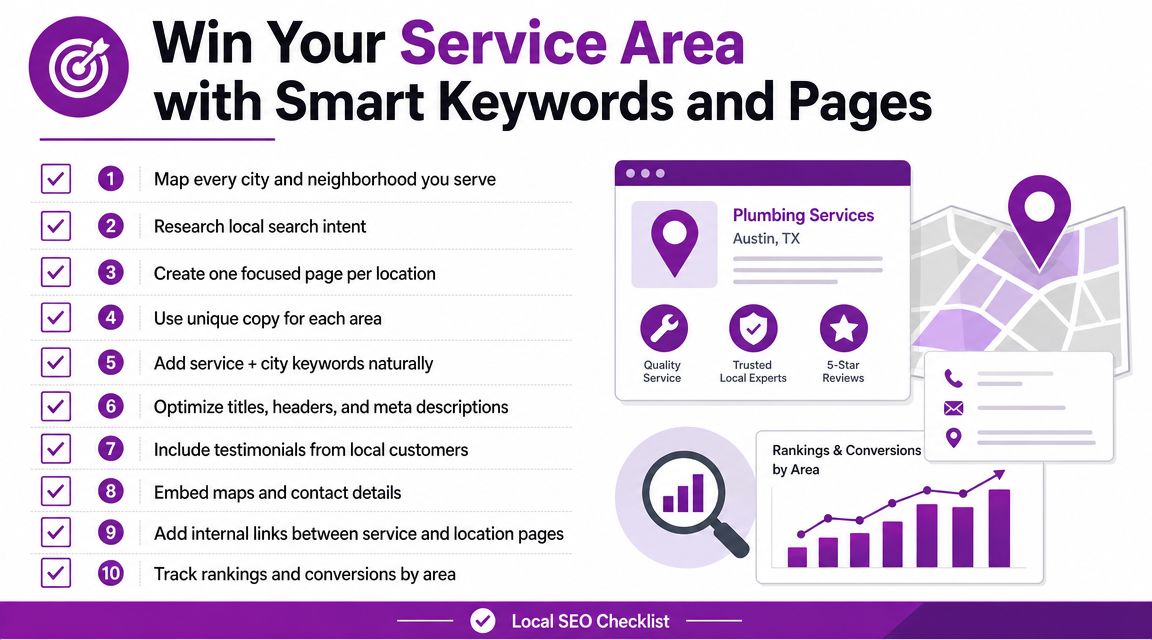
Win Your Service Area with Smart Keywords and Pages
Most plumber SEO advice gets vague at this point.
It's easy to say “create location pages”. It's harder to do it properly when you cover several towns from one base and don't want to break Google's guidelines or flood your site with near-identical junk pages. That's the main challenge.
Ofcom reports that 88% of UK adults used a smartphone in 2024, which matters because mobile is the main way many people search for nearby services. For plumbers trying to rank across multiple towns without opening multiple offices, a postcode-led content architecture is the practical answer (how to do local SEO for plumbers).
Start with services, then layer locations
A lot of plumbing sites get this backwards. They build lots of town pages without having solid service pages first.
Your structure should normally work like this:
- Main service pages: Emergency plumber, boiler repair, leak detection, blocked drains, bathroom plumbing, and so on
- Location-led service pages: Emergency plumber in Guildford, boiler repair in Woking, blocked drains in Farnham
- Supporting local content: FAQs, area-specific issues, nearby project references, and service coverage details
This helps Google understand both what you do and where you do it.
Build pages around real demand
Don't create a page for every postcode just because you can. Create pages for places where you actively work, can write something useful, and can support the page with genuine local relevance.
A good service-area page usually includes:
- A clear headline: service plus town
- A short intro: what you offer in that area
- Specific local detail: not fake office claims, but real coverage language
- Relevant service problems: the kinds of jobs you handle there
- Trust signals: reviews, accreditations, or examples tied to nearby work
- Strong calls to action: call, quote request, emergency booking
Avoid thin postcode swaps
Local SEO for plumbers can quickly go wrong. Many businesses produce dozens of pages where only the town name changes. Same text, same structure, same promises. Google doesn't need fifty versions of the same page, and neither do users.
A better model is postcode-led clustering.
For example, instead of making endless low-value pages, group your coverage logically:
| Area cluster | Best page type | What to include |
|---|---|---|
| Main town | Full location page | Broad services, trust signals, area coverage |
| Nearby priority town | Service + town page | Popular jobs, local response context |
| Smaller surrounding postcodes | Mention within cluster page | Coverage notes, callout details, internal links |
This gives you a cleaner architecture and reduces cannibalisation.
If you work in adjacent trade sectors or want to see how location intent can be mapped more strategically, this guide to SEO for construction companies shows the same principle from a broader service-area angle.
Write pages that sound local without pretending
You do not need a fake office in every town. You do need convincing evidence that you serve the area properly.
That means writing things like:
- the types of properties you work in locally
- the common callouts you get in that area
- whether you cover the centre only or surrounding villages too
- your realistic response approach for emergency jobs
If the page would still make sense with every place name removed, it probably isn't local enough.
What works better than mass page generation
Three strong location pages will often outperform thirty weak ones.
The winning setup is usually:
- a complete Google Business Profile
- strong core service pages
- a handful of useful town pages
- internal links between related services and places
- review signals that reinforce local relevance
That's how you expand from one base into multiple towns without turning your site into duplicate-page clutter.
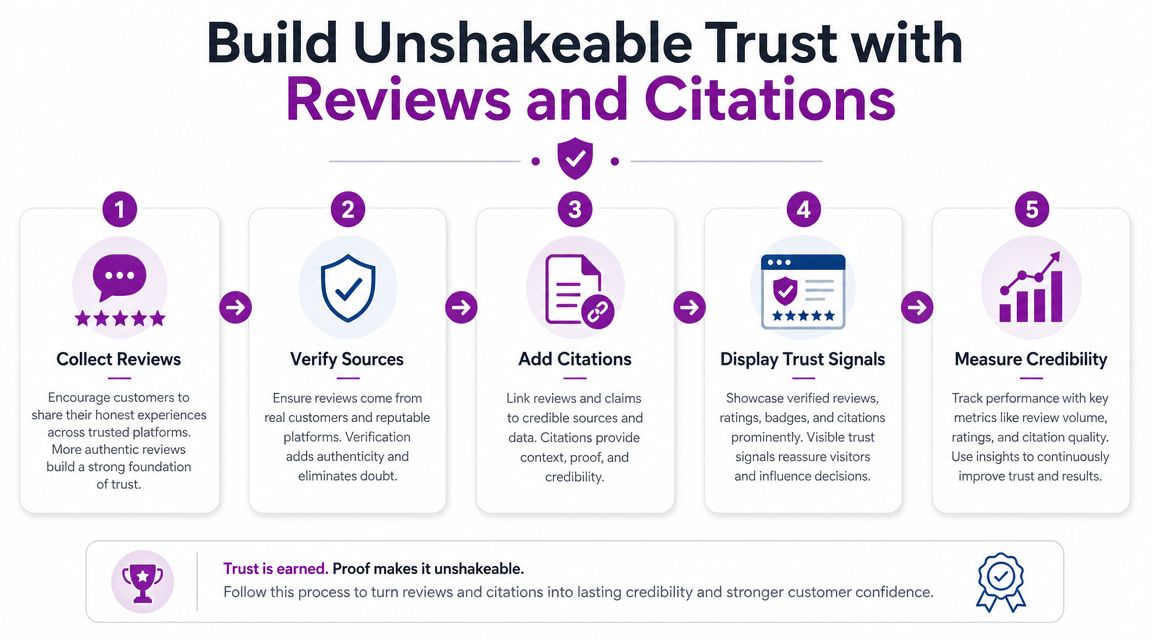
Build Unshakeable Trust with Reviews and Citations
Rankings matter. Trust decides whether someone calls.
For plumbers, reviews aren't a vanity metric. They're part of the operating system. UK local business research shows 87% of consumers read online reviews for local firms, and the practical method for plumbers is straightforward: ask immediately after the job, send the customer to the Google Business Profile review link, and respond to every review (how to master local SEO for plumbers).
Reviews need a process, not hope
Most plumbers ask for reviews when they remember. That leads to long gaps, then a sudden scramble to get a batch after a quiet month. That uneven pattern is weak for both trust and local SEO.
You want a repeatable review habit built into the job completion process.
A simple workflow looks like this:
- Right after the job: ask while the customer is still relieved the problem is fixed
- Send the direct link: text is usually easiest
- Keep the ask short: don't over-explain
- Reply to each review: thank them, mention the service naturally, and sound human
A short script works well:
“Thanks again for having us out today. If you've got a minute, I'd really appreciate a quick Google review. Here's the direct link.”
Respond like a local business owner
A review response doesn't need to be polished corporate copy. It should sound like a real business. If someone mentions an emergency leak in Harrogate or a boiler issue in Leeds, a natural reference in your reply can reinforce local and service relevance.
Don't force keywords. Just write like someone who remembers the job.
For negative reviews, keep it calm. Acknowledge the issue, offer to resolve it, and move specifics offline. A messy public argument does more damage than the original complaint.
This video gives a useful overview of handling review and reputation processes in a practical way:
Citations still matter because consistency matters
Citations are mentions of your business details across directories and platforms. They're not glamorous, but they help confirm that your business is legitimate and consistently represented.
For a UK plumbing business, the important thing is NAP consistency. Your business name, address, and phone number should appear the same way across your website, Google Business Profile, and key directory listings.
Focus on:
- Core platforms: major maps and business listings
- Trade-relevant directories: where homeowners might still compare services
- Local organisations: chambers, community sites, supplier directories, trade bodies
Local relevance beats random link chasing
A common mistake is pursuing generic backlinks from anywhere that will list you. For a local plumber, a smaller number of relevant local mentions usually makes more sense than broad, low-quality links.
That could mean links from:
- local chambers of commerce
- supplier partner pages
- trade associations
- community sponsorship pages
- local business directories with actual standards
If you want a broader framework for managing review requests, replies, and feedback workflows, this 2026 agency playbook is useful as a process reference.
Reviews build confidence with customers. Consistent citations build confidence with Google. You need both.
Create Content That Turns Customer Problems into Jobs
Most plumbing websites stop at service pages. That leaves a lot of search demand untouched.
A homeowner doesn't always search for “plumber in my town” first. Sometimes they search the problem. “Why is my boiler losing pressure?” “What causes a radiator to stay cold?” “Can a dripping overflow pipe wait?” Those searches happen before the booking call, and they're an opportunity to become the obvious expert.
Write about problems customers already bring to you
The best content ideas usually come from your own phone calls, quote requests, and job history.
If customers repeatedly ask the same questions, those questions belong on your site. Good examples include:
- Boiler issues: signs it needs repair versus replacement
- Leaks: what homeowners should do before the plumber arrives
- Blocked drains: what causes recurring problems
- Low water pressure: common causes and when it needs professional attention
- Frozen pipes: prevention and immediate response
A basic article doesn't need to be fancy. It needs to be clear, accurate, and written for stressed homeowners rather than other tradespeople.
Make the content commercially useful
Helpful content shouldn't drift into DIY-only traffic with no business value. The trick is to answer the question accurately, then show where professional help becomes necessary.
For example, an article on a leaking tap can include:
- a quick explanation of likely causes
- a few safe checks the homeowner can do
- the signs the issue is part of a bigger plumbing fault
- a prompt to call if the leak continues or worsens
That approach builds trust without giving away the job.
A good plumbing article reduces uncertainty. That often creates the call.
Build topical depth, not random blog clutter
If you only publish disconnected posts, the site stays thin. If you publish around themes, authority grows.
A stronger model is to create small topic clusters around your core services:
| Topic cluster | Core service page | Supporting content ideas |
|---|---|---|
| Boiler problems | Boiler repair | Pressure loss, no hot water, noisy boiler |
| Drain issues | Blocked drains | Slow sinks, smells, repeat blockages |
| Emergency plumbing | Emergency plumber | Burst pipes, leaks, out-of-hours advice |
This also gives you useful internal linking opportunities. A blog post about winter pipe problems should link to your emergency plumbing page and any relevant location pages.
If you want to see how problem-led content can support local intent in a very different industry, this example around SEO for wedding venues is useful because the principle is the same. Answer the actual questions people ask before they're ready to enquire.
What to avoid
Some content looks active but does very little:
- vague posts with no local relevance
- AI-written pages that say nothing specific
- articles about topics your customers never ask about
- keyword-stuffed copy that reads like a list of towns
Your content should sound like a plumber who knows what usually happens in local homes, not like a machine that scraped search terms.
Your 90-Day Plumber SEO Kickstart Plan
Most plumbers don't need another list of best practices. They need an order of work.
If you try to fix everything at once, nothing gets finished. A better approach is to spend the first month tightening your local foundations, the second month building proof and service-area relevance, and the third month publishing the assets that compound over time.
Days 1 to 30
Start with the assets closest to the phone call.
Clean up your Google Business Profile. Standardise your business details across your website. Tighten your contact information, service pages, and key on-page location signals. Make sure your mobile experience is clean enough that someone in a hurry can call without hunting for a button.
At this stage, don't get distracted by writing lots of articles. Your job is to remove friction.
Days 31 to 60
Once the profile and site basics are aligned, focus on trust and geography.
Build a repeatable review request process into every completed job. Then create your first batch of high-priority service-area pages for the towns that matter most. Pick places you genuinely serve often and can write about credibly.
This is also the right point to start cleaning up citation inconsistencies.
Days 61 to 90
Now you're ready for content and refinement.
Publish a small number of problem-led articles tied to your core services. Add internal links between blogs, service pages, and location pages. Review which towns and services look strongest, and improve weak pages instead of endlessly creating new ones.
Here's a practical roadmap you can follow:
| Phase | Key Objective | Core Tasks |
|---|---|---|
| Days 1 to 30 | Fix the foundation | Claim or refine Google Business Profile, standardise NAP across website and listings, improve service pages, check calls-to-action, update contact details |
| Days 31 to 60 | Build trust and local relevance | Launch review request workflow, respond to all reviews, create priority town pages, clean duplicate or inconsistent citations |
| Days 61 to 90 | Expand authority | Publish problem-led blog content, strengthen internal linking, refine underperforming pages, review map and enquiry trends |
Keep the pace realistic
The businesses that stick with local SEO for plumbers usually don't win by doing everything. They win by doing the right things repeatedly.
A manageable weekly rhythm might be:
- One profile check
- One citation fix
- A few review requests after completed jobs
- One page improvement or one new local content asset
If you want a broader task list to compare against your own workflow, a local SEO checklist can help keep the rollout organised without turning it into an endless admin project.
Tracking Your Results and Measuring What Matters
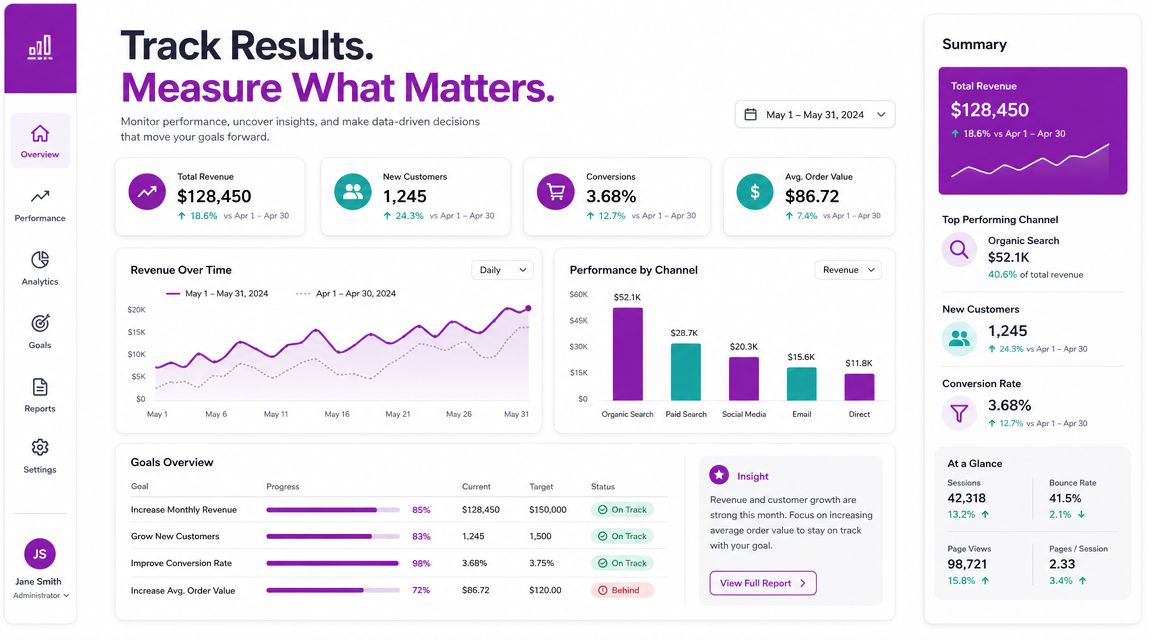
A lot of plumbers get stuck here because SEO reporting often focuses on numbers that look impressive but don't clearly connect to jobs.
You don't need to obsess over every metric. You need to track the signals that tell you whether visibility is turning into enquiries. For a local plumbing business, that usually comes down to what happens on your profile, what happens on your site, and whether the leads are worth having.
The metrics that deserve your attention
Start with the obvious commercial actions:
- Phone calls from your profile
- Website clicks from your profile
- Direction requests where relevant
- Contact form enquiries
- Calls tied to key service and location pages
These metrics tell you whether search visibility is creating intent strong enough to contact you.
Keyword rankings still matter, but only in context. Ranking well for a town or service is useful if it brings the right kind of lead. If you're visible for broad terms that generate time-wasters outside your service area, that isn't progress.
Ignore vanity metrics unless they explain something useful
Impressions on their own don't pay for fuel, staff, or stock. Neither do meaningless traffic spikes from irrelevant blog posts.
The better question is simple: did the visibility create more of the enquiries you want?
That's why lead quality matters. A smaller number of strong local leads can be far more useful than a larger batch of weak ones. If you want a smart framework for measuring lead quality effectively, it helps to look beyond raw volume and judge leads by fit, urgency, and booking potential.
More visibility is only useful when it produces the kind of calls you actually want to answer.
Run a simple monthly review
You don't need a huge dashboard review every week. A monthly check is enough for most small plumbing businesses.
Look at:
| Area | What to check | Why it matters |
|---|---|---|
| Google Business Profile | Calls, clicks, review activity | Shows how your map presence is performing |
| Website pages | Which service and location pages attract enquiries | Tells you where demand is turning into action |
| Lead quality | Area, job type, urgency | Helps you refine pages toward better work |
If you want a structured way to review profile performance, a GBP report can make the map-side data easier to interpret.
The goal isn't to become an SEO analyst. It's to see what's producing calls, keep improving what works, and stop wasting effort on activity that looks busy but doesn't generate jobs.
If you want expert help turning local visibility into booked work, Bare Digital can support you with Google Business Profile optimisation, service-area targeting, location page strategy, and reporting that ties SEO activity back to enquiries.






