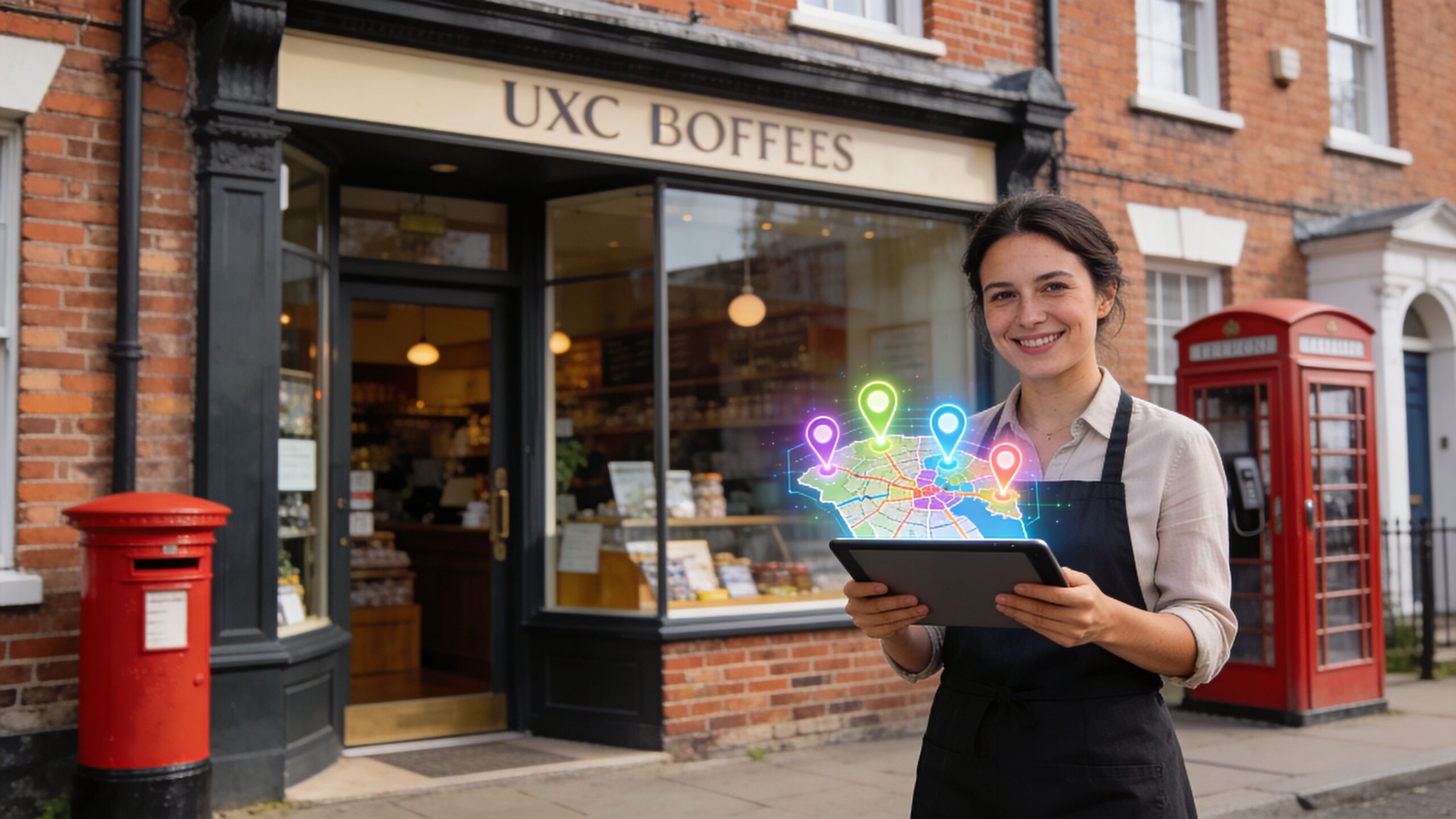

If you run a good local business and still feel invisible online, you’re not imagining it. Plenty of UK firms do solid work, answer the phone, turn up on time, and rely on word of mouth, yet they still lose enquiries to businesses with a sharper digital presence. A wedding venue in the Cotswolds can have a better setting than the place down the road and still miss out. A tradesperson in Leeds can be faster, cheaper, and more reliable, yet watch another firm take the call because that company showed up first on Google.
That gap is where digital marketing for local businesses either becomes a growth engine or a constant frustration. The good news is that local visibility is still winnable if you treat it as a postcode-by-postcode system, not a vague branding exercise.
In the UK, ‘near me’ searches have surged by over 200% in the last two years, and 76% of people who search for a nearby service on their phone visit a business within 24 hours, according to Google-focused local search data compiled by Elementor. That tells you two things. First, local intent is huge. Second, the businesses that show up cleanly and credibly at the moment of search have a serious advantage.
Your Introduction to Dominating the Local Market
Most local marketing problems are simpler than they look. The business owner thinks they need more followers, more blog posts, or a full rebrand. Usually they need three things first. They need to be found, they need to look trustworthy, and they need a clear way to turn clicks into calls or enquiries.
That’s why local growth starts with the basics done properly. Your Google Business Profile, your website’s local pages, your reviews, your business details across the web, and your tracking setup all need to work together. If one breaks, the rest underperform.
For a lot of firms, the issue isn’t effort. It’s scattered effort. They post on Instagram, boost a few ads, tweak the homepage, and hope demand follows. It rarely works like that. Local search rewards consistency, relevance, and completeness.
A useful way to think about it is this. You don’t need to dominate the whole internet. You need to win the searches that matter in your service area.
Practical rule: If you can’t clearly say which towns, postcodes, or branch areas you want to rank in, your local strategy is still too vague.
A stronger approach is to build around real buying behaviour. A funeral home needs trust and accuracy. A construction firm needs area pages and proof of work. A photographer needs local intent pages plus reviews that remove hesitation. A multi-branch home care provider needs all of that, repeated with proper control across each location.
If you want a benchmark for what a structured local presence should look like, the core services outlined on Bare Digital’s local SEO site mirror the same sequence that tends to work in practice. Start with visibility, tighten relevance, then measure what turns into business.
Master Your Digital Front Door with Google Business Profile
Your Google Business Profile is your digital front door. For many local searches, it gets seen before your website. That means customers often decide whether to call, click, or keep scrolling based on your profile alone.
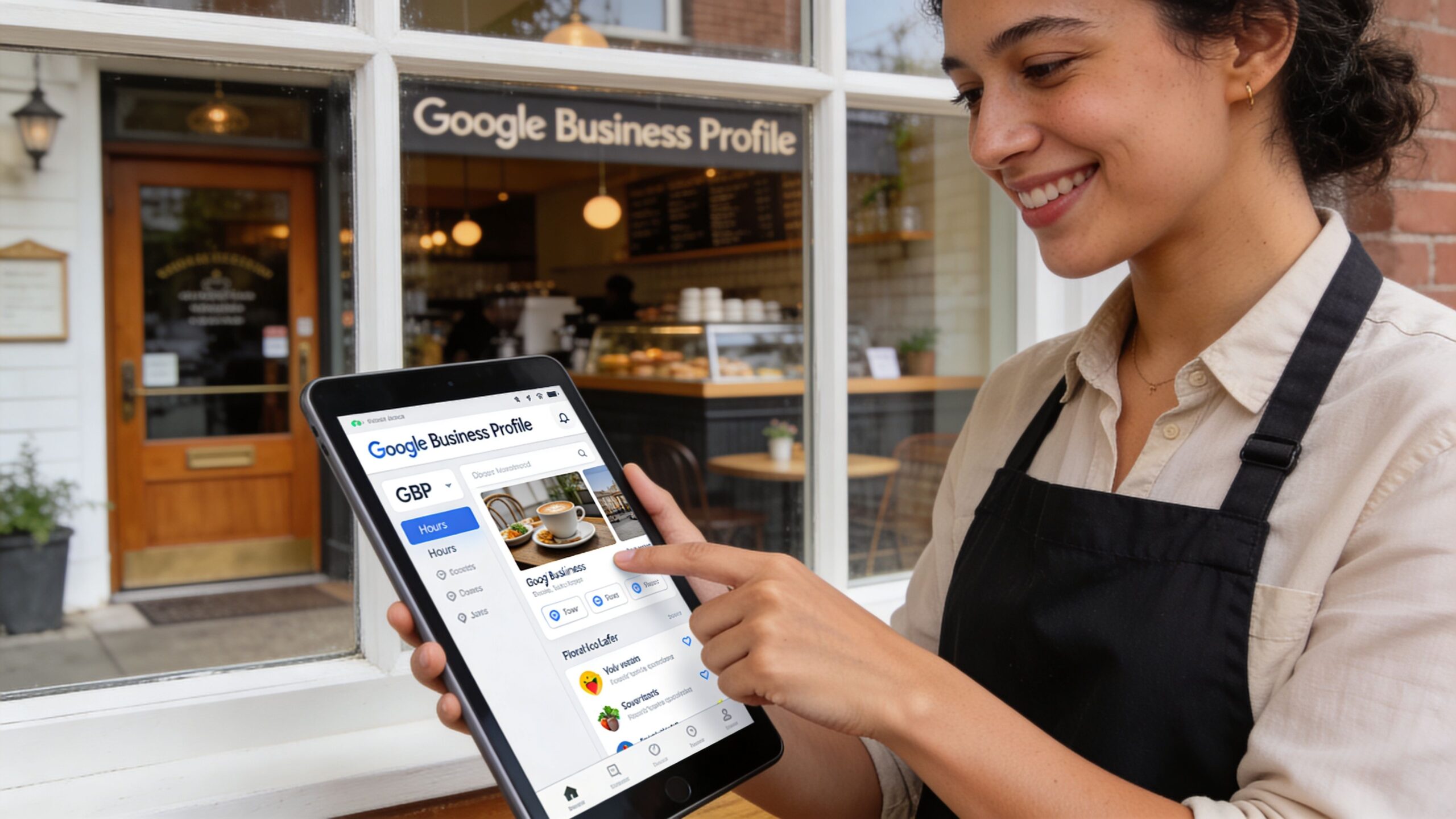
The common mistake is treating it like a listing to claim once and forget. It isn’t. It’s an active local asset. UK businesses also have room to improve here. The Uberall local marketing maturity benchmark notes that UK businesses lag slightly behind the US in local marketing maturity, that incomplete profiles can rank up to 70% lower, and that aiming for a 100% complete GBP profile can result in 2-3 times more calls.
Complete every field that matters
A half-finished profile sends the wrong signals to both Google and customers. The first job is completeness, but not box-ticking for the sake of it. Every field should help a local customer decide.
Focus on these first:
- Business name: Use your real trading name only. Don’t stuff in town names or services.
- Primary category: Pick the clearest match for the core service. A home care provider shouldn’t be vague. A wedding venue shouldn’t hide behind a broad hospitality label if a more precise category fits.
- Secondary categories: Add relevant supporting services, but only if you provide them.
- Opening hours: Keep them current, including seasonal changes and bank holiday updates.
- Phone number and website: Make sure they route to the right branch or main enquiry point.
- Services or products: Add real service lines in plain English that match what local people search for.
- Business description: Write for buyers, not algorithms. Mention what you do, where you do it, and why someone local should trust you.
For a plumber in Leeds, that description might mention emergency callouts, boiler issues, and the areas covered. For a Cotswolds venue, it might mention weddings, private hire, and nearby towns couples search.
Choose categories like a local buyer would
Category selection affects visibility more than many owners realise. People don’t search the way businesses describe themselves internally. They use practical language.
A firm might call itself a “property maintenance solutions company”. The local customer types “roof repair Leeds” or “emergency electrician near me”. Your profile should align with that intent.
If you’re unsure where the gaps are, a structured Google Business Profile audit tool is a practical way to catch missing fields, weak category choices, and content gaps before you spend time elsewhere.
A polished profile doesn’t win because it looks nice. It wins because it removes doubt fast.
Posts, photos, and Q&A aren't optional upkeep
A neglected profile looks abandoned. A current one looks operational.
Google Posts are useful for recent work, offers, events, seasonal reminders, and common service updates. A funeral director might post practical guidance around arranging services. A caterer might post recent event setups or tasting availability. A construction company might post before-and-after project highlights for a specific town.
Photos matter for the same reason. Show your premises, team, vehicles, completed work, interiors, exteriors, and service context. Skip stock imagery where possible. Real local images are stronger because they prove the business exists in the area you claim to serve.
The Q&A section deserves more attention than it gets. Left unmanaged, it becomes patchy or inaccurate. Used properly, it answers hesitation before a customer needs to ring you.
Add and answer the questions people ask repeatedly:
- Service area questions: Do you cover nearby villages or only the town centre?
- Availability questions: Do you handle same-day callouts or weekend bookings?
- Pricing frame questions: Do you offer quotes, consultations, or site visits?
- Practical access questions: Is there parking, disabled access, or appointment-only entry?
Later in the decision process, this walkthrough gives a useful visual reference for how profile elements fit together:
Build a branch-ready process from day one
Even if you have one location now, set up your profile management as if you’ll have three. That means standard photo naming, a repeatable posting rhythm, central control of hours, and a clear review response process.
That discipline matters once you expand. A single branch can get away with ad hoc updates. A multi-location brand can’t. One wrong phone number, one outdated opening time, or one unmanaged profile quickly creates confusion and lost leads.
For single-location firms, GBP is often the fastest route to better local visibility. For multi-location firms, it becomes an operations issue as much as a marketing one.
Winning Local Searches with Smart Website SEO
Your Google profile gets you seen. Your website closes the gap between interest and enquiry. If the profile is the shop window, the website is where the customer checks whether you’re right for the job.
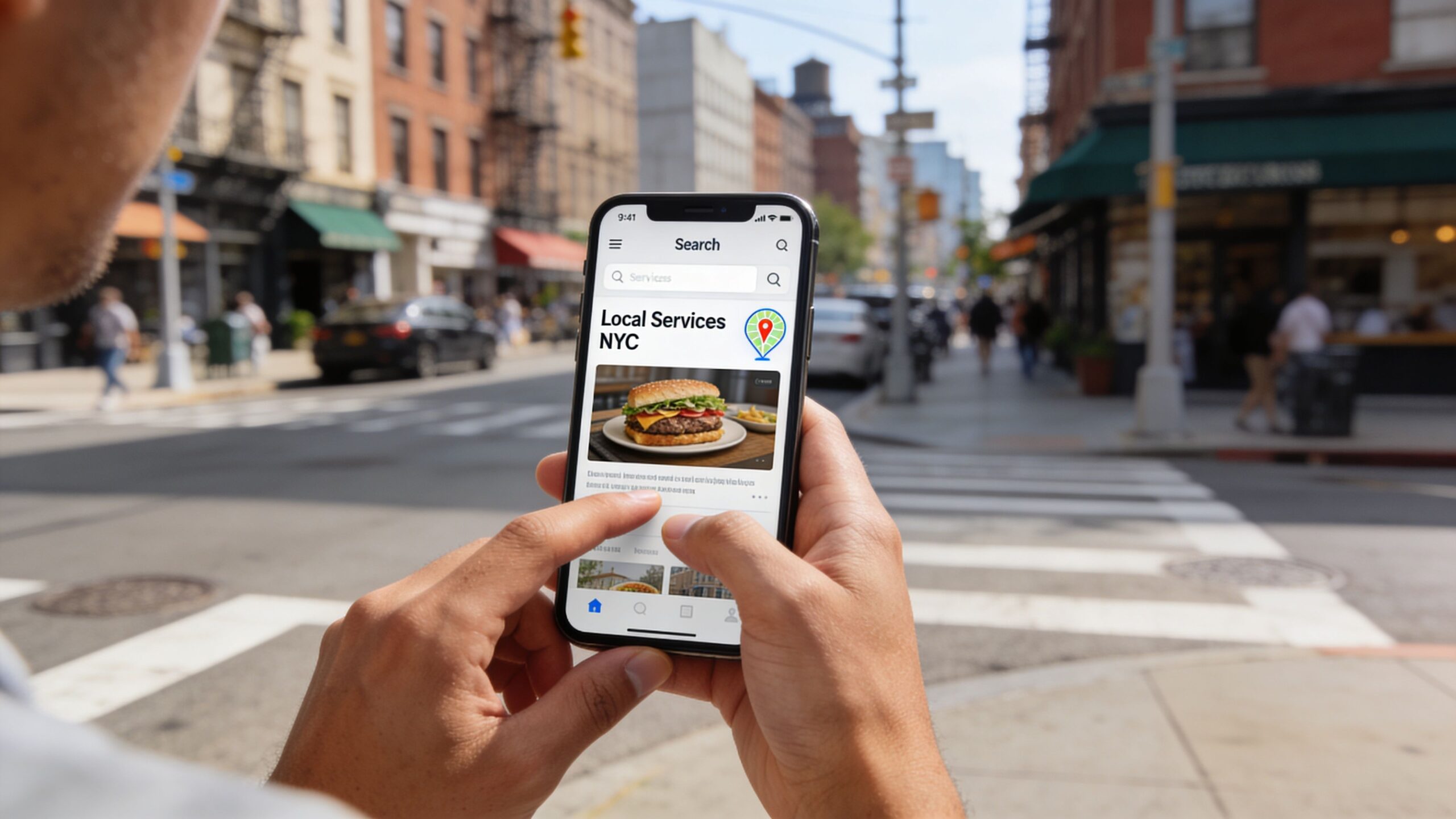
That’s why local SEO on your site can’t stay generic. Local searches show powerful intent, with UK data indicating that 28% result in a purchase, according to local search purchase data compiled by Insivia. If your pages don’t reflect the towns, services, and language people use, you make it harder for high-intent visitors to choose you.
Start with the phrases real customers use
Keyword research for local businesses is less about volume chasing and more about matching demand properly.
A wedding venue might target:
- Wedding venue Cotswolds
- Barn wedding venue Gloucestershire
- Exclusive use wedding venue near Cheltenham
A trades business might need:
- Emergency plumber SW19
- Boiler repair Leeds
- Electrician Harrogate
An architect may need a mix of service and area intent:
- Residential architect Cambridge
- Planning drawings Hertfordshire
- House extension architect near me
The point is precision. “Our services” won’t rank where “home care in York” has a chance. “Areas we cover” isn’t enough where dedicated pages for York, Harrogate, and Ripon would do the job better.
If you want a strong external primer on structuring this work, this small business SEO strategy is a useful companion read because it ties search intent back to page planning and content priorities.
Fix the pages that are supposed to convert
Many local sites don’t fail because they have no traffic. They fail because their core pages say very little.
Your homepage should make four things obvious in seconds:
- What you do
- Where you do it
- Who it’s for
- How to contact you
Then your service pages need to go deeper. A single “services” page covering everything from bathroom fitting to emergency plumbing won’t help much. Break those out. Give each service its own page with the towns or areas that matter naturally included in titles, headings, body copy, FAQs, and proof points.
A good local page usually includes:
- A clear service headline
- Town or postcode relevance
- Specific problems solved
- Local trust signals such as reviews, project examples, or accreditations
- A simple call to action
Working rule: If a customer lands on the page and still has to guess whether you serve their area, the page isn’t finished.
Multi-location SEO needs real landing pages
Most scaling efforts go wrong at this stage. Businesses open another branch, then expect one generic site to rank everywhere. It won’t.
If you have branches in Leeds, Manchester, and Sheffield, each location needs its own landing page. Not a copied template with the town name swapped out. A page that reflects that branch’s service area, contact details, team context, customer questions, and local relevance.
A useful local page framework looks like this:
| Page element | What it should do |
|---|---|
| Title tag | Name the service and location clearly |
| H1 heading | Confirm the page is about that town or branch |
| Intro copy | Explain what you offer locally |
| Area details | Mention nearby districts, villages, or postcodes naturally |
| Proof section | Add reviews, project snapshots, or service examples |
| FAQ block | Answer local concerns such as travel, callout times, parking, or appointments |
| Contact section | Show the correct branch details and enquiry route |
For a home care company, each branch page should show the branch-specific phone number, service area, care types, and practical next steps. For a wedding venue group, each venue page should stand on its own, not rely on one central enquiries page to do the heavy lifting.
A lot of businesses also neglect internal linking. Link your town pages from service pages. Link relevant blog content into those pages. Link branch pages from the main navigation if they matter commercially. Search engines need those relationships to be clear, and so do users.
For a practical benchmark of what to audit on your own site, this local SEO checklist is the kind of framework that keeps website fixes tied to local ranking goals rather than random SEO tasks.
Building Unshakeable Trust and Community Authority
Local visibility gets you into the shortlist. Trust gets you chosen.
That’s true in every sector, but it’s especially obvious in services where risk feels personal. Healthcare, home care, funeral services, architecture, and high-ticket home improvement all rely on confidence before contact. People don’t just want a provider nearby. They want one that feels established, accurate, and safe to deal with.
Keep your business details consistent everywhere
Citation management sounds technical, but the principle is simple. Your business name, address, and phone number should match across the web.
If your website says one thing, your Google profile says another, and a directory has an old phone number from two years ago, you create friction. Customers get unsure. Search engines get mixed signals. Enquiries leak away.
Start with the main places your customers check. For UK firms, that often includes your own site, your Google profile, and trusted directories such as Yell. Then check industry-specific listings where relevant. Healthcare providers, venues, and trades each have their own ecosystem.
This matters even more in regulated or sensitive sectors. A private clinic, care provider, or funeral home can’t afford messy local data. For firms in those spaces, the discipline behind a specialist approach like healthcare SEO support shows the standard required. Accuracy is part of trust, not admin.
Ask for reviews in a way that feels natural
Most businesses either avoid asking or ask badly. They wait for reviews to happen on their own, or they send a stiff automated message that feels transactional.
Better review generation is about timing and context. Ask after a good outcome, not in the middle of a process. Keep the request short. Make it easy. Don’t over-script it.
Here are practical examples that work across sectors:
- Trades: “Thanks again for having us out today. If you’re happy with the work, a Google review really helps local customers find us.”
- Wedding venue: “It was a pleasure hosting your day. If you’d be comfortable sharing a few words about your experience, that feedback helps future couples a lot.”
- Architect or interior designer: “Now the project’s complete, a review about the process and communication would be useful for prospective clients.”
The important part is specificity. Ask clients to mention the service, area, and experience in their own words if they’re comfortable. That creates stronger local relevance than generic praise.
Reviews work best when they sound like real people talking to other real people.
Just as important, reply properly. Thank positive reviewers with detail. Address concerns calmly when feedback is mixed. Prospective customers often read your response style as closely as the review itself.
Publish content that proves local relevance
Local content isn’t about churning out articles no one asked for. It’s about publishing material that makes sense for your area and your buyer.
A few examples:
- A caterer could write a guide to planning events in listed buildings in a nearby town.
- A construction firm could publish updates on completed local projects and what was involved.
- A wedding venue could create location-specific planning guides for couples considering ceremonies in surrounding villages.
- A funeral home could offer practical pages on arrangements, local venues, and common family questions, written with restraint and clarity.
This kind of content does three jobs at once. It supports local SEO, it gives sales teams something useful to send, and it reinforces the impression that you work in the area rather than targeting it from a distance.
Community authority beats shallow reach
A lot of local firms chase broad visibility and ignore local authority. They post generic social content that could belong to any business in any town. It fills a feed but doesn’t build reputation.
Community authority comes from repeated, grounded signals:
- Clear business details
- Consistent local presence
- Reviews with substance
- Relevant local content
- Useful responses to customer questions
That combination is harder to copy than a paid campaign and more durable than a short spike in clicks.
Driving Immediate Leads with Local Paid Advertising
SEO is compounding. Paid advertising is immediate. Most local businesses need both, but they need them for different jobs.
Google Ads usually captures demand that already exists. Social ads usually create awareness or remind people to act. If you mix those roles up, spend gets wasted fast.
There’s also a reason many owners feel digital ads don’t work. While many UK SMBs feel their digital advertising is ineffective, a multi-channel approach can deliver over 200% ROI. Allocating budget to Google Local Services Ads is especially important because 76% of local searchers visit a business within 24 hours, according to local advertising analysis published by Best Version Media.
Use Google Ads for high-intent local demand
If someone searches for a service with local intent, Google is where you want to show up. That makes paid search the practical choice for:
- Emergency trades
- Legal or urgent professional services
- Home care enquiries
- Healthcare appointments
- Local service businesses with a clear catchment area
For these firms, tightly controlled geographic targeting matters more than broad reach. A Leeds electrician shouldn’t pay for clicks from the wrong county. A wedding venue should separate campaigns for local searches from broader planning-stage searches if both matter.
The best local search campaigns usually focus on:
- High-intent service terms
- Specific service areas
- Strong landing pages matched to the ad
- Call and form tracking
- Search term review every week
Use Facebook and Instagram for local awareness and retargeting
Social platforms are useful when people aren’t actively searching yet or when visual proof helps the sale. A new café, wedding venue, photographer, or interior designer can benefit from local social campaigns because the format supports discovery.
That works well for:
- New branch launches
- Event promotion
- Seasonal offers
- Remarketing to previous site visitors
- Reaching people within a tight radius of a location
If you need practical ideas for campaign structure, audience setup, and creative angles, this Facebook Ads for Local Businesses playbook is a useful reference because it frames social ads around local intent rather than generic boosting.
Decide budget by business goal, not by channel preference
One of the worst habits in local marketing is choosing channels based on comfort. The owner likes Facebook, so everything goes there. Or they’ve heard Google is expensive, so they avoid it despite having strong search demand.
Use a simpler decision filter:
| Business situation | Better starting point |
|---|---|
| People need the service urgently | Google Ads |
| People compare options visually first | Facebook or Instagram |
| You’ve launched a new branch | Google plus local social awareness |
| You need bookings quickly | Google Ads with strong local landing pages |
| You want to stay visible to past visitors | Social retargeting and remarketing |
Decision rule: If the customer already knows they need you, pay to capture the search. If they need persuading first, use social to create the demand.
Keep weekly execution boring and repeatable
Local paid campaigns improve when someone checks them consistently. Not obsessively. Just properly.
Here’s a practical weekly rhythm by sector:
| Sector | Google Business Profile Task | Content/Social Task | Review Task |
|---|---|---|---|
| Wedding venue | Add current photos and update key event information | Post a recent ceremony setup or planning tip | Ask recently married couples for feedback |
| Trades business | Confirm hours, service areas, and call routes are current | Share a completed job or seasonal maintenance advice | Request reviews after completed callouts |
| Healthcare clinic | Check service listings and appointment information | Publish helpful educational posts with local relevance | Follow up with satisfied patients using approved wording |
| Construction firm | Add project images and clarify covered towns | Share progress updates from live or completed projects | Ask clients to review communication and workmanship |
| Caterer | Update service categories and event coverage | Post recent menus, setups, or venue partnerships | Request reviews after successful events |
These tasks sound simple because they are. The difference is that done every week, they keep ad performance grounded in current local signals. Done once every few months, they become cosmetic.
Tracking, Scaling, and Proving Your ROI
A local campaign isn’t working because impressions are up or because a post got shared. It’s working when the phone rings more, more qualified forms come in, and more branches generate enquiries without constant firefighting.
That’s where tracking stops being a reporting exercise and starts becoming management. This is also the point where single-location habits either support scale or sabotage it.
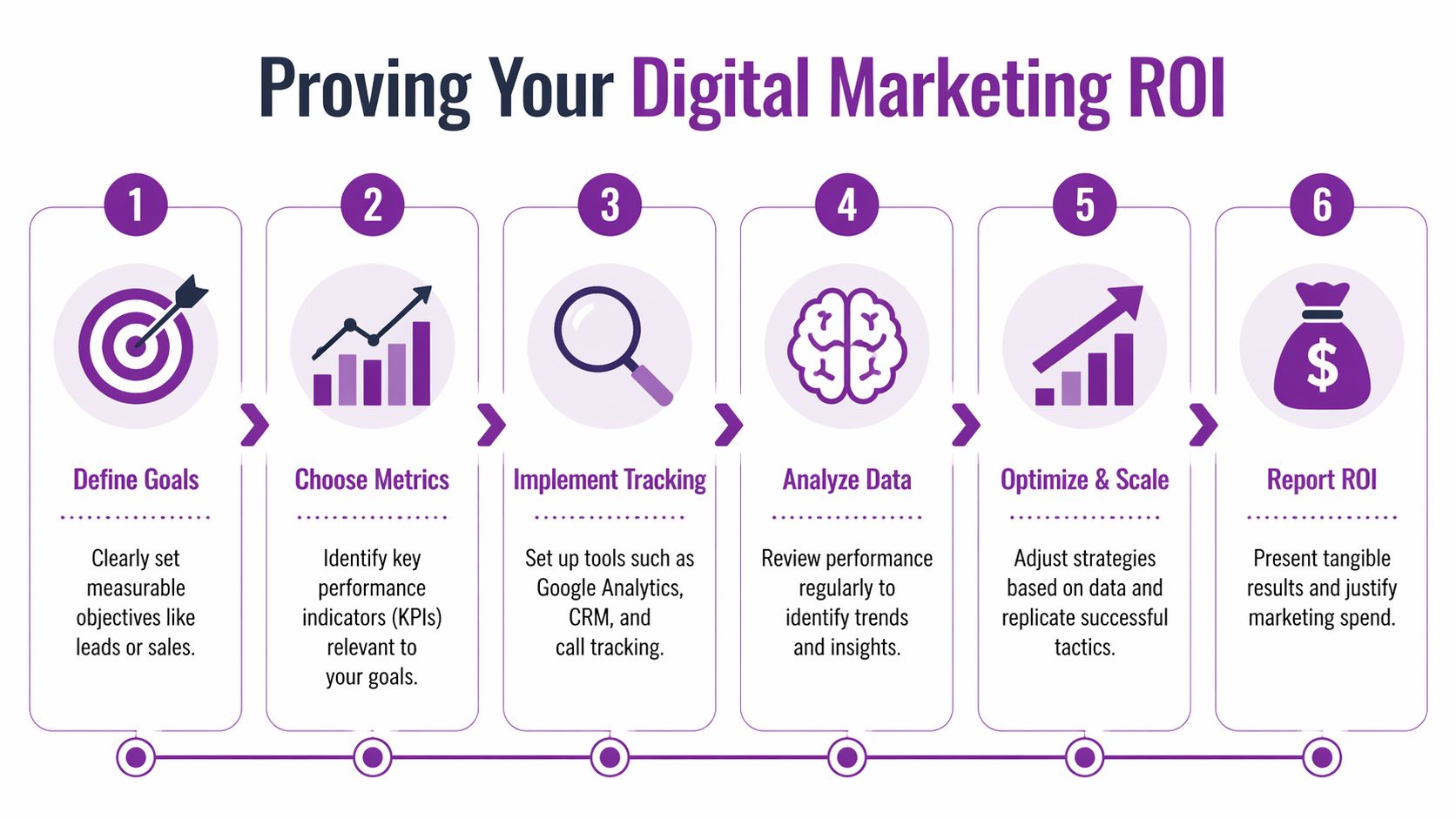
A major obstacle for growing brands is operational inconsistency. According to Sprout Media Lab’s local business strategy article, 68% of multi-location UK SMEs lose significant leads due to inconsistent business information online, and only 22% use integrated dashboards. That tells you the underlying issue isn’t usually lack of effort. It’s lack of control.
Track business outcomes, not vanity metrics
For local firms, the most useful KPIs are the ones tied closest to revenue. That sounds obvious, but a lot of reporting still drifts toward fluff.
Start with metrics such as:
- Calls from Google Business Profile
- Website contact form submissions
- Appointment or consultation bookings
- Direction requests where footfall matters
- Branch-specific enquiry volume
- Lead quality by location
- Search terms that generate actual conversions
If you’re running paid campaigns, you also want cost per lead and which campaign or landing page generated that lead. If you’re investing in SEO, look at whether the pages you improved are bringing in relevant enquiries, not just more sessions.
Build one simple reporting view first
You do not need an elaborate dashboard on day one. A spreadsheet can be enough if it’s organised properly.
A practical local reporting sheet often includes:
- Location or branch
- Core service line
- Leads from GBP
- Leads from website
- Paid campaign leads
- Review volume and response status
- Top-performing local pages
- Actions completed that month
That structure forces clarity. It also stops the classic problem where everyone can see activity but nobody can tie it to results.
For businesses that need to model value from search-led enquiries, a tool such as this SEO ROI calculator for self-storage shows the broader principle well. The exact sector differs, but the logic is the same. Tie traffic and leads back to commercial outcomes, not abstract ranking wins.
What matters isn’t whether marketing feels busy. What matters is whether each location can show what generated enquiries and what didn’t.
Standardise the system before you add more locations
A second branch exposes every weak process in your first branch. A fifth branch magnifies them.
Here’s where scaling usually breaks:
- One branch uses a different phone number format
- Another has outdated opening hours
- Reviews get answered in different tones
- Location pages are copied and thinned out
- Paid campaigns overlap geographically
- Nobody can tell which branch generated the lead
The fix is process discipline.
Create a repeatable branch framework:
- Standard page templates with room for local detail
- One master record for name, address, phone number, hours, and service categories
- A review response guide
- A content calendar with branch-specific slots
- Monthly audits for listings and landing pages
- One owner for reporting quality
Localise without creating chaos
Standardisation doesn’t mean every branch sounds identical. That’s another common mistake.
A venue in the Cotswolds and one in Cheshire shouldn’t have the same page with the place names changed. A care branch in York and one in Leeds will answer different local concerns. A construction office serving central London needs different service language than one covering rural Cambridgeshire.
Use a shared structure, then localise:
- Area names and travel context
- Real project examples
- Branch photos
- Team details where appropriate
- Location-specific FAQs
- Different internal links based on service mix
This keeps the site manageable while giving each location enough individuality to rank and convert.
Scale based on what already proves itself
A lot of businesses try to scale by launching everything at once. New pages, new ads, new content, new locations. That creates noise.
A better pattern is to identify what’s already working in one location and port the method, not the exact content, into the next. If wedding venue landing pages built around local ceremony planning are generating qualified leads in one county, repeat the structure elsewhere with real local adaptation. If one trades branch gets most of its leads from call-focused Google campaigns and review velocity, build the new branch around the same mechanics.
Growth gets easier when your playbook is built from evidence instead of instinct.
From Local Player to Local Leader
Local growth rarely comes from one dramatic tactic. It comes from doing the visible things properly, then doing the unglamorous things consistently. A complete Google Business Profile. Service pages that mention the right places. Reviews asked for at the right time. Paid campaigns aimed at the right radius. Reporting that shows which branch is producing real enquiries.
That’s the difference between being present online and competing.
For a single-location business, this work creates a stronger pipeline and a steadier flow of enquiries. For a multi-location business, it creates a system you can repeat without losing control. The firms that pull ahead locally aren’t always bigger. They’re usually better organised, more accurate, and more deliberate about how they show up in search.
If you’ve been treating digital marketing as a side task, that’s the shift to make. Local marketing works when it becomes part of how the business runs, not something squeezed in when there’s time.
If you want a clear view of where your local visibility is leaking and what to fix first, Bare Digital helps UK businesses tighten Google Maps presence, improve local SEO, and connect activity to measurable enquiries across single and multi-location setups.