
Your Local SEO Blueprint: From Invisible to Unmissable
You know your business inside out. You know what a good job looks like, how long the work really takes, and what customers usually ask before they buy. The problem is that Google doesn't reward craftsmanship on its own. It rewards signals. If those signals are weak, incomplete, or inconsistent, a less capable competitor can appear above you and take the enquiry.
That’s the frustrating bit for most UK small businesses. You’re not losing because you’re worse. You’re losing because your local SEO setup is patchy, your location pages are thin, your Google Business Profile hasn’t been touched in months, or your site isn’t telling search engines exactly where you work and why customers should trust you.
The good news is that local SEO is usually more fixable than owners think. It isn’t magic and it isn’t reserved for national brands. In practice, it’s more like sorting a shopfront, signage, staff script, and local reputation all at once. Get the basics right first, then layer on the authority signals that help you outrank better-known names.
These small business seo tips are the ones that tend to move the needle for UK firms that need local leads rather than vanity traffic. They’re practical, tied to real implementation choices, and built around what gets results for trades, venues, healthcare providers, professional services, and multi-location businesses.
Some of these actions are quick wins. Others compound over months. That’s normal. Local SEO works best when you stop treating it like a one-off tidy-up and start treating it like an operating system for visibility, trust, and enquiries.
1. Optimise Your Google Business Profile for Local Dominance
If you only fix one thing first, fix your Google Business Profile. For most local businesses, it’s the front door. It shapes what people see in Maps, what appears in branded searches, and whether Google trusts your business enough to show it in the local pack.
The weighting behind that is hard to ignore. In the 2026 edition of local SEO ranking factors, Google Business Profile elements account for about 32% of local pack ranking influence, while reviews contribute around 20% and on-page signals sit near 15%, according to local SEO ranking factor analysis. That tells you where to put effort first when time is tight.
A half-complete profile is like fitting a nice sign above a locked shop. You might get seen, but you won’t get chosen.
See how your profile stacks up with Bare Digital’s Google Business Profile audit tool.
Here’s the training video I’d give most local teams before they start updating anything:
What to update first
Start with the details customers use to make a decision. Your primary category, opening hours, phone number, service area, business description, images, and review responses all affect trust.
Then tighten relevance. A wedding venue should upload current venue photos, ceremony spaces, accommodation details, and real guest reviews. A funeral home should present compassionate, accurate service information and clear contact routes. A builder should show real projects, not stock shots and vague promises.
- Categories matter: Choose the closest primary category to your core service, then use relevant secondary categories where they fit.
- Photos need to be real: Add current images of your premises, team, vehicles, projects, or treatment rooms. Stock imagery weakens trust.
- Posts should support buying intent: Publish updates around seasonal demand, service education, offers, or recent work.
- Review replies should be timely: Answer positive and negative reviews in a calm, human tone. Prospects read replies as much as ratings.
Practical rule: Don’t let your Google Business Profile become a filing cabinet. Treat it like a sales asset you update every month.
For single-location firms, this often brings the fastest improvement in visibility. For multi-location businesses, the need for diligence is magnified because each branch profile needs the same discipline. Consistent categories, accurate local details, and a review process across every site usually outperform random posting and occasional updates.
2. Conduct Hyper-Local Keyword Research for Near Me and Area Terms
Broad keywords waste budget and time. “Photographer”, “builder”, or “care home” might look attractive, but they’re too vague on their own. Local customers usually search with geography, urgency, or context attached.
That’s why the better approach is to build your research around service plus place. Think “funeral directors Coventry”, “interior designer Cambridge”, “wedding venue near Henley-on-Thames”, or “emergency electrician CB1”. Those terms are closer to the point of enquiry and easier to turn into page structure, content, and conversion tracking.
Use a practical framework, not guesswork. Start with Google Search Console for existing impressions, check Google Maps autocomplete for live local phrasing, and compare that with tools like Google Ads Keyword Planner, Ahrefs, Semrush, or BrightLocal. If you need a starting framework, Bare Digital’s local SEO checklist is a sensible place to begin.
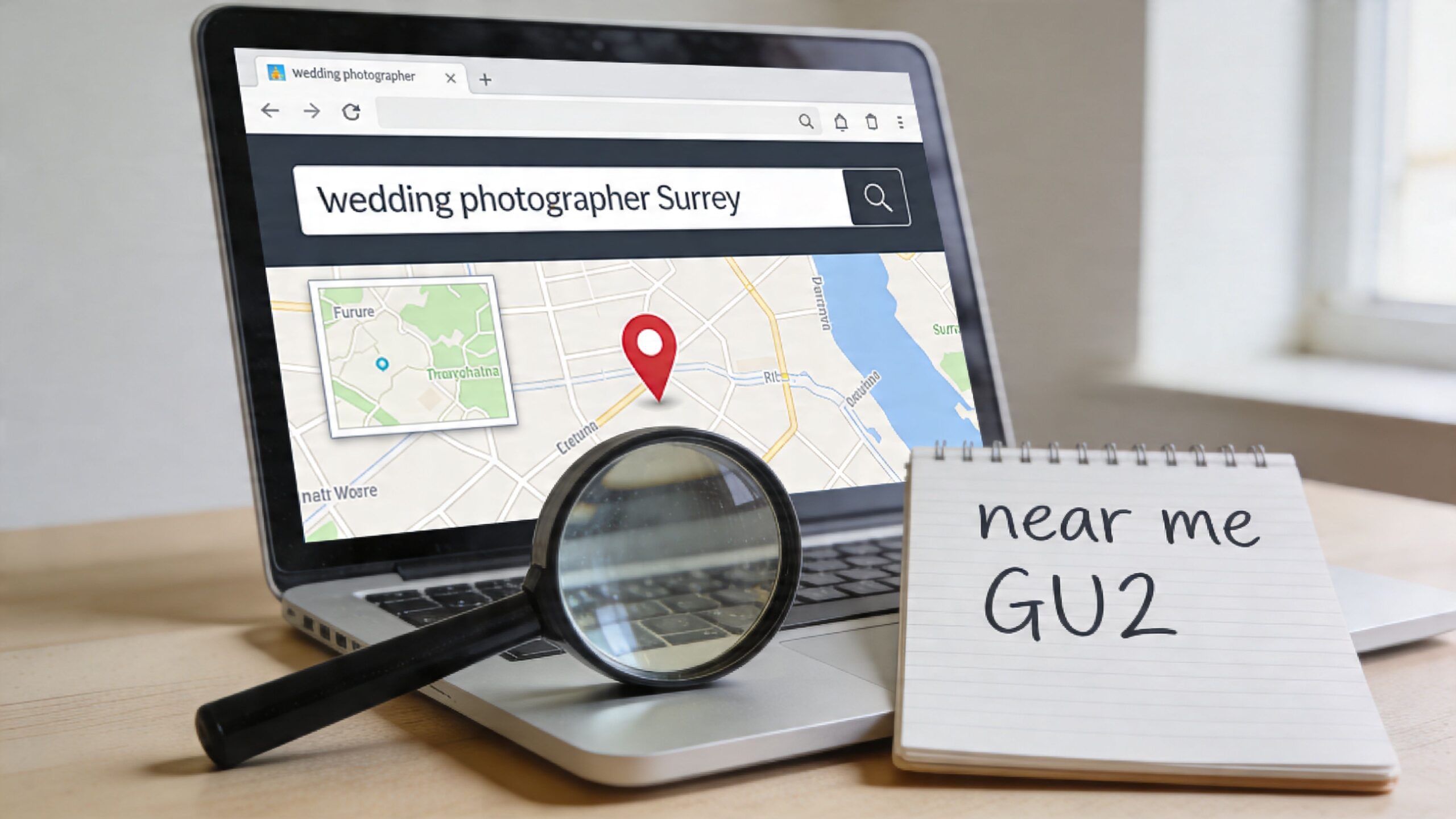
What good local keyword research looks like
For a wedding photographer, there’s a big difference between chasing “wedding photographer UK” and mapping phrases like “Surrey wedding photographer”, “engagement photos Surrey Hills”, and “registry office wedding photographer Guildford”. The second set is narrower, but the person searching is usually much closer to booking.
For a home care provider, local modifiers also reveal intent. “Home care” is broad. “Dementia home care near Bournemouth” tells you far more about the service need, the urgency, and the landing page you should build.
- Look at postcode intent: Districts, towns, villages, and recognisable nearby landmarks often matter more than county-level terms.
- Map one main term per page: Don’t force five towns onto one service page and expect it to rank well everywhere.
- Check the SERP before writing: If Google shows local packs, service pages, and maps results, that’s a local SEO term. If it shows guides, that’s content intent.
- Refresh quarterly: Search language shifts with seasonality, housing trends, and service demand.
Search demand is only useful if it matches the page you’re willing to build. Don’t collect keywords like trophies.
A lot of small business seo tips stop at “do keyword research”. That’s too shallow. True value comes from turning search terms into site architecture. The keyword list should tell you which pages to create, which GBPs need support, which areas deserve their own landing pages, and which services should get priority first.
3. Create Dedicated Location-Specific Landing Pages with Local Content
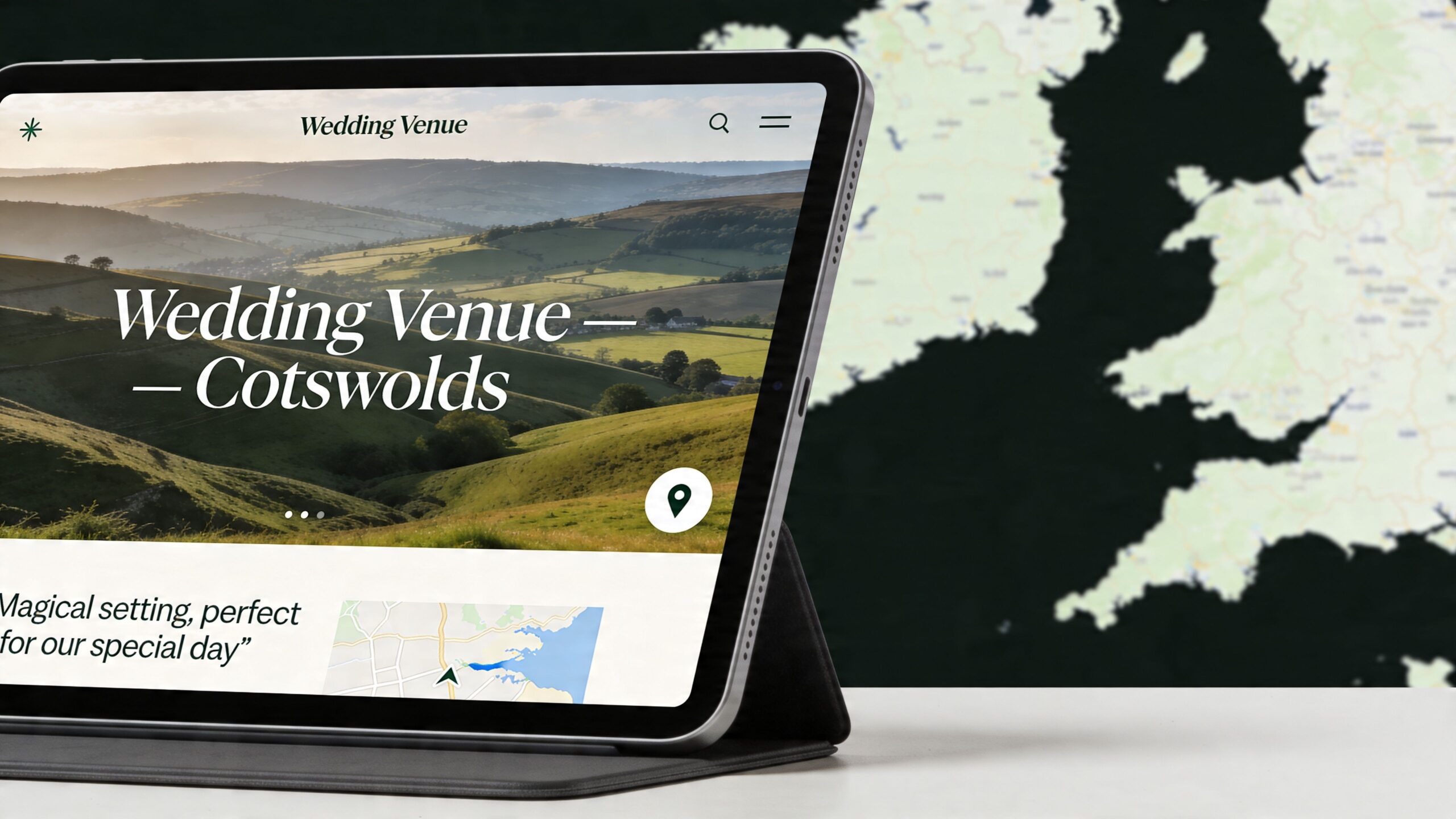
If you serve more than one town, one generic services page won’t do the job. Google needs a clear signal that you work in each area, and customers want proof that you genuinely know the place rather than merely being willing to drive there.
This matters even more for multi-location businesses, which are usually underserved in generic SEO advice. Most content focuses on single-location Google Business Profile work. It rarely deals properly with scaling location signals across towns, postcodes, and service regions. That gap is costly because multi-location SEO analysis for small businesses notes that postcode-specific pages convert better than generic ones, while many small business sites still ignore multi-location schema and consistent local signals.
A good location page isn’t a town name pasted into a template. It needs a reason to exist.
What belongs on each page
Take a construction company covering Cambridge, Ely, and Newmarket. Each area page should reference the services available there, common property types, local project examples, area-specific testimonials where possible, and a clear service radius. A funeral provider covering Brighton, Hove, and Worthing should reflect local community relevance, not just duplicated service copy.
Bare Digital’s own Cambridge SEO services page is the sort of internal location structure businesses should study when planning regional growth.
Use this minimum standard:
- Unique local copy: Write for the place, not just the service. Mention service realities in that area.
- Area proof: Add testimonials, delivery examples, local partnerships, or project references tied to the location.
- Internal links: Link from the homepage, service pages, and other nearby location pages where sensible.
- Clear contact pathways: Give people a direct next step. Call, book, enquire, or request a quote.
- Local schema: Support the page with structured data that reinforces location and service relevance.
For costs, the trade-off is straightforward. Cheap, bulk-generated location pages are quick to launch but weak over time. Properly written pages take longer and cost more because they need local nuance, internal linking, schema, and review proof. But they’re far more likely to rank and convert.
For service brands covering multiple postcodes, these pages often become the engine room of local organic growth. They support GBP relevance, strengthen map visibility, and stop your website from speaking in broad terms when customers are searching in very specific ones.
4. Build High-Quality Local Backlinks and Citations
Backlinks and citations work like references on a CV. Anyone can claim to be reputable. It matters more when other trusted organisations effectively confirm that you are.
Small businesses often get this wrong in one of two ways. They either ignore links entirely, or they chase generic directory submissions with no relevance to their area or sector. Local SEO works better when the signals are both geographically and topically aligned.
What useful local authority looks like
For a wedding venue, good local links might come from regional bridal blogs, florist directories, local wedding fairs, or trusted supplier pages. For an architect, local planning resources, design publications, chambers of commerce, and property partnerships make more sense. For a funeral business, community organisations, bereavement support networks, and local service directories carry stronger trust than random business lists.
Citations matter too. Your business name, address, and phone number need to match across directories, map listings, and social profiles. If one site lists a tracking number, another uses an old address, and a third shortens the company name differently, Google gets mixed signals.
- Audit before building: Check existing citations for outdated names, addresses, and phone numbers.
- Prioritise relevance: One trusted local industry listing usually beats a pile of generic low-quality directories.
- Use partnerships: Sponsors, suppliers, venues, associations, and charities often create natural link opportunities.
- Create something worth citing: Local guides, service explainers, or area resources attract links more easily than sales pages.
A backlink from a respected local organisation is often more useful than a batch of links from websites no customer has ever heard of.
There’s also a practical time trade-off here. Citation cleanup is repetitive and sometimes tedious, but it’s foundational. Outreach for local links takes longer and needs relationship work. If budget is limited, clean the existing mess first, then build authority from the strongest local opportunities outward.
For multi-location firms, assign ownership internally. One person should control the master record for business details. Otherwise, your listings drift. That drift weakens trust, especially when several branches or service areas are involved.
5. Optimise On-Page SEO with Titles, Headers, Meta Descriptions, and Schema
On-page SEO is where clarity beats cleverness. Search engines need to understand what each page is about, and searchers need a reason to click. If your title tags are vague, your headings are messy, and your pages don’t support the main keyword, you’re making Google work harder than it should.
A lot of local websites still hide their value behind bland titles like “Home”, “Services”, or “About Us”. That’s not optimisation. That’s a missed opportunity.
The pages that deserve attention first
Start with your highest-intent pages. Usually that means your homepage, primary service pages, and your strongest location pages. A wedding venue page should state the venue type and area clearly. A funeral page should be direct, respectful, and easy to scan. A trade page should make the service and service area obvious in the first screenful.
If you need an example of service-led page targeting, look at a focused local service structure like Bare Digital’s SEO services in Chatteris.
Then tighten the essentials:
- Title tags: Put the primary service and location near the front where it fits naturally.
- Meta descriptions: Write for clicks, not just keywords. Tell people what they’ll get if they visit the page.
- Heading structure: Use one clear H1, then sensible H2s and H3s that reflect how customers think.
- Opening copy: Mention the core service and area early without forcing it.
- Schema markup: Add LocalBusiness, Service, Review, or FAQ schema where it matches the page.
Good on-page SEO feels boring in the best possible way. Everything is obvious. The page title matches the service. The heading matches the query. The copy answers the question. The CTA gives a next step.
On-page reality check: If a stranger lands on the page and can’t tell within seconds what you do, where you do it, and how to contact you, the page isn’t ready.
Implementation costs here are usually moderate compared with a site rebuild. If the site already has decent templates, this is often a content and QA exercise rather than a development-heavy project. That’s why it’s one of the more reliable small business seo tips for owners who want measurable gains without overcomplicating the job.
6. Develop a Consistent Blog and Content Marketing Strategy with Local Angles
Blogging still works, but only when it earns its place. Thin opinion pieces and recycled generic posts don’t help much. Useful local content does.
Think of your blog as the section of your website that answers the questions customers ask before they’re ready to call. A funeral director might publish clear guides on planning and practical next steps. A wedding venue might cover area-specific planning advice, supplier tips, or seasonal considerations. A builder might explain planning issues, renovation pitfalls, or material choices relevant to local housing stock.
Use content to support services, not distract from them
The easiest mistake is writing content with no route back to the commercial pages. Every article should connect to a service, a location, or a trust signal. If it doesn’t, you’re building traffic that may never turn into enquiries.
There’s another reason content now matters more operationally. Small business marketers reported that SEO trackability rose from 80% to 94% between 2023 and 2024, and 84% now buy third-party tools or software to plan and execute search marketing strategies, according to small business search marketing survey findings. In plain English, clients now expect content performance to be visible, not vague.
That means you should track:
- Impressions and clicks: Use Google Search Console to see which topics gain traction.
- Engagement paths: Use GA4 to see whether blog readers move into service pages or contact routes.
- Local relevance: Compare which areas and service themes produce better enquiries.
- Topic gaps: Review search queries regularly and turn recurring questions into articles.
For niche sectors, specialist content often creates the trust that homepages can’t carry on their own. Bare Digital’s SEO for self-storage guide is a good example of content built around sector-specific search behaviour rather than generic marketing fluff.
Publishing cadence matters less than consistency. One useful local article each month is better than a burst of six poor ones followed by silence. Build a backlog around real sales conversations, support questions, and regional search demand. That way your blog becomes an asset, not a content graveyard.
7. Fix Technical SEO Issues with Speed, Mobile Usability, and Indexation
Technical SEO is the plumbing. Customers don’t compliment it, but they notice when it fails. So does Google.
Many local sites lose ground because they’re slow on mobile, hard to crawl, or full of avoidable issues like broken redirects, duplicate pages, poor image handling, and muddled internal linking. If your website is the digital equivalent of a shop with a sticky front door, people leave before they’ve seen what you sell.
The issues worth fixing first
For most small businesses, I’d check the basics before anything advanced. Run Google PageSpeed Insights, Lighthouse, Search Console, and GTmetrix. Then review the site on an actual phone, not just a browser preview. Local traffic is often mobile and high intent. If someone needs a funeral director, a plumber, or a care provider, they won’t wait around for clunky pages.
The first wins are usually practical:
- Compress large images: Venue galleries, project photos, and hero banners are common speed killers.
- Review hosting quality: Cheap hosting often slows WordPress sites more than owners realise.
- Fix crawl waste: Clean up 404s, redirect chains, noindex mistakes, and duplicate versions of pages.
- Submit and monitor sitemaps: Make sure Search Console reflects the pages you want indexed.
- Check mobile UX: Buttons, forms, tap targets, and sticky elements should work cleanly on smaller screens.
This isn’t glamorous work, but it’s often where rankings stall. Businesses keep adding content while their crawl issues, bloated page templates, and weak internal linking persistently hold everything back.
Slow websites don’t just irritate visitors. They interrupt buying intent.
The cost trade-off depends on the platform. A lightweight site with a good developer can often be improved quickly. A page-builder-heavy site with years of patchwork plugins may need a broader cleanup. Owners should know the difference before spending money on content that sits on a weak technical base.
For local businesses, technical fixes rarely produce the same visible excitement as a fresh homepage design. They do, however, create the conditions for your content, GBP work, and location pages to perform properly.
8. Build Trust Signals with Reviews, Ratings, and Local Authority
Trust is a ranking factor and a conversion factor. In local search, those two are tied together more tightly than many businesses realise.
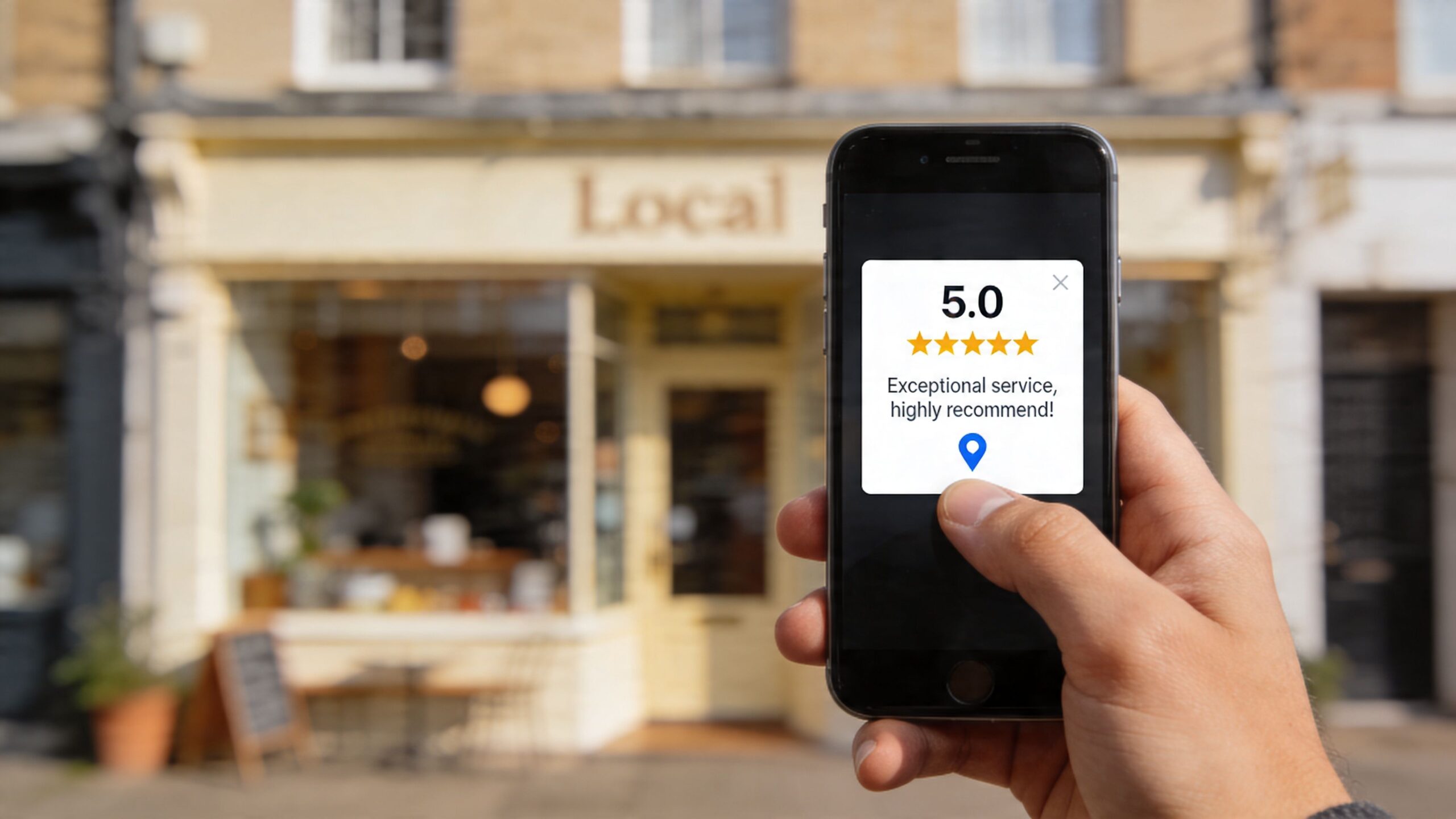
For local pack visibility, reviews now sit close to the centre of the picture. In the same local ranking factor breakdown cited earlier, reviews account for around 20% of local pack influence, making them one of the strongest trust signals a small business can build when handled properly. That’s especially important in sectors where people choose carefully, such as funeral care, healthcare, home services, and high-value creative work.
How to ask without sounding awkward
The best review process is simple and repeatable. Ask at the right moment, make it easy, and don’t overcomplicate the wording. A venue can request feedback shortly after the event. A photographer can ask when the gallery is delivered. A care provider can build review requests into a follow-up workflow handled sensitively. A trade business can send a direct review link after sign-off and payment.
The aim isn’t to chase stars in a desperate way. The aim is to capture honest feedback consistently enough that your public reputation reflects the actual service you provide.
- Use direct links: Remove friction from the review process.
- Ask at natural milestones: Right after a successful handover usually works best.
- Reply like a human: Prospects judge your tone, not just your rating.
- Show reviews on-site: Reinforce social proof on key service and location pages.
- Expand authority signals: Add memberships, accreditations, awards, and relevant certifications where appropriate.
If you’re also improving response speed and customer communication, tools such as customer support live chat solutions can help businesses handle pre-sale questions faster, which often strengthens the overall trust experience around the website.
Review management takes discipline. It’s rarely difficult, but it’s easy to neglect. The businesses that win locally usually have a process. The ones that fall behind tend to rely on luck and occasional reminders.
9. Leverage Google Maps and Local Search Advertising
Organic local SEO is the long game. Sometimes you also need immediate visibility, especially in sectors where demand is urgent or seasonal. That’s where Google Maps visibility and Local Services Ads can work alongside your organic setup.
This is particularly useful for trades, urgent care-related services, and professional services with strong local intent. If someone needs help quickly, being visible in both paid local placements and organic maps results gives you more surface area in the search results.
When paid local visibility makes sense
Use Local Services Ads when fast lead capture matters and your operations can respond quickly. Don’t use them if the back office is slow, the service area is poorly defined, or review quality is weak. Paid local visibility amplifies what’s already there. It doesn’t fix a weak offer.
For service businesses, the setup usually works best when these pieces are already in place:
- A complete Google Business Profile: Paid local campaigns work better when the underlying business information is solid.
- Clear service areas: Tight targeting stops wasted leads from irrelevant postcodes.
- Fast lead handling: Calls and message leads need a same-day response, ideally faster.
- A review foundation: Better reputation signals improve trust once people see the listing.
This is also where many owners should think more commercially about channel mix. SEO builds compounding visibility over months. Local search advertising can support that during busy periods, new area launches, or while organic rankings are still developing.
A wedding photographer might use paid local visibility during peak enquiry season. A plumbing firm might keep it active for emergency demand. A funeral provider might use it carefully to support discoverability where immediate contact matters. The common thread is operational readiness. If you can’t answer promptly, don’t pay to create demand you can’t handle.
10. Implement Structured Data for Better Search Visibility
Schema markup helps search engines understand your pages with less guesswork. It won’t rescue a weak website, but it does sharpen the signals around services, locations, reviews, FAQs, business details, and events.
For local businesses, that extra clarity matters. Search engines are trying to match a user’s intent with a service in a place. Structured data helps confirm what a page is about and how it relates to the business behind it.
Start with the pages closest to revenue
Don’t try to schema-mark up the entire site in one go. Start with the homepage, primary service pages, contact page, and your strongest location pages. Then expand carefully.
The most practical schema types for local businesses are usually:
- LocalBusiness schema: Supports your core business identity and location details.
- Service schema: Clarifies the service being offered on a page.
- Review schema: Useful where genuine review content is present and eligible.
- FAQ schema: Helpful for pages answering real customer questions.
- Event schema: Relevant for venues, workshops, open days, or community events.
There’s also an emerging angle many UK local sites still miss. Voice-driven local search is becoming more prominent, and much of the content online still focuses too narrowly on short text keywords. Voice search optimisation trends for small businesses point to a stronger role for conversational queries and FAQ-led content, particularly for local intent. That makes FAQ schema and natural-language answers more valuable than many businesses realise.
If a page answers customer questions clearly, schema helps search engines trust that structure. If the page is vague, schema just labels a weak page more precisely.
Implementation costs are usually modest if your site is maintained properly. Many CMS setups support JSON-LD through plugins or templates, and a developer can usually roll it out without major disruption. The important part is accuracy. Hours, service details, and location information need to match what customers see elsewhere on the site and in your listings.
10-Point Local SEO Comparison
| Tactic | 🔄 Implementation complexity | ⚡ Resource requirements | ⭐ Expected effectiveness | 📊 Expected outcomes | 💡 Ideal use cases / Key tip |
|---|---|---|---|---|---|
| Optimise Your Google Business Profile (GBP) for Local Dominance | Low–Medium (ongoing upkeep) | Time, photos, review management (low cost) | ⭐⭐⭐⭐ | Better Maps/local‑pack visibility, CTR and foot traffic | Small local businesses; keep NAP accurate and respond to reviews |
| Conduct Hyper‑Local Keyword Research for 'Near Me' and Area‑Specific Terms | Low–Medium (research cycle) | SEO tools + analyst time (£0–500+) | ⭐⭐⭐⭐ | Faster rankings for high‑intent local queries and higher conversion rate | Service businesses targeting towns/postcodes; map keywords to pages |
| Create Dedicated Location‑Specific Landing Pages with Local Content | Medium–High (content + dev) | Content creation, images, developer time (£500–5k) | ⭐⭐⭐⭐⭐ | Improved local rankings per area and higher local conversions | Multi‑location services; create unique pages per area with local reviews |
| Build High‑Quality Local Backlinks and Citations | High (outreach & PR) | Outreach effort, tools, possible monthly budget (£200–2k+/mo) | ⭐⭐⭐⭐ | Increased domain authority, referral traffic, local ranking lift | Businesses needing authority; prioritise relevant directories and NAP consistency |
| Optimise On‑Page SEO: Title Tags, Meta, Headers, Schema | Low–Medium (technical/content tweaks) | SEO knowledge or small agency/dev time (£0–2k) | ⭐⭐⭐⭐ | Immediate CTR uplift; 2–8 weeks for ranking gains | Any site with limited pages; optimise titles, metas and add schema JSON‑LD |
| Develop a Consistent Blog & Content Marketing Strategy with Local Angles | Medium (ongoing editorial) | Writers, promotion, editorial calendar (£0–2k+/mo) | ⭐⭐⭐ | Long‑term organic traffic, authority and link opportunities | Brands seeking sustained growth; publish local guides and case studies |
| Fix Technical SEO: Speed, Mobile, Indexation | Medium–High (technical fixes) | Developer time, hosting improvements (£0–2k) | ⭐⭐⭐⭐ | Faster pages, better UX, quicker indexation and ranking improvements | Sites with slow/mobile issues; run audits and prioritise Core Web Vitals |
| Build Trust Signals: Reviews, Ratings, Local Authority | Low–Medium (process & monitoring) | Customer outreach, review tools (£0–500/mo) | ⭐⭐⭐⭐⭐ | Higher CTR, conversions and local‑pack ranking improvements | Trust‑sensitive sectors (healthcare, care homes); request and respond to reviews promptly |
| Leverage Google Local Services Ads (GLSA) | Medium (setup & vetting) | Per‑lead budget (£5–50+ per lead) and account management | ⭐⭐⭐⭐ | Immediate high‑visibility leads and top‑of‑search placement | Trades and service businesses needing instant leads; ensure GBP and reviews first |
| Implement Structured Data (Schema Markup) for Rich Snippets | Medium (technical implementation) | Developer/SEO time (£0–500) | ⭐⭐⭐ | Increased CTR via rich results; better content understanding | Any local site wanting enhanced SERP features; use JSON‑LD and validate markup |
Turning SEO Tips into Sustainable Business Growth
These small business seo tips work best when you treat them as a system rather than a menu. A strong Google Business Profile helps you appear. Good reviews help you get chosen. Location pages help you prove local relevance. On-page SEO, schema, technical fixes, and backlinks help search engines trust the website behind the listing. Content and tracking help you keep improving instead of guessing.
That’s why local SEO often feels slow to people who approach it in fragments. They tweak a title tag, post a photo to GBP, or publish a blog article, then wait for a breakthrough. It rarely works like that. The gains come from alignment. The profile, the website, the citations, the reviews, the content, and the reporting all need to point in the same direction.
There are practical trade-offs at every stage. If you’ve only got a small budget, start with the assets closest to revenue. Tighten your Google Business Profile. Fix your highest-intent pages. Build a review process. Clean up citations. Make sure technical issues aren’t dragging the site down. That tends to outperform spending months on broad content while the local fundamentals remain weak.
If you run a multi-location business, don’t copy and paste your way across towns and hope for the best. Build proper location infrastructure. Keep NAP consistency under control. Give each area page a reason to exist. Match each profile and landing page to a real service footprint. That’s slower than producing templated pages in bulk, but it’s far more resilient.
Tracking matters just as much as execution now. Owners no longer accept black-box SEO, and they shouldn’t. You should be able to see movement in impressions, clicks, local visibility, lead quality, and conversion actions over time. If reporting only shows vague traffic charts with no connection to enquiries, the work isn’t tied tightly enough to the business.
The timeframe question comes up in almost every SEO conversation. The honest answer is that some changes produce visible improvements quickly, especially around GBP completeness, review activity, indexation, and on-page clarity. Authority building, location page growth, and content compounding usually take longer. Most local campaigns need steady work over months, not a burst of effort followed by neglect. That isn’t a flaw in SEO. It’s the reason the gains tend to last longer than paid campaigns that stop the moment spend stops.
For owners doing this in-house, the challenge is usually not knowledge. It’s consistency. The jobs that matter are rarely impossible, but they compete with delivery, sales, staffing, and admin. That’s where external support can help. Not because SEO is mysterious, but because it needs process, prioritisation, and follow-through.
Bare Digital is one relevant option for UK businesses that want a clearer route from local visibility to enquiries. The agency offers a free SEO health check and an activity plan focused on technical performance, on-page issues, local search visibility, and next-step priorities. If you want to pair the strategy in this guide with the right software stack, this roundup of best SEO software for small businesses can also help you assess the tools side properly.
The businesses that win locally usually aren’t doing flashy things. They’re doing the basics better than everyone else, then repeating them with discipline. That’s the fundamental blueprint. Not shortcuts. Not vanity rankings. Clear signals, local trust, and a website that turns attention into action.
If you want a clear view of where your local SEO is leaking enquiries, Bare Digital offers a free SEO health check and customized activity plan for UK businesses that need stronger Google Maps visibility, better local rankings, and reporting tied to real outcomes.