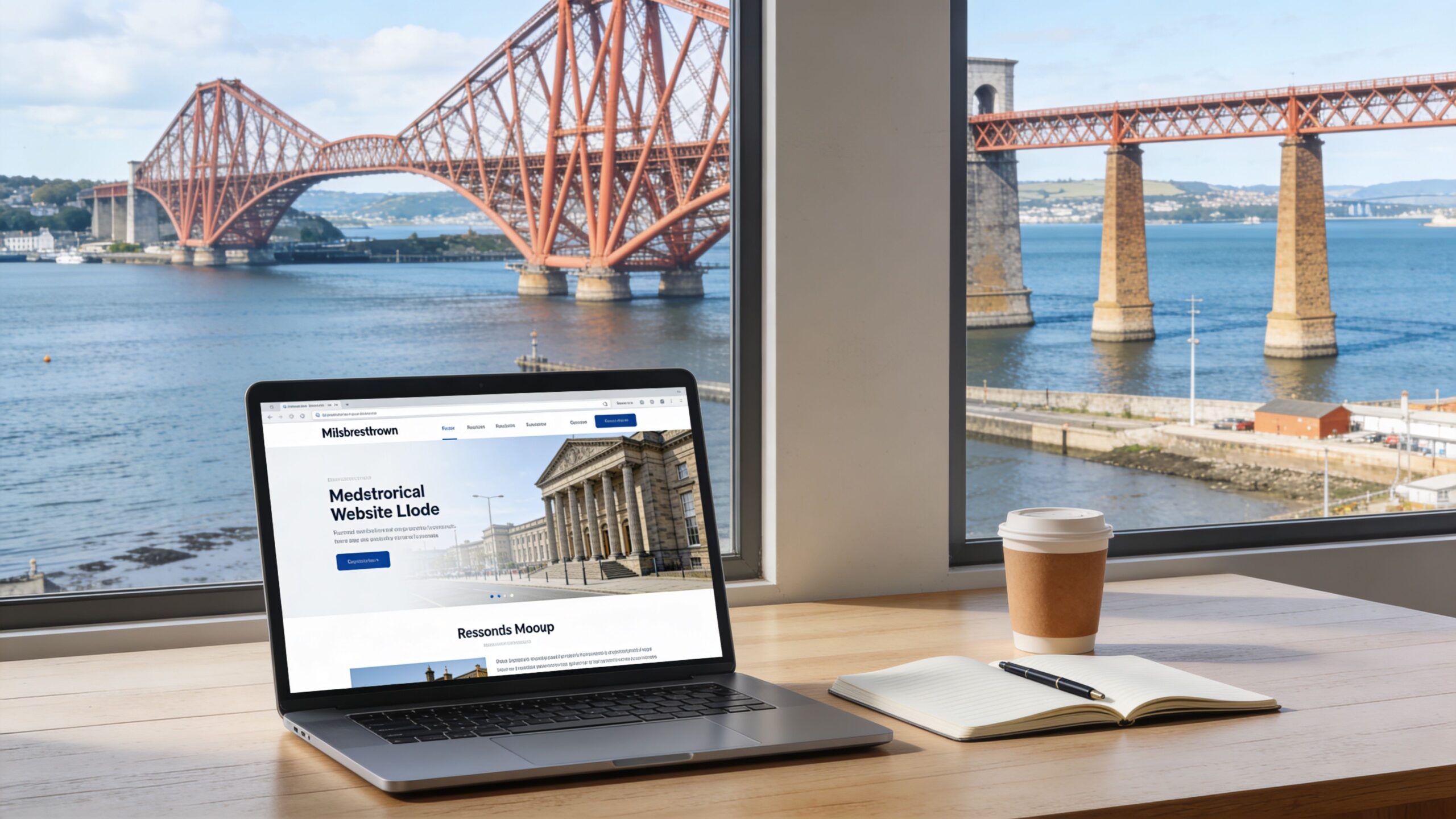

A lot of Middlesbrough business owners are in the same spot. Their website looks tidy enough. It has their logo, a few service pages, maybe even some decent photos. But the phone isn’t ringing because of it, quote requests are patchy, and most new work still comes from referrals.
That’s usually the point where people start asking the wrong question. They ask, “Do I need a new website?” The better question is, “Do I have a website that helps people find me and gives them a clear reason to contact me?”
For most local businesses, the site isn’t failing because the colours are wrong. It’s failing because it was built like a brochure instead of a lead generation system. In web design middlesbrough projects, that distinction matters. A brochure sits there. A lead-generating website pulls in local searches, supports your Google Business Profile, answers buyer doubts, and moves visitors towards a call, form, or booking.
Your Middlesbrough Website Is More Than a Brochure
A common scenario goes like this. A local firm paid for a website a few years ago. The homepage still says the right things. The service pages exist. On paper, nothing looks broken. But when someone searches for a provider in Middlesbrough, Stockton or nearby, competitors show up first, and the business owner is left wondering why the site feels invisible.

That’s where the mindset needs to change. Your website should behave more like your best salesperson than a printed leaflet. It should attract the right local searches, build trust fast, and make the next step obvious. If it doesn’t do that, the design is only doing half the job.
What local buyers actually do
People rarely land on a site in a calm, patient mood. They search on their phone, compare a few options, check whether you serve their area, scan for proof, and decide quickly whether you look credible. If they can’t confirm those basics in seconds, they leave.
That’s why a website has to connect design decisions with business goals. Navigation, page layout, contact options, service wording, local signals, and page speed all affect whether someone enquires or bounces.
Practical rule: If a visitor can’t tell what you do, where you work, and how to contact you within a few seconds, the website is underperforming.
The shift that matters
A stronger brief isn’t “make it modern”. It’s “make it easier for buyers in Middlesbrough to find us and contact us”. That changes everything, from page structure to content priorities.
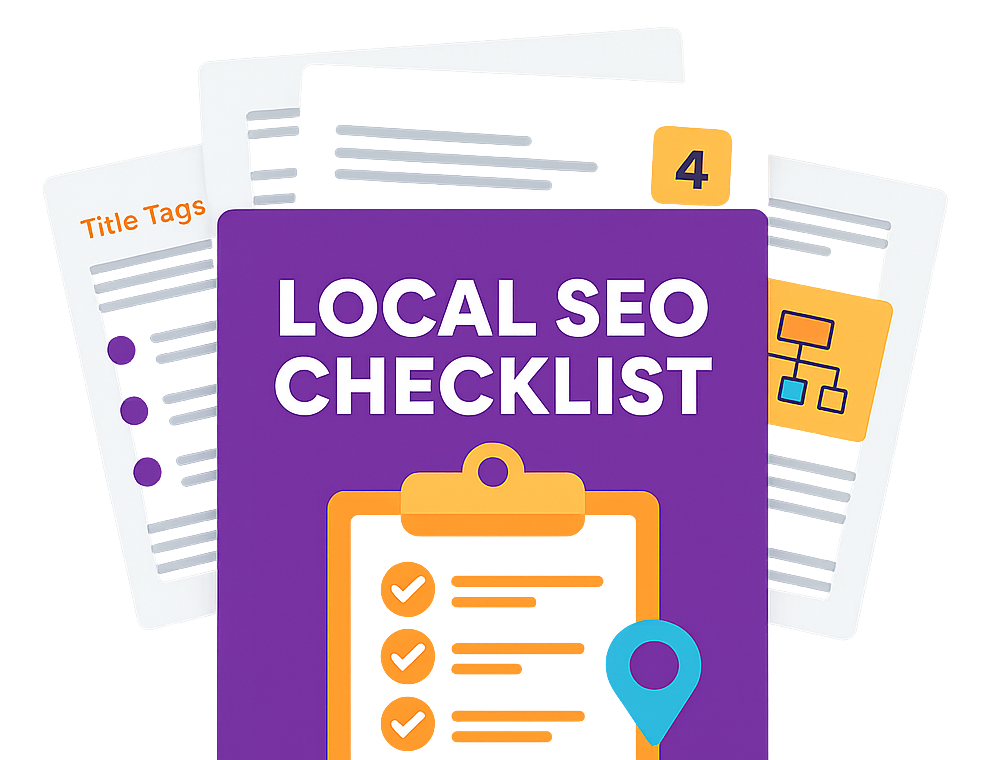
If you’re not sure where your current site is leaking opportunities, a local SEO checklist for service businesses is a useful way to spot obvious gaps before you talk to any agency.
The Anatomy of a High-Performing Local Website
Think of your website like a physical shop. If the entrance is awkward, people turn away. If service is slow, they walk out. If the place feels generic, they don’t trust it. The same rules apply online.
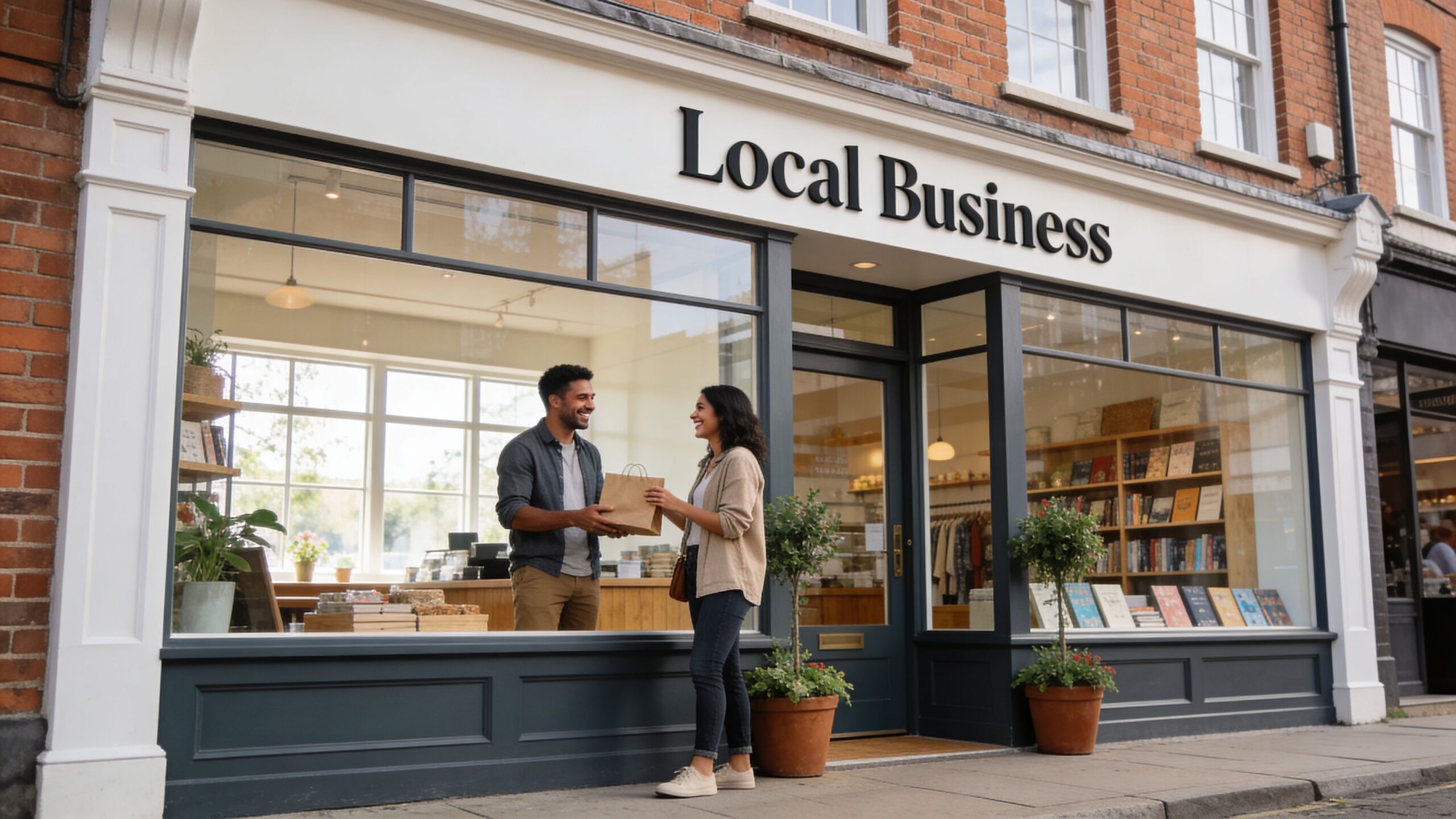
In practical terms, three parts do most of the heavy lifting. Mobile-first design, fast loading, and local relevance. Get these wrong and the rest of the build struggles to compensate.
Mobile-first is not optional
In Middlesbrough's competitive digital environment, responsive web design with mobile-first layouts is critical for SEO, as the town sees high mobile traffic. Local agencies report that sites with mobile responsiveness rank 25-40% higher in local “near me” searches because Google’s mobile-first indexing algorithm prioritises sites passing mobile usability tests, reducing bounce rates by 30% on average for Middlesbrough businesses, according to Honcho’s Middlesbrough web design page.
That matters because local searches are often impatient searches. Someone needs a tradesperson, a consultant, a clinic, a venue, or a supplier. They’re checking options while moving between jobs, commuting, or dealing with a live need. If your mobile menu is clumsy or your call button is hard to spot, you lose the lead before the sales conversation even starts.
A proper mobile-first layout usually includes:
- Clear tap targets so buttons and menus are easy to use on smaller screens.
- Shorter page sections that help people scan instead of forcing long walls of text.
- Visible contact actions such as click-to-call, forms, or enquiry buttons placed where people naturally pause.
- Compressed imagery so visuals support trust without slowing the page.
Speed shapes trust
A slow website doesn’t just annoy visitors. It makes the business feel less organised. People may not say, “this CSS file is too heavy”, but they will decide the company feels dated or inconvenient.
What works is straightforward. Use properly sized images. Keep scripts lean. Avoid decorative extras that don’t help conversion. Choose reliable hosting. Ask whether the build prioritises performance from the start, not as an afterthought once the design is signed off.
Slow pages kill intent. The user doesn’t compare your loading time against a benchmark. They compare it against their patience.
Local relevance closes the gap
A polished website still falls flat if it could belong to any company in any town. Local buyers want reassurance that you understand their area, their buying habits, and the kind of work they need done.
That usually shows up in details such as service-area wording, examples of work across Teesside, clear coverage pages, and location language that sounds natural instead of stuffed with keywords.
For businesses that rely on visual trust and local discovery, the same principles often overlap with niche SEO work. This is why guides on topics like SEO for photographers targeting local clients often apply far beyond photography. The mechanics are similar. Make it easy for the right local visitor to find you, trust you, and act.
Choosing Your Web Design Partner in Middlesbrough
Middlesbrough isn’t a market where you have to settle for whoever can build a homepage quickest. It’s a mature space. Multiple agencies in the region, including Hush Digital and Reactive Design, have been operating for over 20 years, which points to a stable, competitive environment with strong regional knowledge across Teesside, Stockton, Darlington and Hartlepool, as noted on Hush Digital’s Middlesbrough web design page.
That maturity is helpful for buyers, but it also makes selection harder. Plenty of firms can produce a decent-looking site. Fewer can explain how the site will support lead generation once it goes live.
What to listen for in the first conversation
The best agencies tend to ask sharper questions. They want to know which services are most profitable, which areas matter most, where leads currently come from, and what counts as a good enquiry. That’s a very different conversation from “which font do you prefer?”
If an agency jumps straight into visuals without discussing search visibility, call-to-action strategy, or local landing pages, treat that as a warning sign.
Ask direct questions like these:
- How will you structure the site around enquiries? You want to hear about service pages, internal linking, forms, calls, and user journeys.
- How will the site support local search visibility? If they separate design from local SEO entirely, that’s a gap.
- What happens after launch? A website isn’t finished when the files go live.
- How do you measure success? The answer should involve leads, enquiries, visibility, and user behaviour, not just design approval.
Portfolio quality beats visual flair
Don’t judge a portfolio only by how polished it looks. Judge it by whether the work appears useful for the client’s business model. A restaurant, consultant, construction firm and healthcare provider need different website priorities.
A strong local portfolio often reveals three things:
| What to check | Why it matters |
|---|---|
| Relevant sector work | Shows the agency understands your buyer’s decision process |
| Teesside coverage | Suggests local market awareness, not generic templates |
| Conversion cues | Proves the site was built to generate action, not just approval |
The right partner behaves like an advisor
You’re not buying software off a shelf. You’re hiring a team to help shape a commercial asset. The right partner should challenge weak ideas, simplify decisions, and steer you away from features that look impressive but don’t help sales.
A good starting point is reviewing an agency’s wider approach to local growth, not just its design gallery. That’s easier to assess when you can see how they position their work and what problems they solve on their main website.
If an agency can’t explain how the website should make you money, they’re not ready to lead the project.
The Web Design Project Journey Explained
A web design project tends to go better when both sides understand the process before the first design file appears. The clearest analogy is a house build. You wouldn’t pour concrete before agreeing the layout. The same applies here.
Discovery shapes the blueprint
The first phase should clarify business goals before anyone talks about colours or animations. In this stage, the team defines your services, priority locations, ideal customers, current problems, and what the site needs to do better than the existing one.
A useful discovery stage often includes:
- Commercial priorities such as the services you most want to push.
- Audience questions that need answering on-page.
- Local search opportunities tied to core service areas.
- Content gaps in the current site.
- Technical risks if the existing website is being replaced.
If you’re redesigning an established site, migration planning matters more than many businesses realise. A sloppy switch can break rankings, lose key pages, or confuse search engines. For that handover stage, ARPHost's website migration best practices are a sensible reference because they help you think about redirects, content mapping, and launch-day checks before anything is moved.
Design should solve, not decorate
Once the blueprint is agreed, the design phase should turn strategy into page layouts. Good design at this stage is less about artistic taste and more about decision flow. What do visitors need to see first? Where should proof sit? Which service paths deserve prominence?
Expect discussion around:
- Homepage hierarchy so the page serves real buyer intent.
- Service page layouts that balance clarity, trust, and action.
- Navigation logic that helps users reach the right section fast.
- Mobile behaviour rather than desktop-only mock-ups.
This is the point where clients often slow the project by reacting only to personal taste. “I don’t like that image” might be fair. But the better feedback is tied to the business goal. “This section doesn’t make our service difference clear” is far more useful.
The best client feedback improves clarity. It doesn’t turn the project into a committee exercise.
Build and launch need discipline
Development is where approved designs become a functioning site. The build should cover performance, form handling, content formatting, analytics setup, and technical SEO basics. Then comes testing. Not just whether the page loads, but whether the full enquiry path works on real devices.
Before launch, check these basics:
- Forms reach the right inbox
- Phone numbers are clickable on mobile
- Page titles and headings reflect the actual service intent
- Old URLs are handled properly if the site replaces an existing one
- Tracking is in place so you can measure what happens next
After launch, don’t judge the site by whether it “feels finished”. Judge it by whether it starts producing useful signals. Calls, form submissions, rankings for local service terms, and user behaviour matter far more than internal opinions.
If you need a practical way to connect traffic improvements to commercial value, a tool such as a self-storage SEO ROI calculator shows the kind of thinking businesses should apply. The exact sector may differ, but the principle is the same. Tie digital work to outcomes, not vanity.
Integrating Local SEO for Teesside Dominance
The most expensive mistake in web design middlesbrough projects is treating SEO as something you bolt on later. That’s how businesses end up with an attractive site that nobody local finds.
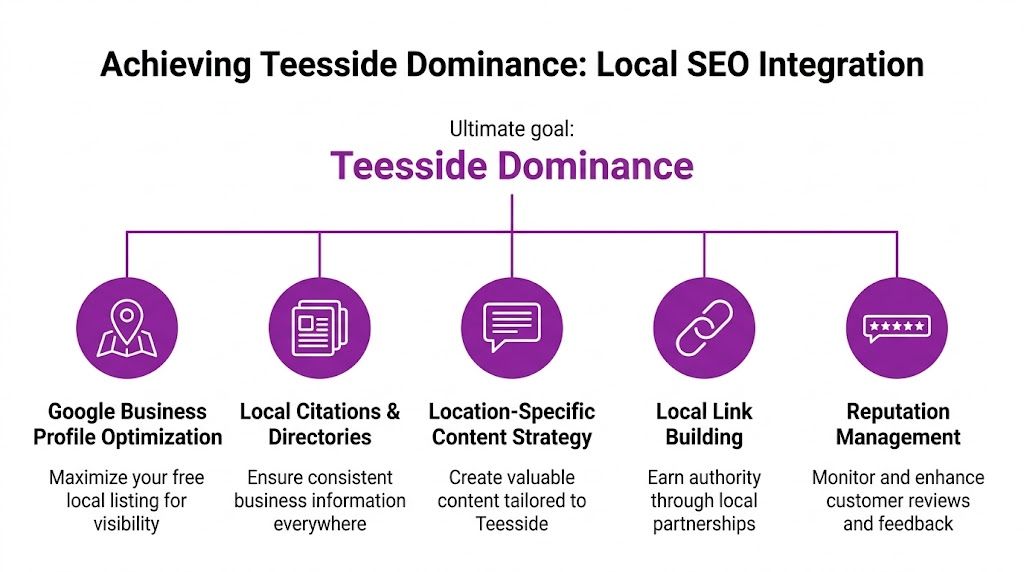
A common pain point is the failure to integrate web design with Google Business Profile optimisation. Many Middlesbrough agencies focus on aesthetics but neglect local map rankings, yet syncing site data with GBP can yield a 20-30% local traffic uplift, and Teesside SMEs lag 15% behind national averages in map visibility, according to Rocket Website Design’s Middlesbrough web design page.
That single issue changes how the whole site should be planned. If your Google Business Profile and website aren’t aligned, you send mixed signals about who you serve, where you operate, and which services matter most.
Your website and GBP should reinforce each other
A solid setup means your core business details match across the site and profile. Service wording should align. Location intent should be clear. Key landing pages should support the categories and service areas you want to rank for.
In practice, that means thinking about:
- Location pages for the places you want to win in, such as Middlesbrough, Stockton or Hartlepool
- Consistent business information across your website and Google profile
- Relevant service content that supports the searches real buyers make
- Technical clarity so search engines can crawl and understand your pages cleanly
A lot of agencies mention local SEO but stop at title tags and a paragraph mentioning Middlesbrough. That’s not enough. A local lead generation site should be built around the map pack, local organic results, and buyer intent from the start.
To understand how these pieces fit together in a visual way, this walkthrough is useful:
Location pages need a real purpose
Thin location pages don’t help. A page that swaps town names into the same copy won’t build trust with users or search engines. Better pages explain the service in local context, reflect the area served, and give people a reason to believe you work there regularly.
A location page should answer a buyer’s question, not just chase a keyword.
The hidden advantage most businesses miss
When local SEO is built into the web design process, every page has a job. The homepage sets the commercial direction. Service pages target intent. Location pages support area visibility. The contact page removes friction. Google Business Profile gains a stronger destination to send traffic to.
That’s why an audit before a redesign is so useful. A proper Google Business Profile audit tool helps identify gaps between what your profile says, what your website supports, and where leads may be leaking.
Understanding Web Design Pricing in Middlesbrough
Price matters, but price without context causes bad decisions. In a tighter market, businesses naturally watch spend more closely. Across the UK, web design services revenue is projected to decline at a compound annual rate of 0.6% over the five years through 2025-26, reaching £658.2 million, and many Middlesbrough agencies now offer tiered pricing such as templated websites from £950 and custom builds from £3,995, according to IBISWorld’s UK web design services industry data.
That pricing spread reflects a real difference in what you’re buying.
What lower-cost and custom options usually mean
A lower-cost site can be perfectly reasonable if you need a basic web presence, have a simple offer, and don’t require much local search depth. But it often comes with tighter flexibility, lighter strategy, and less room for location-focused content or conversion planning.
A custom build usually makes more sense when the website needs to support multiple services, multiple areas, stronger SEO foundations, and a more deliberate enquiry journey.
| Service Level | Typical Price Range | Best For |
|---|---|---|
| Templated website | From £950 | Businesses needing a basic online presence |
| Custom website | From £3,995 | Businesses that need a more tailored, lead-focused build |
The useful way to judge price
Cheap isn’t cheap if it has to be rebuilt. Expensive isn’t expensive if it supports a better flow of qualified enquiries over time.
When reviewing proposals, look beyond the homepage mock-up and ask what is included around planning, content structure, local landing pages, technical setup, conversion paths, and post-launch support. Those are often the parts that separate a site that looks decent from one that helps generate business.
Your Next Step Towards a Lead-Generating Website
If your current website isn’t producing steady local enquiries, the answer usually isn’t another cosmetic refresh. It’s a sharper strategy. The site needs to be fast, easy to use on mobile, built around buyer intent, and closely aligned with local search visibility.
That’s the difference between a digital brochure and a working sales asset. The first one fills space online. The second helps you get found, builds trust, and gives local prospects a clear route to contact you.
Focus on the next decision, not the whole overhaul
Most businesses don’t need to have every answer before they start. They need a clear diagnosis of what’s underperforming. Sometimes the issue is site structure. Sometimes it’s local landing pages. Sometimes it’s weak Google Business Profile alignment. Sometimes the design is fine, but the calls to action are too vague.
A useful way to think about improvement is to remove friction at each stage of the buyer journey. If you want extra ideas on turning more visitors into enquiries, this guide on how to drive more sign-ups and sales offers practical conversion principles that apply well beyond ecommerce.
What good next steps look like
Before commissioning a redesign, get clarity on three points:
- What do you want the site to generate? Calls, quote requests, bookings, visits, or all of them.
- Which locations matter most? That will shape page structure and local SEO priorities.
- What is the current site failing to do? If you can name the blockage, you can brief the project properly.
The strongest websites in Middlesbrough aren’t just well designed. They’re commercially organised. They match how local people search, compare, and enquire.
If you want a clear view of where your current site is helping or hurting local visibility, book a free, no-obligation review with Bare Digital. They’ll assess your website, local SEO position, and Google Business Profile setup, then give you a practical health check and activity plan focused on measurable growth.